The Weeknight Flavor Planner Funnel for Small-Batch Spice Shops
Turn Pinterest dinner searches into sampler orders and repeat spice buyers with a practical flavor-planner funnel, a weekly pin cadence, and a maintenance routine.
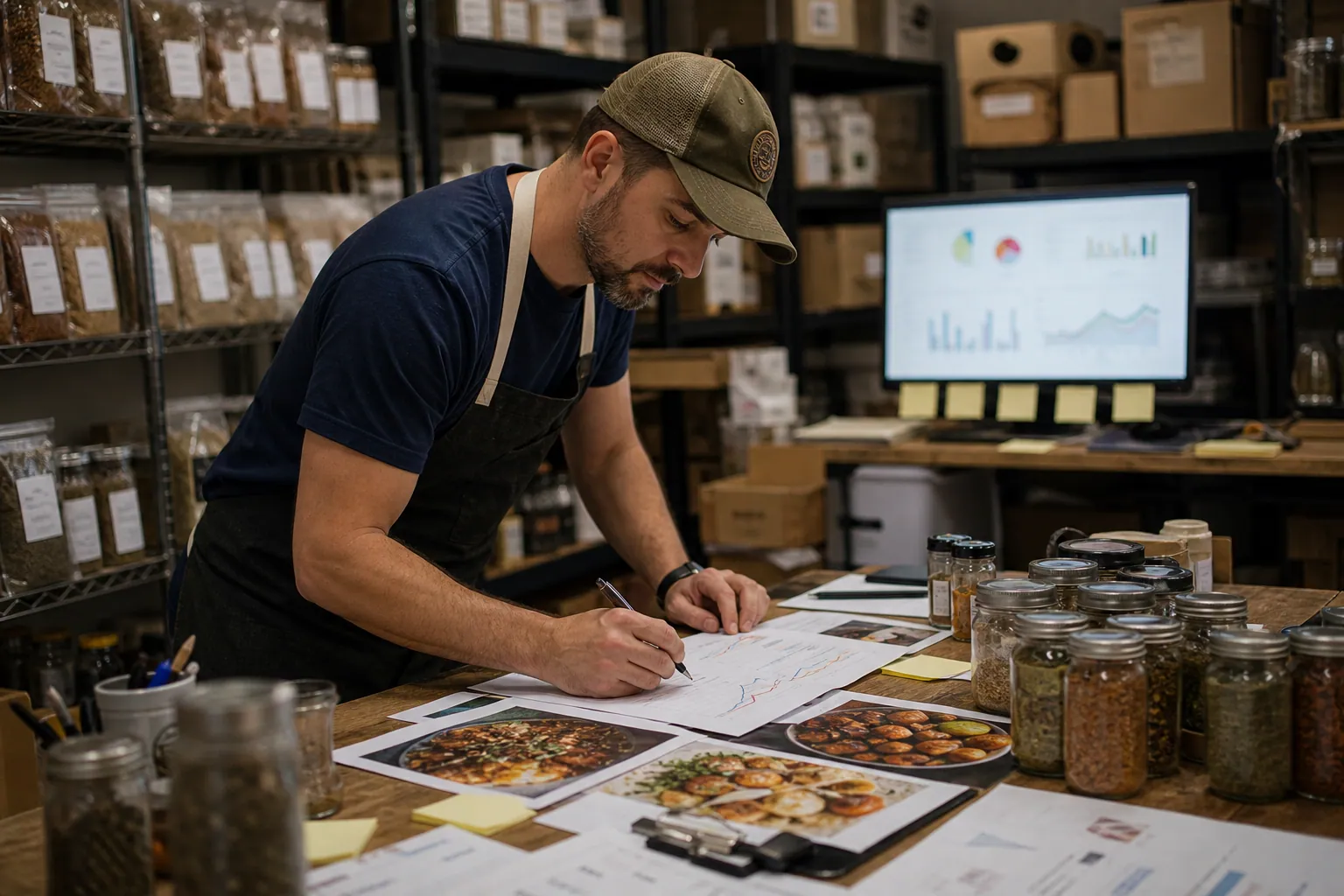
A small-batch spice shop rarely has the ad budget to compete for “best spices” searches. It does have something more useful: specific help for the person staring at chicken thighs, canned beans, and a nearly empty dinner plan at 5:30 p.m.
That is the Pinterest opportunity.
For a spice brand with 8–20 blends, the most dependable path is usually not a stream of jar photos. It is a content line built around repeatable cooking decisions, with one clear route from a useful download to a first order and a reason to come back.
This article maps that operating model for a founder-led spice business selling online, especially heading into fall weeknight cooking.
Begin with one shopper problem, not the whole catalog
Choose a narrow promise that a shopper can understand in five seconds:
“Make five weeknight dinners from a short grocery list without eating the same meal twice.”
That promise can become a Five-Night Flavor Planner: a printable or mobile-friendly guide with five dinner formats, a grocery list, substitution notes, and the blends used in each recipe.
It works because it creates a natural sequence:
- A Pinner searches for a realistic dinner idea.
- They land on a recipe or planner page that solves the immediate problem.
- They download the planner in exchange for an email address.
- They receive a sampler offer tied to the meals in the planner.
- They later receive recipes and replenishment prompts that make reordering sensible.
This is a better fit for Pinterest search intent than leading with “Shop our spices.” A jar is the product; dinner confidence is the outcome.
The offer ladder
Build the funnel before producing Pins. Each layer needs one job.
| Moment | Pinterest promise | Destination | Next action |
|---|---|---|---|
| Discovery | “5 easy chicken thigh dinners that don’t taste the same” | Recipe post | Download flavor planner |
| Planning | “Weeknight dinner plan with one grocery list” | Planner landing page | Join email list |
| First purchase | “Try the five blends used in the plan” | Sampler bundle page | Buy sampler |
| Product evaluation | “Smoky blend vs taco blend: which dinner is each for?” | Comparison page | Add one or both blends |
| Repeat purchase | “Three pantry dinners for busy October nights” | Email recipe or recipe hub | Reorder / build a bundle |
Do not require the lead magnet to do every job. Its job is to identify someone who wants help planning dinners. The sampler page’s job is to make trying the blends low-risk. The email sequence’s job is to close the gap between “that sounds useful” and “I will actually cook this.”
Set up a source tray your team can refill
A content operation breaks when content ideas depend on inspiration. A source tray avoids that problem by collecting evidence your brand already creates.
Every Friday, put these inputs in one shared folder or database:
- The five products currently in the sampler, including stock status, margin, allergens, and shipping constraints.
- Two customer questions from email, reviews, markets, or social comments.
- One recipe tested in a real home kitchen, including active cooking time and substitutions.
- One seasonal cooking context, such as sheet-pan dinners, game-day snacks, lunchbox leftovers, or soup season.
- Pinterest keyword observations from autocomplete and search results.
- The prior week’s outbound-click and order data, tagged by landing page.
The rule is simple: no claim enters the content queue unless it is true of the current product and has an owner who can verify it.
For example, “weeknight-friendly” is only credible if the recipe has been tested in a reasonable time window. “Gluten-free” requires the packaging and production answer, not a copywriter’s assumption. “Use on everything” is neither useful nor specific enough to earn a click.
This source tray also protects the business from a common ecommerce mistake: publishing a high-performing recipe Pin that promotes a blend currently out of stock.
Turn each dinner theme into a small family of assets
One recipe should not produce one Pin. It should create a connected set of assets aimed at different planning moments.
Take a tested recipe for crispy chickpeas with a lemon-herb blend. The content family might look like this:
| Asset | Search angle | Pin title example | Destination |
|---|---|---|---|
| Recipe Pin | Fast dinner | Crispy Chickpea Pitas for a Fast Weeknight Dinner | Full recipe post |
| Ingredient Pin | Pantry cooking | Canned Chickpea Dinner Idea With Lemon Herb Flavor | Full recipe post |
| Planning Pin | Meal prep | 5-Dinner Plan for Busy Weeks: Grocery List Included | Planner landing page |
| Product-use Pin | Product discovery | What to Make With Lemon Herb Seasoning Besides Chicken | Blend collection page |
| Comparison Pin | Purchase confidence | Lemon Herb vs Garlic Blend: Which One Fits Your Dinner? | Comparison page |
Each creative should have a distinct visual and distinct promise. Changing only a headline on the same image is not a content strategy.
For the recipe Pin, show the finished pita cut open with a small text overlay such as “20-minute chickpea pitas.” For the planner Pin, show a readable slice of the grocery list. For the comparison Pin, show two dishes side by side, not two identical jars on a white background.
Use Pinterest pin titles that reflect the actual search task. “Easy chickpea dinners” is stronger than “Meet our citrus herb blend,” because it tells the Pinner why the click is worth making.
Descriptions can add helpful detail: cooking time, meal format, a substitution, and a restrained call to action. They are not a place to paste every keyword variation.
Put production on a short, repeatable weekly rhythm
This model can run in about three to four focused hours a week for a founder and one part-time creative assistant. The goal is consistency, not volume for its own sake.
Monday: choose one dinner decision
Choose one theme from the source tray using three filters:
- Search fit: Is it a clear problem or meal moment people can name?
- Commercial fit: Does a current, profitable product solve it?
- Kitchen fit: Can you show a credible recipe, instruction, or comparison?
In September, a viable theme might be “make-ahead Sunday dinners that become weekday lunches.” In November, it could be “easy host gifts for people who cook.” Avoid jumping straight to holiday baking marketing just because the calendar says Q4; only publish it when the products, recipes, and shipping window support it.
Write one content ticket before any design begins:
- Theme: 5 weeknight bean dinners
- Primary keyword phrase: easy bean dinner ideas
- Secondary phrase: pantry dinners with canned beans
- Offer: Five-Night Flavor Planner
- Featured items: smoky chili blend, garlic herb blend, citrus pepper blend
- Destination: planner landing page or a specific recipe page
- Proof required: tested recipes, stock check, dietary-label review
- Success signal: qualified planner downloads, sampler orders, or recipe-to-sampler clicks
Tuesday: make the page earn the click
Pinterest landing pages should continue the exact promise from the Pin.
If a Pin says “five bean dinners,” the landing page should not open with a large brand story and force visitors to hunt for the recipes. Put the meals, grocery list, and download form above the fold. Then show the optional sampler as the convenient way to make the plan.
A practical planner landing page includes:
- A preview of two meal cards.
- The number of dinners, total active prep time, and intended household size.
- Clear notes on what is included in the download.
- An email form with a specific button: “Send me the five-night plan.”
- A sampler section explaining which blend supports which dinner.
- Ingredient, allergen, and shipping details where shoppers need them.
Make the sampler offer useful without over-discounting. A modest bundle price, free recipe card, or free shipping threshold can protect margin better than a broad coupon that trains every subscriber to wait.
Wednesday: create six fresh creatives
Produce six assets from the selected theme:
- Two recipe-led Pins.
- One grocery-list or meal-plan Pin.
- One product-use Pin.
- One comparison or substitution Pin.
- One seasonal variation, such as leftovers, freezer prep, or a vegetarian option.
Keep a simple naming convention so results can be traced later:
2026-09-bean-dinners-planner-grocerylist-v1
Add a unique UTM combination to each destination URL. At minimum, preserve source, medium, campaign, and creative name. Without Pinterest UTM tracking, the business will struggle to distinguish a planner Pin from a recipe Pin once both begin sending traffic.
Thursday: run an approval gate
Before scheduling, someone other than the person who designed the Pin should check:
- Is every product shown or named available now?
- Does the text promise match the landing page exactly?
- Is the text readable on a phone at a glance?
- Are dietary, allergen, time, and serving claims verified?
- Does the image show the meal outcome rather than only packaging?
- Is the correct UTM link attached?
- Is the Pin assigned to a relevant board rather than a catch-all “Recipes” board?
A basic two-person review matters most when the founder is moving quickly. It catches stock errors, unsupported dietary claims, and mismatched links before Pinterest gives the content a longer life than intended.
Friday: schedule the next seven days
Spread the six creatives across the week rather than releasing them as one batch. Mix destinations so your account does not become a string of direct product pages.
For example:
- Monday: recipe Pin
- Tuesday: planner Pin
- Wednesday: product-use Pin
- Friday: recipe variation
- Saturday: comparison Pin
- Sunday: grocery-list Pin
Use a small board set organized around cooking intent:
- Weeknight Dinner Ideas
- Pantry Meals and Meal Prep
- Spice Blend Recipes
- Easy Vegetarian Dinners
- Seasonal Hosting and Gift Ideas
If scheduling is the bottleneck, a tool such as PinPinMe can hold approved creative, descriptions, destination links, and a staggered publishing queue in one place. The important part is not the tool; it is publishing only material that passed the approval gate.
Let email turn a download into a cooking habit
A lead magnet without follow-up is a free PDF with a reporting problem.
Write a short sequence that follows the reader’s likely behavior after downloading the planner:
Email 1: deliver the plan immediately
Subject: Your five-night dinner plan is ready
Include the download, the grocery list, and one sentence explaining which meals use the sampler blends. Do not lead with a discount.
Email 2: remove the first cooking obstacle
Subject: If Wednesday gets hectic, make this one instead
Offer a substitution: swap chickpeas for rotisserie chicken, use frozen vegetables, or turn the meal into a grain bowl. Link to the relevant recipe and sampler.
Email 3: make the sampler a practical choice
Subject: The three blends behind this week’s dinners
Explain the role of each blend by meal, not by abstract flavor notes. For example: “Use Smoky Chili in the bean skillet, on roasted sweet potatoes, or in taco meat.”
Email 4: ask for a low-friction reply
Subject: Which night did you actually make?
Invite readers to reply with a dinner number. Those replies are research. They reveal whether your best next Pinterest asset should address picky eaters, leftovers, quick prep, or substitutions.
Email 5: create an honest replenishment path
Subject: Three more dinners for your favorite blend
Send one recipe for each blend. Link back to individual products and a build-your-own bundle. This helps shoppers who skipped the sampler but now know what they want.
Segment where possible. Someone who bought the sampler should not receive the same first-purchase pitch as someone who downloaded but did not click. Buyers need usage ideas; non-buyers may need proof that the blends solve a real dinner problem.
Review the funnel by cohort, not by vanity totals
Check the system every Friday, but do not judge a new Pin after 24 hours. Pinterest discovery can have a delayed curve, especially for meal planning content saved for later.
Use a rolling 28-day view and record these numbers by content family:
| Funnel stage | What to measure | What the result may mean |
|---|---|---|
| Discovery | Impressions, saves, outbound clicks | Does the topic and visual earn attention? |
| Landing page | Click-to-download rate | Does the page fulfill the Pin promise? |
| Delivery, opens, recipe clicks, replies | Does the plan remain useful after signup? | |
| Commerce | Sampler conversion rate, average order value, bundle attachment | Does the offer make first purchase easy? |
| Retention | Reorder rate and recipe-to-product clicks | Are buyers using the product enough to return? |
Calculate two practical ratios:
- Planner conversion rate = planner downloads ÷ Pinterest landing-page sessions
- Sampler revenue per Pinterest outbound click = sampler revenue attributed to a Pin campaign ÷ outbound clicks from that campaign
Do not automatically pause a Pin with high saves and modest clicks. It may be discovery content that supports later branded searches or email activity. But if a Pin has substantial clicks and weak planner conversions, inspect the page first: slow load time, hidden form, vague offer, or an image that does not match the Pin are more likely culprits than the keyword.
Keep a decision log with one line per review:
“Bean dinner grocery-list Pin earned strong planner downloads; make two versions for lentils and pasta. Product-only jar Pin had clicks but no add-to-carts; replace with a recipe-use image.”
That log prevents the team from repeating old tests and turns Pinterest ecommerce analytics into decisions rather than screenshots.
Maintain the library like a menu, not an archive
Spice content lasts longer than a promotion, but it still needs upkeep. Assign maintenance dates when each asset is published.
Monthly checks
- Confirm featured blends are in stock and still profitable.
- Update links if bundles, labels, or collection URLs changed.
- Review the top five Pins by outbound clicks and check their destinations on mobile.
- Answer recurring customer questions with one new content ticket.
Seasonal checks
- Four to six weeks before a seasonal meal moment, refresh the planner visuals and recipe order.
- Add hosting, gifting, soup, grilling, or holiday baking marketing angles only when they fit the product assortment.
- Remove expired shipping deadlines from all live Pins and landing pages.
- Create a new version of a proven topic instead of endlessly editing an old one.
Quarterly checks
- Retire products from high-traffic pages only after adding a replacement recommendation.
- Compare first-order margin by source and landing page, not just total revenue.
- Identify the two meal themes that generated the best combination of downloads, first orders, and repeat orders.
- Build the next quarter around those themes, plus one controlled new experiment.
A 30-day launch version
A lean launch does not require a recipe media team or dozens of products.
Week 1: Choose one planning promise, create the planner, build the landing page, and create a sampler bundle.
Week 2: Write the five-email sequence. Gather two tested recipes and build six Pins around one dinner theme.
Week 3: Publish the first batch on a staggered schedule. Confirm UTM tracking, form delivery, inventory, and mobile checkout.
Week 4: Review clicks, downloads, sampler orders, and email replies. Keep the strongest destination, repair the weakest handoff, then build the second meal theme.
The useful standard is not “post every day forever.” It is this: every Pin should help someone decide what to cook, every page should make the next step obvious, and every weekly review should change what you publish next.
For a small spice shop, that is how Pinterest becomes more than recipe inspiration. It becomes a durable route from dinner planning to a first order—and from a first order to a better-stocked pantry.

A Two-Lane Pinterest Funnel for Halloween ESL Printable Sellers
A practical September memo for ESL resource sellers: send ready-to-buy teachers to a bundle, route idea seekers to a useful sample, and measure revenue before Halloween demand fades.
The Backyard Office Budget Funnel for Custom Shed Builders
Turn Pinterest searches for backyard offices into better estimate requests with a site-readiness tool, a short email sequence, and a weekly publishing routine.

Pinterest Funnel Comparison for Beekeeping Course Creators
Compare five Pinterest paths for beekeeping educators, from winter-readiness worksheets to direct course enrollment, then choose a September funnel that fits learner intent.

The Holiday-Bake Pinterest Content Line for Silicone Bakeware Shops
A copyable Pinterest operating rhythm for silicone bakeware brands turning product facts, recipes, and holiday baking questions into durable catalog traffic.

The Stitch-Guide Pinterest SEO Desk for Needlepoint Canvas Shops
Turn hard-to-search canvas names into Pinterest discovery assets with a weekly routine built around stitch questions, finishing decisions, and project-ready collections.

The Pinterest Margin Test Desk for Personalized Ornament Shops Before Q4
A practical Pinterest testing desk for personalized ornament sellers: map catalog inputs, test buyer intent, publish with discipline, and protect holiday profit.