Case Study: How a Vacation Rental Template Shop Turned Pinterest Clicks Into Bundle Sales
A composite teardown of a vacation rental template seller that stopped sending every Pinterest visitor to one freebie and built intent-led routes to higher-value bundles.

A host searching for a “vacation rental welcome book template” is usually not looking for broad hosting inspiration. They have a property to prepare, details to organize, and a guest-facing problem to solve.
That distinction matters because a Pinterest funnel can lose revenue long before the checkout page. In this composite case study, a digital template shop had attractive Pins and steady clicks—but its most purchase-ready visitors were being asked to download a generic freebie before they could even see the product they wanted.
Here is how the seller rebuilt the path around intent, not just email-list growth.
The shop’s starting point: one destination for every visitor
The shop sold editable files for short-term rental hosts:
- Welcome book templates
- House-rules cards
- Wi-Fi and check-in signs
- Local recommendation pages
- A larger guest-communication bundle
Its Pinterest account featured polished interior photos with template mockups. Most Pins linked to one landing page: a free “Arrival-Day Checklist.” The thank-you page mentioned a $15 welcome-book template, and a short email sequence promoted the larger bundle.
The freebie was useful. The issue was the mismatch.
A person searching for a check-in checklist may welcome a download. A person searching for an editable welcome book is often ready to compare formats, see included pages, and buy. Sending both people into the same funnel introduced an unnecessary step for the more valuable visitor.
Over eight weeks, the shop’s Pinterest-attributed, UTM-tagged sessions looked like this:
| Metric | Baseline |
|---|---|
| Tagged Pinterest sessions | 980 |
| Email subscribers | 41 |
| Paid orders within 21 days | 14 |
| Average order value | $18.50 |
| Gross revenue from the cohort | $259 |
| Revenue per 100 tagged sessions | $26.43 |
These are illustrative composite figures, not a benchmark. A lower-priced template shop, a marketplace seller, and a brand with an established email list will all see different numbers.
Still, the pattern was clear: the shop was collecting a few leads, but it was not giving ready buyers a quick route to the higher-value offer.
The diagnosis came from Pin destinations, not save counts
The operator exported Pinterest outbound-click data, then reviewed tagged sessions and purchases by Pin destination. She grouped Pins by the words in their titles, descriptions, and linked pages.
Three intent groups emerged.
1. Ready-to-customize buyers
These Pins used language such as:
- “Vacation rental welcome book template”
- “Editable guest book for rental hosts”
- “Short-term rental house manual template”
They earned the strongest product-page engagement when visitors eventually reached an offer. But they were still being sent to the checklist opt-in first.
2. Section-specific problem solvers
These searchers wanted one immediate answer:
- “Vacation rental house rules template”
- “Guest Wi-Fi sign printable”
- “Check-in instructions template”
A full bundle could be relevant later, but a host looking for a door-code card did not necessarily want to evaluate a 35-page welcome-book kit on the first click.
3. Planning-stage hosts
This group searched for topics such as:
- “Vacation rental guest checklist”
- “What to include in a rental welcome book”
- “Guest arrival checklist for hosts”
The free checklist matched this group well. They were not necessarily ready to buy, but they had a real operating task and could become credible email subscribers.
The lesson was simple: Pinterest search intent should decide the destination. Not every Pin needs to grow the email list, and not every Pin should go directly to checkout.
Three decisions that changed the funnel
The seller did not redesign the entire brand. She made three deliberate route changes.
Decision one: give direct buyers a direct offer
Pins about editable welcome books began linking to a focused bundle page rather than the free checklist.
The page answered the questions a purchase-ready host would have before buying:
- Which guest-facing pages are included?
- Which files are editable?
- Is the bundle better for one property or multiple listings?
- Can a buyer purchase individual sections instead?
- What property-specific information must the host review before sharing with guests?
The page included readable previews of several interior pages, not just a styled cover mockup. It also made the smaller options visible, so visitors who did not need the full bundle had a reasonable next step.
This was a Pinterest landing page built for a single decision: choose a complete kit, start smaller, or leave with clarity.
Decision two: keep the freebie for planners—and tag the source
The Arrival-Day Checklist stayed in place, but only Pins aimed at planning-stage searches linked to it.
The opt-in form added one source tag based on the destination route:
arrival-checklistwelcome-book-contenthouse-rules-guide
The seller did not ask visitors to complete a long quiz. The tag was assigned automatically from the page they used.
That small change made the Pinterest email funnel more useful. A subscriber who downloaded the arrival checklist received help with the task they came for first. They were not immediately treated as though they had asked to buy a complete welcome-book kit.
Decision three: turn individual templates into a sensible ladder
Previously, the $15 welcome book was the main offer, with the full bundle mentioned vaguely in a later email.
The revised offer structure was clearer:
| Visitor need | First offer | Logical next step |
|---|---|---|
| Needs one guest-facing sign | Individual editable template | Guest communication mini-pack |
| Needs welcome-book content | Welcome-book starter kit | Complete guest experience bundle |
| Needs an arrival process | Free arrival checklist | Checklist-to-welcome-book offer |
The pricing itself was less important than the sequence. Each purchase or signup had to make the next recommendation feel practical, not forced.
For example, someone who bought a Wi-Fi sign received a follow-up note explaining how the matching house-rules and check-in cards could keep guest information consistent. They did not receive a generic seven-email launch sequence.
What the revised Pinterest routes looked like
The operator created three Pin families from the same product library.
Route A: product-ready traffic
Pin title: Editable Vacation Rental Welcome Book Template
Destination: Complete guest experience bundle page
Call to action: Preview the editable pages
Route B: section-specific traffic
Pin title: Vacation Rental House Rules Template for Guests
Destination: House-rules template page
Call to action: Start with the page guests need most
Route C: planning traffic
Pin title: 12 Things to Check Before Vacation Rental Guest Arrival
Destination: Arrival-Day Checklist opt-in
Call to action: Download the host checklist
Each Pin had a distinct visual promise. Product Pins showed readable template spreads. Checklist Pins showed a real excerpt from the list. The seller stopped relying on interchangeable photos of neutral living rooms.
She also kept a simple record of the creative, keyword theme, destination, and UTM code in a content queue. A tool such as PinPinMe can make that handoff easier when a small team needs to batch Pins without losing track of which page each one promotes.
The email sequence did less selling—and produced more useful sales
The planning route used four emails over nine days.
Email 1: deliver the checklist and establish the boundary
The first email delivered the file and reminded subscribers to verify property-specific information themselves, including access instructions, local contacts, and safety details.
That note protected trust. Templates can organize information, but they cannot confirm whether a code, appliance instruction, rule, or emergency contact is current.
Email 2: solve one follow-on problem
Two days later, the subscriber received a short guide: “What guests actually look for first after check-in.” It linked to a page previewing the welcome-book sections that answered those questions.
Email 3: offer the right starting point
The third email showed three routes:
- Buy only the house-rules and Wi-Fi pages
- Start with the welcome-book kit
- Choose the complete bundle for a more consistent guest experience
No manufactured countdown timer was used. Hosts often need time to collect their property information, and false urgency would not improve the product fit.
Email 4: answer the editing objection
The final message addressed the common hesitation: “I have the content, but I do not know where to put it.” It showed how the files were organized and linked to the appropriate offer based on the subscriber’s original route.
What changed after the rebuild
The seller ran the revised routes for eight weeks, then waited until every click cohort had a full 21-day opportunity to purchase. That matters because a host may save a Pin, gather property details, and return later to edit their materials.
| Metric | Before | After |
|---|---|---|
| Tagged Pinterest sessions | 980 | 1,060 |
| Email subscribers | 41 | 94 |
| Paid orders within 21 days | 14 | 39 |
| Average order value | $18.50 | $30.36 |
| Gross revenue from the cohort | $259 | $1,184 |
| Revenue per 100 tagged sessions | $26.43 | $111.70 |
Traffic rose only modestly. The larger improvement came from better matching between the Pin, the landing page, and the offer.
The bundle page did not become the best destination for every query. The individual house-rules page still generated smaller orders, and the checklist route still created leads. But the shop stopped treating every click as if it represented the same buying stage.
What did not work during the test
A case study is more helpful when it includes the discarded ideas.
“Airbnb welcome basket ideas” was a weak sales route
The shop tested gift-basket-style content because it attracted saves. It produced broad inspiration traffic but few visitors who wanted editable guest documents. The Pin family was retained only as occasional top-of-funnel content, not scaled as a revenue driver.
Bundle discounts confused single-template buyers
An early landing-page version led with a large bundle discount. Visitors seeking a $9 Wi-Fi card appeared to interpret it as a page for a different problem and left. Showing the individual file first, with a clear bundle comparison below it, worked better.
A long opt-in form reduced useful leads
The seller briefly asked hosts how many properties they managed, what platform they used, and their biggest guest issue. Completion dropped. Those details were interesting, but not necessary to deliver a checklist. The form returned to email address only.
Platform metrics and store metrics did not match perfectly
Pinterest outbound clicks, web analytics sessions, email-platform revenue, and storefront orders will not line up exactly. The seller used Pinterest reporting to assess creative reach and click direction, then used Pinterest UTM tracking and the storefront as the source for revenue calculations.
That prevented a common mistake: declaring a Pin successful because it earned saves while ignoring whether tagged visitors actually became customers.
Transferable lessons for any digital product seller
Let the search phrase choose the first destination. A buyer searching for a specific template should see that template or a tightly related product page before an opt-in wall.
Use lead magnets for unresolved planning problems. A good free resource helps someone complete a task and naturally reveals the value of the paid product that follows.
Build offers around the size of the job. One-page products, starter kits, and bundles can coexist when each solves a different scope of work.
Keep the promise consistent from Pin to page. If a Pin says “house rules template,” the destination should not open with a generic host checklist or unrelated design inspiration.
Measure value by route, not account averages. Track tagged sessions, leads, orders, average order value, and revenue per 100 sessions for each destination family.
Give Pinterest cohorts time. Compare groups only after they have had the same post-click window to subscribe, return, and purchase.
The strongest funnel was not the one with the most steps. It was the one that made the host’s next decision easier: download a useful checklist, buy the specific page they need, or choose the complete kit with confidence.
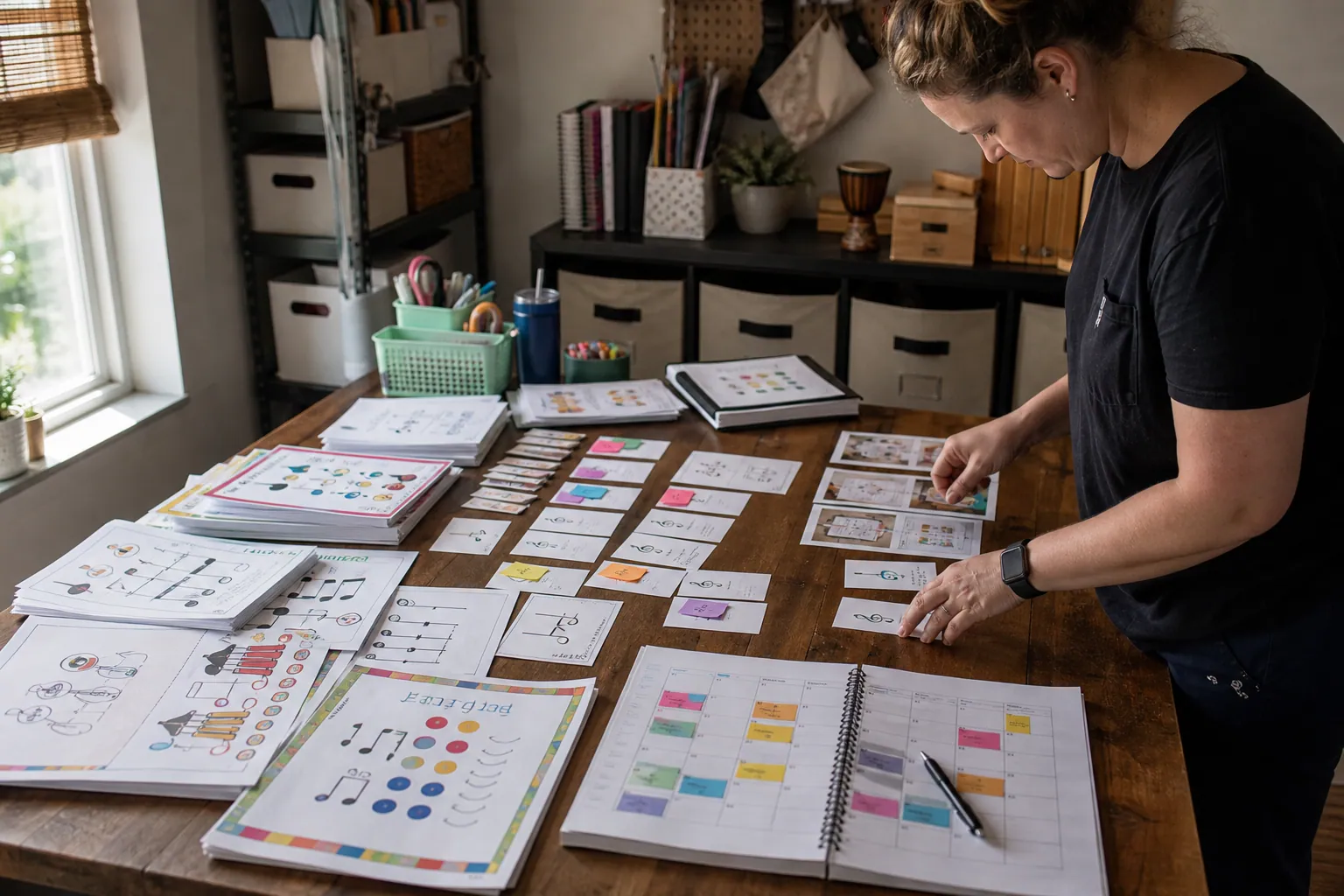
Case Study: How an Elementary Music Printable Shop Turned Pinterest Freebies Into Bundle Sales
A composite teardown of a music printable seller that stopped sending every Pinterest visitor to one freebie and built intent-led paths to bundle sales.

The October Pinterest Funnel for Royal Icing Template Shops
Turn holiday cookie-planning searches into template sales with a two-lane Pinterest funnel for ready buyers and beginner decorators.

The Collection-to-Enrollment Pinterest Desk for Surface Pattern Design Courses
A copyable Pinterest content operation for surface pattern design educators who want sketchbook searches to become useful email subscribers and course enrollments.

Case Study: How a Podcasting Course Creator Turned Planning Pins Into Evergreen Enrollments
A composite teardown of a podcasting educator who replaced aesthetic creator Pins with planning resources that attracted more course-ready subscribers and buyers.

Case Study: How Event Florist Proposal Software Turned Pinterest Templates Into Activated Trials
A composite teardown of an event florist SaaS team that replaced bridal-inspiration Pins with pricing, recipe, and proposal resources that attracted stronger trials.

Case Study: How a Merino Sock Shop Found Its Best Pinterest Pins by Tracking Net Revenue
A composite teardown of a merino sock shop that stopped treating saves as success and used UTMs, return reasons, and 21-day cohorts to identify Pinterest Pins that sold.