Case Study: How an Elementary Music Printable Shop Turned Pinterest Freebies Into Bundle Sales
A composite teardown of a music printable seller that stopped sending every Pinterest visitor to one freebie and built intent-led paths to bundle sales.
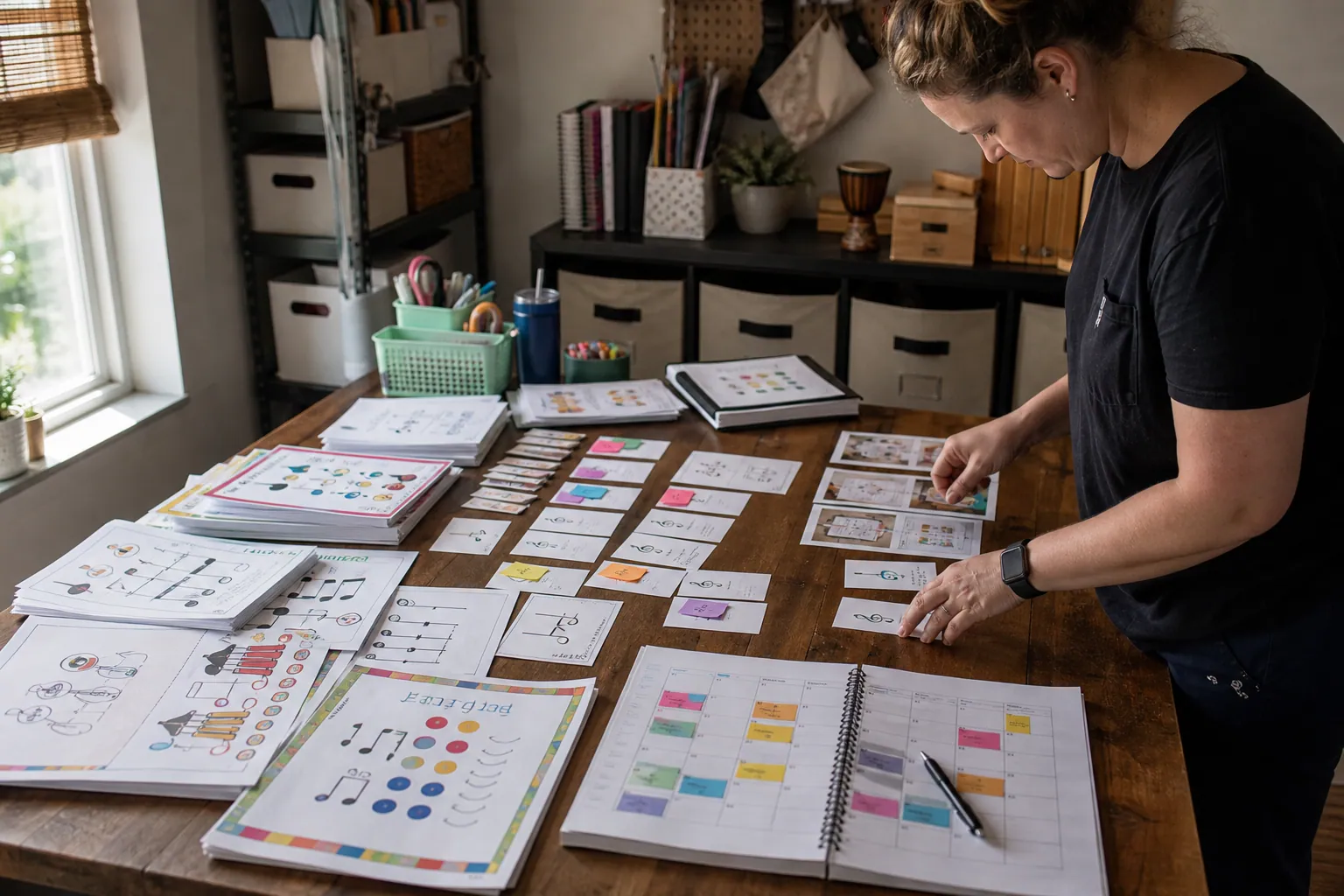
A teacher searching Pinterest for a rhythm game at 9 p.m. has a different job than one building three days of emergency sub plans. Treating both visitors as identical is how a digital resource shop collects plenty of email addresses—and struggles to sell.
This composite case study follows an elementary music printable shop with 34 products: rhythm centers, music-sub plans, concert rehearsal activities, and grade-band bundles. The figures are rounded and illustrative, but the decisions reflect a common issue for sellers relying on Pinterest discovery.
The baseline: a good freebie doing the wrong job
The shop had one popular opt-in: a free printable rhythm game. Every Pin, regardless of topic, linked to that page.
That approach looked healthy in surface-level reporting. Saves climbed, and the email list grew. Revenue did not keep pace.
| 90-day baseline | Result | What it suggested |
|---|---|---|
| Pinterest outbound clicks | 1,260 | The account could earn discovery traffic |
| Freebie opt-ins | 292 | The offer was attractive enough to download |
| Paid orders attributed to Pinterest | 15 | Most visitors did not see a relevant next purchase |
| Average order value | $18.50 | Mostly single-resource purchases |
| Revenue per 100 outbound clicks | $22 | Traffic was inexpensive in time, but under-monetized |
The initial reaction was to write more emails. That would not solve the real mismatch.
The free rhythm game was useful for a teacher seeking an activity for tomorrow. It was much less useful to someone searching for elementary music sub plans or winter concert rehearsal activities. Those visitors downloaded the game, filed it away, and had no reason to buy the shop’s more relevant resource next.
The shop was using one lead magnet to serve at least three different Pinterest search-intent moments.
The diagnosis came from the Pins, not the email dashboard
The operator exported the top Pins and labeled each by the problem a teacher was trying to solve.
Three clusters appeared:
- Immediate classroom activity: “rhythm games for elementary music,” “music centers for third grade,” and “no-prep music activities.”
- Coverage problem: “music sub plans,” “emergency sub plans elementary,” and “music teacher absent lesson plans.”
- Event preparation: “winter concert rehearsal ideas,” “elementary choir warm-ups,” and “concert behavior activities.”
The original account sent all three groups to a generic freebie page. The rebuild started with a simpler rule:
A Pin should answer the searcher’s next decision, not merely collect their email address.
That led to three destination paths.
| Pinterest search cluster | First destination | Primary business goal |
|---|---|---|
| Rhythm games and music centers | Grade-specific paid bundle page | Direct sale |
| Music sub plans | Free one-page sub-plan setup checklist | Email sale into a sub-plan kit |
| Concert rehearsal activities | Free rehearsal countdown worksheet | Email sale into a concert resource collection |
The direct-sale path mattered. A teacher who types “rhythm games for grades 3–5 printable” may already be ready to purchase. Forcing that person through a free download adds friction and can make the paid bundle harder to find.
What the shop changed in 18 working days
The changes were modest. No new 40-product catalog. No daily publishing target. The shop rebuilt its existing assets around clearer handoffs.
1. It made the free offers narrower
The generic rhythm game was replaced as the universal entry point. Two new opt-ins were created from existing material:
- Music sub-plan setup checklist: a one-page guide for leaving room routines, technology instructions, and a low-prep activity list for a substitute.
- Concert rehearsal countdown: a printable planning sheet for choosing rehearsal priorities in the final two weeks before a performance.
Neither free resource attempted to be a complete lesson library. Each helped with one small planning decision and naturally exposed the gap the paid product filled.
For example, the sub-plan checklist included a section called “What your substitute still needs.” The paid offer was the complete, print-ready music sub-plan kit with editable notes, activities, and grade-band options.
That distinction protects the value of the paid product. A lead magnet should create progress, not accidentally give away the entire reason to buy.
2. It rebuilt landing pages around classroom context
Each destination page answered four questions within the first screen:
- Which grades does this fit?
- How much preparation is required?
- What will students actually do?
- Is this a free planning tool or a paid printable resource?
The paid rhythm-bundle page also showed three preview pages, the file format, print permissions, and a simple “best for” label. Instead of one broad collection, it offered separate buttons for K–2 and grades 3–5.
This reduced a quiet conversion blocker: teachers were clicking through but could not quickly tell whether a product matched their classroom.
These are the practical details that make Pinterest landing pages convert better than a generic storefront category.
3. It separated Pin families by the promise made
The operator created four to six Pins for each destination, but each family stayed faithful to one search idea.
Examples:
| Pin title | Visual angle | Destination |
|---|---|---|
| 5-Minute Rhythm Games for Grades 3–5 | Three printable cards shown in use | Rhythm bundle page |
| What to Leave for a Music Substitute | Checklist-style graphic | Sub-plan checklist opt-in |
| A Two-Week Elementary Concert Rehearsal Plan | Calendar preview with milestone labels | Concert countdown opt-in |
| No-Prep Music Centers for Rainy Recess Days | Classroom station mockup | K–2 center bundle page |
The Pinterest pin titles used the language a teacher would actually search. The Pinterest descriptions added grade range, prep level, and a precise outcome rather than repeating a list of keywords.
The team deliberately avoided titles such as “Free Music Teacher Resources.” Those broad phrases attracted people who wanted anything free, not teachers seeking a particular resource or planning solution.
4. It wrote two short email sequences instead of one long newsletter
The old sequence delivered the freebie and then sent generic product announcements. The revised emails matched the opt-in source.
Sub-plan checklist sequence
- Email 0: Deliver the checklist and suggest one way to use it before an absence.
- Email 2: Explain how to make a music-room substitute plan usable for a non-music teacher.
- Email 4: Show a preview of the paid kit and offer the relevant grade-band version.
- Email 7: Present a bundle option for buyers who also need emergency centers.
Concert countdown sequence
- Email 0: Deliver the worksheet with a reminder to choose one rehearsal focus per day.
- Email 3: Share a rehearsal-order example for a short elementary performance.
- Email 6: Offer the concert activity collection, including behavior prompts and warm-ups.
There was no manufactured deadline. The products solved recurring school-year problems, so the emails emphasized fit and utility over urgency.
5. It tagged every route before publishing
The shop used a distinct Pinterest UTM tracking label for each intent group and creative version. A naming pattern might look like this:
pinterest / organic / music-subplans / checklist-v2
That made it possible to compare a sub-plan Pin with a rhythm-center Pin without guessing from a blended traffic report.
For a small team managing several creative versions and seasonal publishing dates, a tool such as PinPinMe can provide a lighter publishing layer for keeping Pin destinations, campaign labels, and queued assets organized.
What changed after the rebuild
The operator reviewed the next six weeks as one cohort, allowing time for teachers to save, return, download, and purchase. Clicks declined slightly because broad free-resource Pins were no longer the main acquisition tactic. Sales improved.
| Six-week comparison | Before rebuild | After rebuild |
|---|---|---|
| Pinterest outbound clicks | 1,260 | 1,050 |
| Opt-ins | 292 | 162 |
| Paid orders | 15 | 42 |
| Average order value | $18.50 | $21.70 |
| Revenue per 100 outbound clicks | $22 | $87 |
| Orders from bundles | 3 | 19 |
The important signal was not that fewer people joined the email list. It was that the remaining subscribers had a clearer reason to receive the next email—and direct buyers could purchase without detouring through a freebie.
The operator also found that the sub-plan checklist was not the highest-volume opt-in. It was the highest-value one. Teachers who downloaded it were more likely to buy within seven days because the need was immediate and specific.
That insight changed the content calendar. The team made fewer broad inspiration Pins and more Pins tied to concrete teaching moments: substitute coverage, seasonal concert planning, indoor recess, and grade-level rhythm practice.
The funnel decisions worth copying
This case is not an argument that every Pinterest visitor needs an email sequence. It is an argument for matching the route to the decision already in progress.
Send high-intent searchers to a product page
Use a direct path when the phrase includes the thing you sell and enough qualifying detail:
- “printable rhythm games grades 3–5”
- “elementary music sub plans PDF”
- “concert rehearsal activities for kids”
A product page should then make grade range, file type, preview, license, and lesson outcome easy to verify.
Use a lead magnet when the buyer has a planning problem first
An opt-in is better suited to questions such as:
- “what to leave for a music substitute”
- “how to plan an elementary concert rehearsal”
- “music classroom setup checklist”
The free item should solve one preliminary task and point honestly to the paid resource that handles implementation.
Segment with the smallest useful question
Do not ask a new subscriber for their school size, district, budget, role, teaching style, and favorite composer. Ask one question that changes what you recommend.
For this shop, “Which grades do you teach?” was enough to prevent K–2 teachers from receiving promotions for a grades 3–5 rhythm bundle.
Judge Pins by earned revenue, not list growth alone
Track these figures by campaign and destination:
- Pinterest outbound clicks
- landing-page conversion rate
- opt-in rate, where applicable
- direct paid orders
- email-assisted paid orders within 7, 14, and 30 days
- average order value
- revenue per 100 outbound clicks
- refund or support requests caused by grade-level mismatch
Pinterest saves can still indicate useful creative resonance. They should not be the deciding metric when the shop’s goal is bundle revenue.
A quick audit for printable sellers
Pull your 20 most-clicked Pins and put each in one of these columns:
| If the Pin promises… | It should usually link to… |
|---|---|
| A specific printable activity | A product or grade-specific bundle page |
| A planning checklist or decision aid | A tightly related opt-in page |
| A technique explanation | A short teaching page with a relevant paid next step |
| Broad classroom inspiration | A curated collection only if it has a clear buying route |
Then look for the warning sign this shop had: multiple very different Pinterest search intents leading to the same free download.
If you find it, do not start by making more Pins. First create a better next page for the visitors you already have. That is often the fastest route from Pinterest discovery to meaningful digital-product revenue.

Strategy Memo: Build a Pinterest Revenue Ladder for Chicken Coop Plan Sellers
Turn coop-size, winter ventilation, and predator-control searches into plan sales without forcing every Pinterest visitor into the same email funnel.

The October Pinterest Funnel for Royal Icing Template Shops
Turn holiday cookie-planning searches into template sales with a two-lane Pinterest funnel for ready buyers and beginner decorators.

The Collection-to-Enrollment Pinterest Desk for Surface Pattern Design Courses
A copyable Pinterest content operation for surface pattern design educators who want sketchbook searches to become useful email subscribers and course enrollments.

The Lean Pinterest Tool Stack for Printable Party Game Shops Before Holiday Hosting
A practical Pinterest content blueprint for printable party game shops: choose the right tools, batch seasonal Pins, prevent wrong-link errors, and maintain winners.

Strategy Memo: Pinterest for Rain Boot Shops Before Wet-Weather Season
Use fit confidence, weather-specific collections, and practical outfit content to turn Pinterest fall planning into rain boot orders with fewer avoidable returns.

Case Study: A Cottage Food Course’s Pinterest Shift From Recipe Saves to Enrollments
A composite teardown of a cottage food educator who replaced recipe-heavy Pins with compliance, pricing, and preorder content that produced more course-ready leads.