Which Pinterest Report Should a Fruit Tree Nursery Trust Before Preorders?
Late-summer Pinterest clicks often become bare-root orders months later. Compare five reporting models and build a scorecard that protects inventory decisions.

A fruit tree nursery has an attribution problem that most ecommerce brands do not.
A customer may save a Pin for “dwarf apple trees for small yards” in August, compare rootstocks in October, join an availability list in November, and reserve two pollination-compatible trees when preorders open. If the team judges Pinterest only by this week’s Shopify revenue, it will conclude that planning content failed precisely when it is creating next season’s demand.
The opposite mistake is just as expensive: treating saves as proof that a variety, guide, or Pinterest product pin deserves more inventory.
For bare-root preorders, use reporting that separates early planning interest from reservation-ready demand. The goal is not a perfect attribution number. It is a repeatable way to make better calls on content, preorder merchandising, and stock.
The calendar changes what “good” looks like
A nursery’s typical Pinterest visitor is not always ready to buy. They may still need to answer questions such as:
- Will this tree thrive in my climate?
- Do I need a second apple variety for pollination?
- Is a dwarf tree actually small enough for my patio or suburban yard?
- Can I plant bare-root trees in my region?
- Which varieties are available on the rootstock I need?
That makes a direct, same-session order a valuable signal—but not the only one worth measuring.
For an August-to-January preorder period, reporting needs two speeds:
- Fast signals that help the team improve Pins and pages this month.
- Mature revenue signals that show which search topics create reservations over 60 to 120 days.
Trying to use one number for both jobs causes bad decisions. A pollination guide should not be killed after seven days because it has fewer orders than a direct “shop dwarf apple trees” Pin. Its job may be to earn the first qualified visit that later turns into a multi-tree order.
Five ways to report on Pinterest preorder demand
Each method answers a different question. The right setup for most small nurseries is a combination, not a winner-take-all choice.
| Reporting approach | What it answers well | How quickly it helps | Main blind spot | Best use |
|---|---|---|---|---|
| Pinterest Analytics | Which topics, formats, and Pinterest search intent earn distribution, saves, and outbound clicks? | Days | It cannot prove preorder revenue on its own. | Creative and Pinterest SEO decisions |
| Store or GA4 last-click reporting | Which Pinterest sessions produce an immediate add-to-cart, reservation, or sale? | Days to weeks | It undervalues people who return through email, direct traffic, or another device. | Landing-page and checkout diagnosis |
| UTM-based click cohorts | What do visitors who first arrived from Pinterest do over 30, 60, or 90 days? | Weeks to months | Requires clean tagging and a way to preserve source data. | Budget and content investment decisions |
| Preorder-intent scoring | Are Pinterest visitors taking actions that historically precede a reservation? | Days | It is a proxy, not revenue. | In-season optimization before orders mature |
| Post-purchase source question | Did buyers remember Pinterest as part of their research? | At order time | Memory is imperfect, and response rates are incomplete. | A reality check on undercounted influence |
1. Pinterest Analytics: use it to choose topics, not declare ROI
Pinterest Analytics is where a nursery should look for early signs of relevance:
- outbound clicks by Pin and board
- saves relative to impressions
- search-led topics that keep earning clicks after publication
- differences between product Pins and guide Pins
For example, a Pin called “Best dwarf apple trees for small gardens” may earn fewer impressions than a broad backyard-orchard image but generate a much higher outbound click rate. That is a useful finding: small-garden buyers may be closer to a specific planting decision.
Do not turn that into an inventory forecast yet. A saved “apple tree pollination chart” can be useful research behavior, but it is not a preorder deposit.
Use native data for: choosing the next three Pin angles, rewriting Pinterest pin titles, and identifying pages that deserve a stronger call to action.
2. Last-click store reporting: use it to fix purchase friction
Shopify and GA4 reporting are valuable when a visitor clicks a Pin and acts right away. This view can reveal issues such as:
- a Pin promises dwarf trees but lands on a broad apple category
- the collection page hides preorder timing below the fold
- shipping-zone restrictions appear only at checkout
- a guide attracts readers but never gives them a logical next step
- a product page lacks pollination or rootstock information
Look at the path, not just the order count:
Pinterest session → product page → variety or rootstock detail → add to cart → preorder
If 200 Pinterest visitors reach a collection and only six view a product detail page, the problem is probably merchandising or page clarity. Publishing more Pins will not repair that gap.
Use last-click data for: checkout and collection-page decisions, especially once preorders are live.
3. UTM cohorts: the best method for deciding what to scale
A click cohort groups visitors by when they arrived from Pinterest, then follows their behavior over a fixed window.
For a nursery, a weekly cohort could include everyone who clicked Pinterest content from September 7–13. Review what that group did after 30, 60, and 90 days:
- availability-list signups
- planner or pollination-guide downloads
- preorder deposits
- total reserved revenue
- average number of trees per order
Use a stable UTM naming convention such as:
utm_source=pinterest
utm_medium=organic
utm_campaign=bare_root_preorder_2026
utm_content=apple_pollination_chart_v1
The campaign identifies the commercial season. The content field identifies the Pin family or creative angle. Do not put a vague label like summer_pin in utm_content; it will be useless when you compare results in January.
For email captures, pass the first landing-page source into a hidden field and save it on the subscriber record. When that person eventually reserves a tree with the same email address, you can connect the order to the original Pinterest cohort even if they returned from an email reminder.
A simple publishing log—whether it lives in a spreadsheet or PinPinMe—also prevents the familiar problem of not knowing which live Pin belongs to which UTM label.
Use cohorts for: deciding whether to create more content around small-space fruit trees, self-pollinating varieties, fall planting calendars, or specific crop categories.
4. Preorder-intent scoring: use it while you are waiting for revenue
Cohort revenue takes time. In the meantime, create a practical weighted score for actions that indicate real tree-shopping behavior.
Here is a starting point for one Pinterest session:
| Visitor action | Suggested points |
|---|---|
| Views a specific tree product page | 1 |
| Opens a hardiness, rootstock, or pollination detail | 2 |
| Joins a back-in-stock or preorder availability list | 3 |
| Adds a tree or compatible pair to cart | 4 |
| Completes a preorder reservation | 8 |
Then calculate:
Preorder Intent Score = total Pinterest-session points / Pinterest sessions × 100
The point values are not universal. A nursery with a strong email list may find that an availability signup predicts revenue well; another may find it produces many casual researchers. After one season, compare each action against eventual reservations and adjust the weights.
The important part is restraint: call this an intent score, not revenue or return on ad spend.
Use intent scoring for: deciding which Pin families and destination pages to improve during September and October.
5. A post-purchase question: use it to catch what software misses
Add one optional checkout or confirmation-survey question:
Where did you first find us?
Include concise options such as Pinterest, Google, Instagram, a friend, garden club, and other.
This will not replace tagged data. Buyers may forget, skip the question, or choose the source they used most recently. Still, if Pinterest-tagged orders look modest while a meaningful share of high-value multi-tree buyers mention Pinterest, you have evidence that last-click reporting is undercounting discovery.
Use the survey for: directional validation, not pin-by-pin optimization.
The reporting mix to use at each operating moment
A nursery does not need all five reports every morning.
Before preorders open: prioritize demand quality
In late summer and early fall, review:
- outbound clicks by Pin family
- preorder-intent score
- availability-list conversion rate
- product-detail views per Pinterest session
- the search terms and Pin themes producing qualified visits
At this stage, do not rank every piece of content by revenue. Direct product Pins, pollination explainers, and small-yard planning pages have different jobs.
During the preorder window: add revenue efficiency
Once inventory is reservable, add:
- preorder conversion rate by Pinterest landing page
- revenue per Pinterest session
- average items per Pinterest order
- compatible-pair attachment rate
- cohort revenue at 30 and 60 days
A Pin that produces fewer sessions but more two-tree orders may be more valuable than a high-click Pin for a single low-priced variety.
After inventory sells through: review the full season
When the preorder period ends, compare mature cohorts. Ask:
- Which Pinterest entry points produced the most reserved revenue per 100 sessions?
- Which guides generated the most email captures that later ordered?
- Which varieties received attention but could not be shipped to enough visitors’ regions?
- Did product Pins or planning guides contribute more first-touch visits?
- Did any content create demand for trees that were already constrained in supply?
That last question matters. Good Pinterest analytics should inform what you feature next year, not merely celebrate traffic that arrived after stock disappeared.
Run one clean 30-day content comparison
Do not test ten variables at once. For a nursery entering preorder season, compare three distinct buyer routes:
| Pin family | Example destination | Primary success measure | Secondary measure |
|---|---|---|---|
| Variety-shopping Pins | Dwarf apple tree collection | Preorder conversion rate | Revenue per session |
| Compatibility Pins | Apple pollination guide with linked pairs | Pair add-to-cart rate | Email capture rate |
| Constraint-solving Pins | “Fruit trees for small yards” guide | Preorder-intent score | Product-detail views per session |
Create three to five fresh Pins per family, with each family using its own utm_content value. Keep the destination page and offer stable for 30 days. Do not simultaneously change page copy, shipping thresholds, pricing, and visuals; otherwise you will not know what changed the result.
Review at two points:
- Day 14: outbound clicks, engaged sessions, intent score, and obvious landing-page leaks.
- Day 30: email captures, cart activity, reservations, and early cohort value.
Then let the same cohorts mature for 60 to 90 days before making broad decisions about what Pinterest is worth.
How to interpret common mismatches
High saves, weak outbound clicks
The Pin is probably helpful or aspirational but not urgent. Keep it if it supports brand discovery, but test a clearer next step: “Compare dwarf apple rootstocks” or “Check preorder availability by zone.”
Strong outbound clicks, low product-detail views
The Pin and landing page are mismatched. A guide visitor may not be ready for a category grid; a variety shopper may not want a 2,000-word orchard-planning article first.
Strong intent score, weak completed preorders
Look for a commercial obstacle: unclear reservation dates, unexpected shipping costs, unavailable rootstocks, limited regional shipping, or a mobile checkout issue.
Few clicks, unusually high revenue per session
This is often a scale candidate. Make more Pins around the same query, buyer constraint, and destination—not just more versions of the same design.
Early Pinterest revenue looks low, but surveys mention Pinterest often
Your reporting likely misses return visits. Strengthen first-party source capture on email forms and keep cohort reporting rather than relying entirely on last-click data.
Start with a report your team can actually maintain
The useful version is usually one weekly sheet, not a complicated dashboard.
Track these columns for each Pin family:
Pin family | destination | UTM content | publish dates | outbound clicks |
Pinterest sessions | product-detail views | availability signups |
intent score | carts | preorders | 30/60/90-day cohort revenue | notes
Every Friday, make only one decision from the sheet:
- scale a topic,
- repair a landing page,
- pause an inventory-mismatched Pin,
- or wait for the cohort to mature.
For bare-root fruit tree nurseries, patient measurement is not passive measurement. It is how you avoid dismissing valuable planning traffic too early—and how you stop letting attractive but non-commercial saves dictate next season’s inventory.

The Pinterest Margin Test Desk for Personalized Ornament Shops Before Q4
A practical Pinterest testing desk for personalized ornament sellers: map catalog inputs, test buyer intent, publish with discipline, and protect holiday profit.

Strategy Memo: Measure Pinterest’s 21-Day Sales Lag for Holiday Card Shops
Holiday card shoppers often save today and order after photo selection. Use a 21-day Pinterest measurement model to separate discovery value from empty traffic.

Strategy Memo: Which Pinterest Pins Actually Book Home Staging Consultations?
Home staging studios should test seller intent—not chase before-and-after saves. Compare four Pinterest routes, track qualified consults, and run a focused 30-day test.

Pinterest Preorder Analytics for Limited-Run Knitwear Brands
A practical operator guide for knitwear founders who need Pinterest to forecast real preorder demand—not just generate autumn capsule saves.
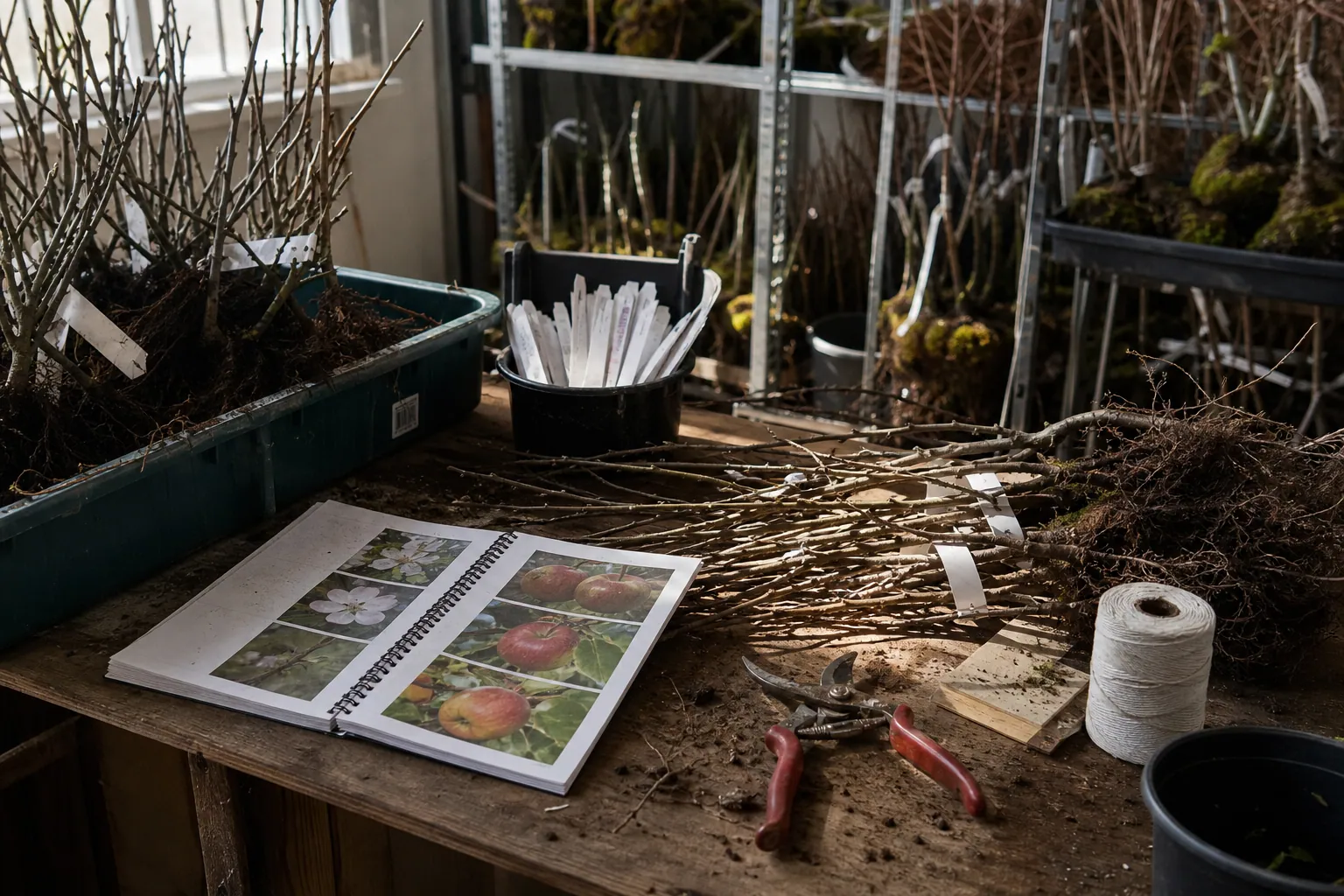
The AI Preorder Content Desk for Bare-Root Fruit Tree Nurseries
A practical AI-assisted Pinterest operating system for fruit tree nurseries that need accurate, inventory-aware preorder traffic before spring shipping.

Project Posts vs Plan Pages: What a Woodworking Plan Shop Should Link From Pinterest
Compare five Pinterest destinations for PDF woodworking plans—from direct product pages to cut lists—and choose the route that fits each searcher's build decision.