Which Pinterest Pins Earn a November Production Slot? A Testing Playbook for Paint-by-Number Kit Shops
A practical Pinterest testing routine for paint-by-number shops deciding which gift, beginner, and custom-photo Pins deserve scarce Q4 production capacity.
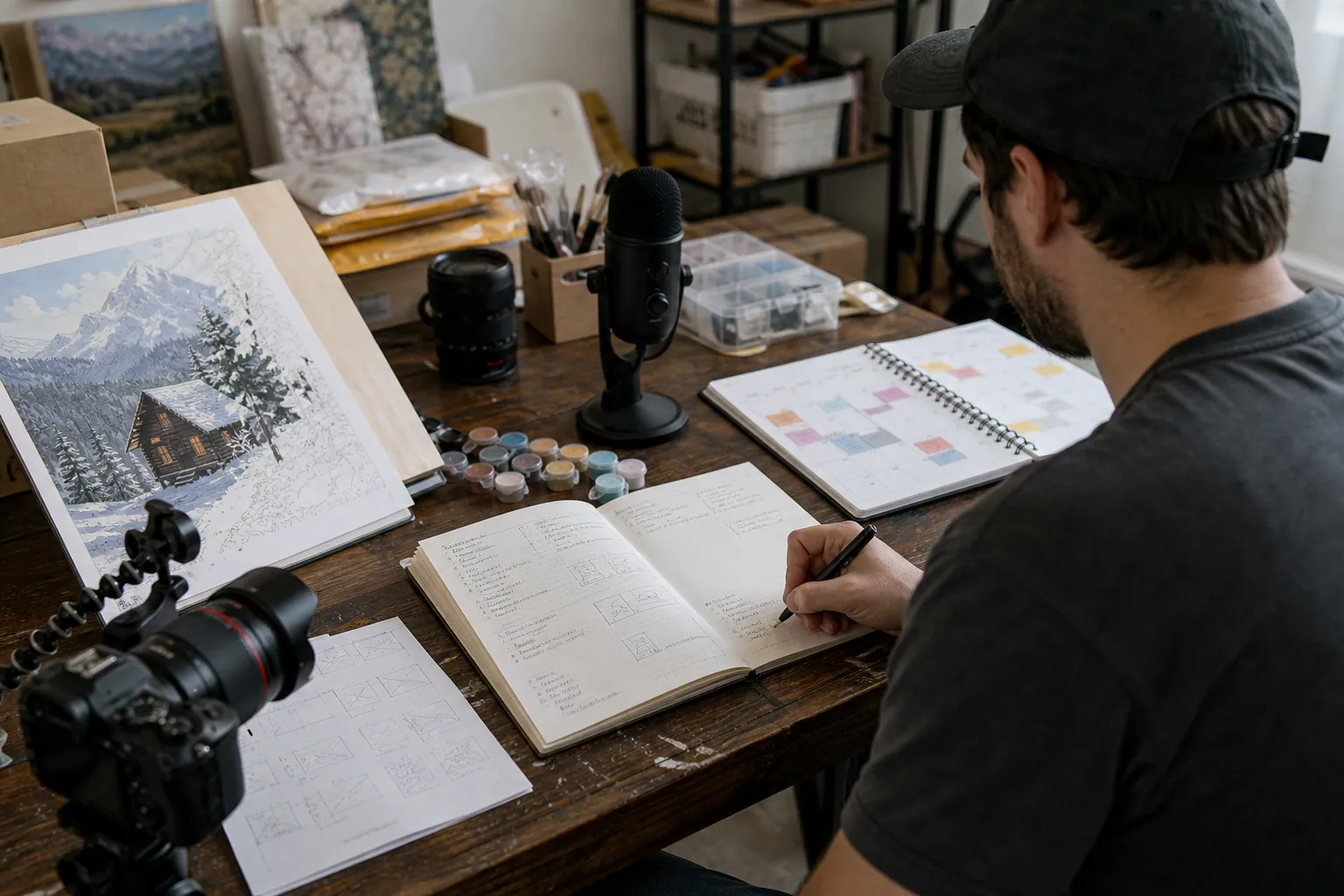
On November 8, a paint-by-number kit shop has a familiar Q4 problem: Pinterest is generating plenty of activity, but the production calendar is tightening.
The shop sells three things:
- Ready-to-ship landscape and floral kits
- Beginner kits with larger sections and fewer paint colors
- Custom photo kits that require image review and manual setup
A Pin about cozy winter painting may earn thousands of saves. A custom-pet portrait Pin may earn fewer clicks but create high-value orders that consume the team’s last available personalization slots. A beginner gift Pin may quietly drive the most profitable ready-to-ship orders.
The operator’s question is not which Pin looks most popular. It is: which Pinterest route deserves a production slot, an inventory allocation, and another round of creative before holiday cutoffs?
This is an operator playbook for answering that question with evidence rather than saves alone.
Diagnose the gap between Pinterest activity and useful demand
Start with the last 30 days of Pinterest and store data. Do not begin by making new Pins. First, sort every meaningful Pin or Pin family into one of three intent groups:
| Intent group | Typical search or Pin angle | Best destination | Primary business signal |
|---|---|---|---|
| Gift buyer | Paint by number gift ideas, gifts for crafty adults | Gift collection with arrival guidance | Paid, on-time orders |
| First-time painter | Easy paint by number for beginners | Beginner-kit chooser or collection | Add-to-cart rate and first-kit sales |
| Personalized buyer | Custom paint by number from photo | Custom-kit page with photo rules and cutoff | Approved orders that fit production capacity |
A Pin family means several Pins built around one destination and one promise. For example, three creative variations can all lead to the same beginner kit collection:
- Large-section paint by number for a relaxing first project
- Beginner paint by number kits with numbered paint pots
- A screen-free winter hobby for adults who want an easy start
This grouping matters because single Pinterest Pins can have uneven distribution. A practical decision needs the combined result of a clear route, not a verdict on one design after three days.
Read the funnel in order
Use Pinterest analytics, site analytics, and order data together. Each tells a different part of the story.
| If you see this | Likely diagnosis | Check before changing creative |
|---|---|---|
| High saves, low Pinterest outbound clicks | The image is inspiration or reference material, not a shopping prompt | Does the title state an outcome, product type, or recipient? |
| Strong outbound clicks, weak product views | The Pin promise and Pinterest landing page do not match, or the page is slow | Check mobile load time, collection availability, and above-the-fold copy |
| Good product views, weak add-to-carts | The shopper needs more confidence | Show finished size, difficulty, paint count, delivery timing, and what is included |
| Good carts, weak paid orders | Friction is occurring after intent is established | Review shipping cost, gift cutoff language, discount logic, and checkout errors |
| Good revenue, late or refunded orders | The route may be damaging margin or fulfillment reliability | Separate gross sales from on-time, net contribution |
For Q4, add one field that many ecommerce dashboards omit: production-safe order.
A production-safe order is one that can be made and shipped by the promised date without overtime, unplanned outsourcing, or pushing out an existing customer. This is especially important for custom photo kits. Revenue from orders that force expensive rush handling is not equivalent to revenue from an in-stock beginner kit.
Build one scorecard everyone can read
Keep a simple spreadsheet where each row is a Pin family, not a single Pin. Include:
- Test name and hypothesis
- Intent group
- Pin titles and creative IDs
- Destination URL
- Publish dates
- Pinterest impressions, saves, and outbound clicks
- Pinterest sessions and product views
- Add-to-carts, checkouts, and paid orders
- Approved custom orders, if applicable
- Refunds, cancellations, and late shipments
- Net contribution per 100 Pinterest sessions
- Decision: continue, revise, pause, or scale
Use consistent Pinterest UTM tracking. A readable convention is enough:
utm_source=pinterest&utm_medium=organic&utm_campaign=2026_q4&utm_content=beginner_winter_v1
The utm_content value should identify the creative route, not contain a vague label such as newpin. When an order appears two weeks after a Pin click, this naming is what lets you identify the original promise.
For a direct ecommerce comparison, calculate:
net contribution per 100 Pinterest sessions = (paid revenue - refunds - product cost - packing cost - shipping subsidy - discount cost - remake reserve) / Pinterest sessions × 100
If you use paid promotion, subtract ad spend too. This metric will often rank Pins differently from saves, click-through rate, or gross revenue.
The weekly testing rhythm for a lean Q4 team
The goal is not to test everything. It is to make one consequential decision every week while protecting stock and production capacity.
Monday: close the oldest cohort before reading the newest one
Review Pin families that have had time to convert. For gift and beginner kits, that might be 14 days. For custom photo kits, use a longer window if shoppers commonly need time to select and upload a photo.
Keep a 21-day cohort view alongside the seven-day view. A Pinterest visitor may save a Pin on November 8, return directly on November 17, and order after asking a family member for a photo. Last-click reporting can miss the original discovery.
Ask three questions:
- Which route produced the most production-safe orders?
- Which route produced the highest net contribution per 100 Pinterest sessions?
- Which route has enough inventory or personalization capacity to scale this week?
Do not call a winner simply because it had the highest conversion rate from six clicks. Set a traffic threshold that reflects your normal volume. A small shop may need to combine related Pins at the route level before making a decision.
Tuesday: write one test brief
Every test should answer one business question. Good tests are narrow enough to interpret.
| Test question | Hold steady | Change |
|---|---|---|
| Do recipient-led gift Pins bring more completed orders than activity-led Pins? | Same gift collection, product mix, format, and publish week | Title, text overlay, and opening image |
| Does a beginner chooser outperform a direct collection for new painters? | Same beginner products and Pin topic | Destination path |
| Should custom photo kits receive more Q4 attention? | Same custom product and cutoff | Pin promise: pet portrait, family photo, or memorial gift |
Write the expected decision before publishing. For example: if beginner Pins generate a lower average order value but at least 25% more net contribution per 100 sessions than gift Pins, allocate next week’s design time to beginner creative and protect the relevant inventory.
Wednesday: make a small, controlled Pin batch
Create two or three fresh Pins for the chosen question. Keep the destination accurate and the product facts stable.
Do not change the image, headline, offer, destination, and board all at once. That creates content, SEO, and landing-page tests simultaneously—and teaches you almost nothing.
Check every Pin against this Q4 quality gate:
- Is the featured kit in stock or clearly marked as preorder?
- Does the finished image represent the actual kit difficulty?
- Does the Pin mention a delivery or customization claim that the page cannot support?
- Does the destination open to the exact collection or product promised?
- Is the UTM value unique and readable?
A scheduling queue can reduce the mechanical work here. If it is useful for your team, PinPinMe can help keep approved batches moving while the scorecard remains the source of decision-making.
Thursday: publish without flooding one board
Publish the variants across relevant boards, but do not mistake board placement for a test variable unless you are explicitly testing boards. Use a stable set of boards for the duration of the experiment.
For a paint-by-number shop, useful board themes might include:
- Beginner painting projects
- Creative gifts for adults
- Winter indoor hobbies
- Personalized gifts from photos
Your Pinterest catalog strategy can continue running in parallel through Pinterest product Pins. Treat that catalog traffic as a baseline for product discovery. The editorial Pin families should be tested for the extra value they add: better buyer education, more qualified clicks, or higher-margin orders.
Friday: inspect operational risk, not performance winners
Five minutes is enough to catch preventable problems:
- A custom-kit Pin is still live after the personalization cutoff
- A gift collection contains sold-out kits
- A winning Pin lands on a generic homepage
- A product image was updated but the Pin still shows an old version
- A discount code reduces margin below the test target
Pause inaccurate Pins immediately. Do not wait for the Monday report to correct a fulfillment problem.
Three November tests worth running
1. Gift recipient versus creative outcome
A gift Pin can lead with the recipient:
Gift for the adult who always starts creative projects after the holidays
Or it can lead with the activity:
A relaxing paint-by-number kit for quiet winter evenings
Send both to the same ready-to-ship gift collection. Keep price range, shipping guidance, and featured kits the same.
Measure: outbound click-through rate, paid orders per 100 sessions, and on-time order rate.
The recipient-led version may drive more gift-ready traffic. The activity-led version may attract self-buyers who convert after the holiday. Both can be valuable, but they should not share one generic UTM label.
2. Beginner reassurance versus finished-art aspiration
A dramatic finished landscape can earn saves from experienced hobbyists. A close-up showing broad numbered sections, paint pots, and a simple instruction card may produce fewer saves but more first-kit orders.
Test two visual treatments for the same beginner kit collection:
- Finished-art aspiration: a framed painting in a winter living room
- Process reassurance: a hand painting a large, clearly numbered section
Measure: product views per session, add-to-cart rate, and refund or support-request rate.
If process reassurance wins on carts and produces fewer questions about difficulty, it may be the better commercial Pin even with a lower save rate.
3. Custom photo kit demand versus capacity
Custom photo kits are not a normal product test because availability is constrained by labor.
Compare two photo-led promises:
- Turn a favorite dog photo into a paint-by-number kit
- Make a family photo into a meaningful keepsake project
Send both to a page that clearly states photo requirements, proof process, production time, and the last order date. Track photo uploads and approved orders, not only checkout starts.
Measure: approved orders per 100 sessions, average contribution per order, remake rate, and remaining production slots.
If the pet route earns half as many orders but has cleaner photo submissions and fewer revisions, it may be the more scalable route. Once personalization capacity is close to full, redirect new Pins toward ready-to-ship kits rather than continuing to generate demand you cannot fulfill well.
Mistakes that make Pinterest tests misleading
Treating every save as a future sale
Saves can indicate relevance, but a saved finished-art image may be an idea for later, not an intent to buy a kit today. Keep saves in the report; do not make them the deciding metric.
Declaring a winner after a weekend
Pinterest distribution and buyer behavior are uneven. A Pin with early reach may not have had enough time for its audience to convert. Review early signals, but make scale-or-pause decisions from a defined cohort window.
Comparing different products as though the Pin is the only variable
A $28 ready-to-ship kit and a $72 custom kit have different conversion rates, margins, support needs, and production constraints. Compare them with contribution and capacity metrics, not conversion rate alone.
Sending every Pin to one collection page
Pinterest landing pages should fulfill the promise made in the Pin. A beginner needs a beginner collection; a custom-photo shopper needs upload guidance; a gift buyer needs in-stock options and arrival confidence.
Letting a winning Pin outlive its offer
Holiday cutoffs, stock levels, and personalization capacity change fast. Create an expiry date in your ledger for every time-sensitive Pin family. A successful Pin with stale delivery language can become expensive customer-service work.
Short operating checklist
Before next week’s Pinterest batch, confirm:
- One test question is tied to a real inventory or production decision.
- Each Pin family has a distinct, readable UTM value.
- The destination matches the specific Pin promise.
- You are reviewing 14- and 21-day cohorts, not only recent clicks.
- Pinterest outbound clicks are compared with site sessions and paid orders.
- Net contribution includes refunds, shipping subsidies, and personalization risk.
- Custom-kit demand is capped by remaining production slots.
- The team has chosen one action: scale, revise, pause, or redirect.
A good Pinterest testing routine does not prove that one Pin is universally best. It tells a shop what to publish, stock, and prioritize next—while there is still time to deliver on the promise.

Case Study: How a Jigsaw Puzzle Shop Found the Pinterest Pins That Sold Holiday Gifts
A composite Pinterest analytics teardown for puzzle shops: separate cozy saves from gift-ready traffic, test landing paths, and scale Pins by net sales per click.

Case Study: How a Handmade Tile Shop Found the Pinterest Pins That Led to Sample Kits—and Projects
A composite teardown of a handmade tile retailer that stopped celebrating saves and used sample, quote, and deposit data to find its highest-value Pinterest routes.

Case Study: How a Permanent Jewelry Studio Found the Pinterest Pins That Booked Private Parties
A composite teardown of a permanent jewelry studio that separated pop-up traffic from party leads and used booking-quality data to choose which Pinterest Pins to scale.
The Contract-Value Pinterest Operator Playbook for Hood Cleaning Companies
A practical testing routine for hood cleaning firms that need Pinterest traffic to create service-area-qualified maintenance contracts—not generic restaurant cleaning questions.
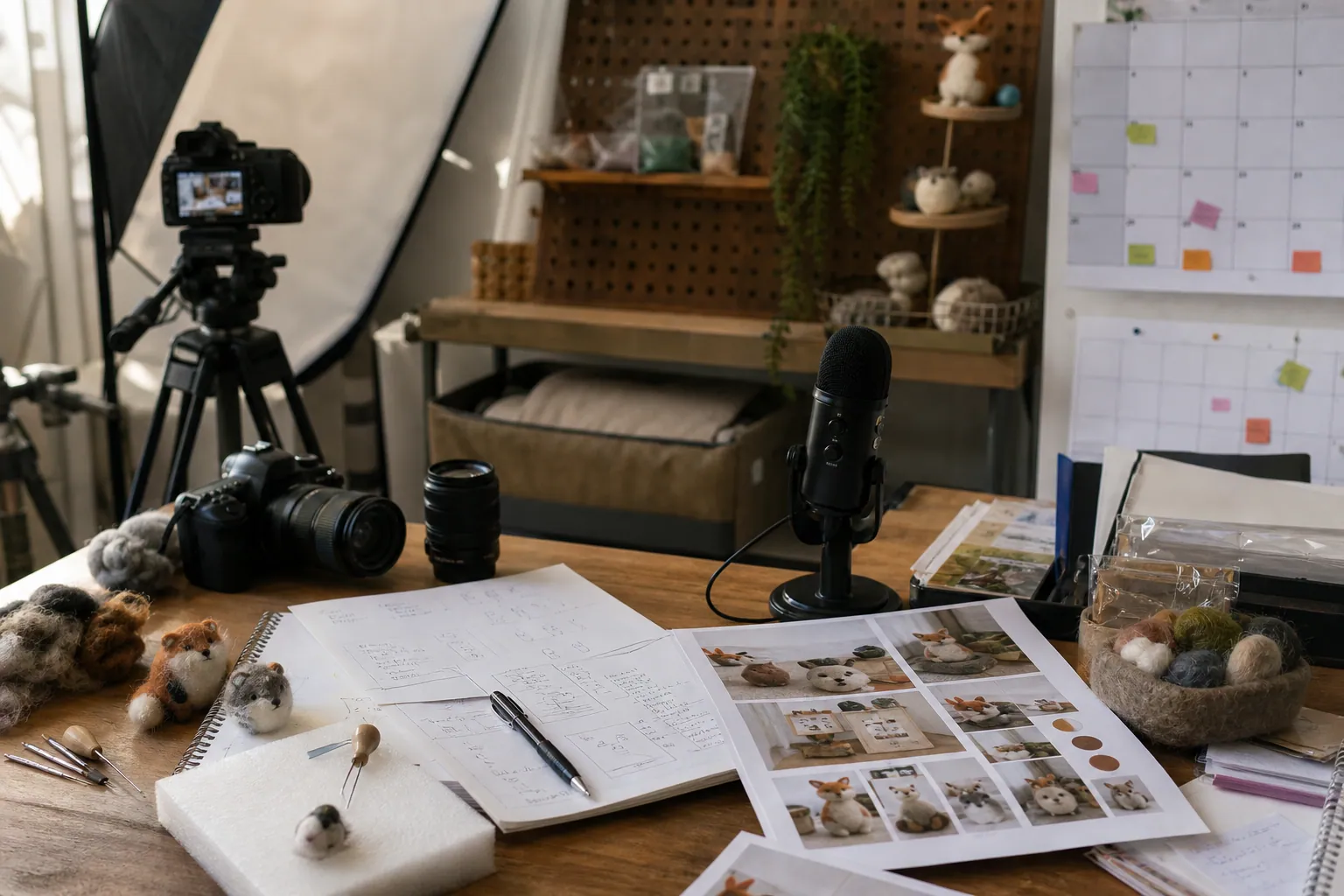
Case Study: How a Needle-Felting Kit Shop Used AI to Make Gift-Ready Pinterest Pins Without Inventing Product Claims
A composite teardown of a craft-kit retailer that used AI for faster Pinterest production while protecting product accuracy, inventory, and beginner-buyer trust.

The Gift-Deadline Pinterest Operator Playbook for Loose-Leaf Tea Shops
A practical November Pinterest routine for tea retailers: turn gifting, sampler, and hosting searches into in-stock collection visits without creating fulfillment problems.