Strategy Memo: AI Pinterest Triage for Vintage Furniture Sellers
A 30-day plan for vintage furniture sellers using AI to turn fast-moving, one-of-a-kind inventory into accurate Pinterest discovery without leaving shoppers on sold-out listings.

The strategic thesis
For a vintage furniture seller, the best use of AI on Pinterest is not generating more Pins for every item that arrives. It is deciding which pieces deserve item-level promotion, which should support durable collection pages, and which are too poorly documented to publish at all.
That distinction matters when a walnut dresser can sell in 48 hours, while Pinterest discovery may build over several weeks. Pinning every new SKU creates a trail of dead destinations. Publishing only broad inspiration protects links but loses the urgency and specificity that makes one-of-a-kind inventory compelling.
The practical answer is a two-speed approach:
- Use AI to triage intake information into buyer-intent themes and Pin briefs.
- Send short-lived item Pins to live listings, but send longer-lived discovery Pins to maintained in-stock collections or useful buying guides.
AI accelerates the clerical and editorial work. A human remains responsible for provenance, material claims, measurements, condition, pricing, and final approval.
Four ways to handle new inventory
A shop receiving 25 to 80 pieces each month usually falls into one of these approaches.
| Approach | What happens | Advantage | Tradeoff |
|---|---|---|---|
| Pin every new listing | Each SKU gets a title, description, and direct product Pin | Maximum item visibility | Sold links accumulate quickly; weak photos and incomplete listings get promoted anyway |
| Publish room inspiration only | Pins point to evergreen articles such as “warm wood living room ideas” | Durable destinations and easy maintenance | The account can drift into vague inspiration traffic with little inventory intent |
| Have AI write every caption | A model drafts copy from listing fields, then posts at volume | Fast production | Copy can invent an era, wood species, or condition detail; volume hides poor merchandising decisions |
| AI-assisted inventory triage | AI labels each item, recommends a route, and creates a reviewable brief | Balances speed, accuracy, and destination durability | Requires disciplined intake fields and a weekly inventory check |
The fourth option is the strongest fit for a small vintage dealer. It treats Pinterest as part search engine, part long-consideration discovery channel—not as an automated classifieds feed.
The decision rule: promote the decision, not just the object
A single listing deserves a direct Pin when it has all four:
- A clear hero image that shows scale, not just a close-up.
- Verified dimensions, condition notes, delivery or pickup terms, and a live price.
- A recognizable planning use, such as a narrow entryway console, 84-inch dining table, or low media credenza.
- Enough margin and availability to make promotion worthwhile.
A durable collection or guide Pin is better when the buyer is still deciding:
- “How deep should a dining table be in a narrow room?”
- “Vintage wood nightstands for a small bedroom”
- “What to check before buying a used leather chair”
- “How to mix vintage dining chairs without a matched set”
In those cases, link to a live collection, a size guide, or a buying article that is maintained after individual pieces sell. Good Pinterest landing pages make the next step clear: browse in-stock inventory, request local delivery, or join a new-arrivals list.
What AI should receive—and what it must never infer
Most unusable AI copy begins with unusable inputs. Before asking for a Pin brief, create an intake record for every candidate item.
Required intake fields
| Field | Why it matters on Pinterest |
|---|---|
| Internal SKU and inventory status | Lets the team stop promotion when an item is on hold or sold |
| Item type and functional use | Helps match searches such as “storage bench for entryway” rather than broad decor terms |
| Exact measurements | Supports scale-led searches and prevents misleading copy |
| Verified material and construction | Keeps descriptions accurate |
| Documented era or maker, if known | Prevents AI from turning a stylistic resemblance into a provenance claim |
| Condition notes | Lets shoppers self-qualify before clicking |
| Delivery area, freight, or pickup details | Essential for a local or high-ticket purchase |
| Hero image and one detail image | Gives a designer enough visual evidence to make a useful Pin |
| Destination type | Direct listing, in-stock collection, buying guide, or email waitlist |
Do not give an AI model a photo and ask it to “identify this vintage piece.” It may sound confident while being wrong. A teak-looking veneer is not teak. “Mid-century style” is not a documented 1960s piece. “Excellent condition” is not a substitute for a note about veneer wear, a repair, or a missing pull.
Set three non-negotiable rules in the prompt:
- State only facts supplied in the intake record.
- Use “style” only when the team has chosen that merchandising language; never use it as proof of age or origin.
- If a fact is missing, write
[VERIFY]instead of guessing.
This guardrail matters more than elegant copy. It protects trust, reduces corrections, and prevents a polished Pin from creating a disappointing site visit.
The recommended triage model
Create four labels that AI can assign from the intake record. The label determines the Pin route before a designer opens Canva.
1. Direct-listing candidate
Use for exceptional, well-documented pieces with enough inventory runway to justify promotion.
Example: A 72-inch oak sideboard with verified dimensions, six clear photos, nationwide freight, and a strong price point.
AI output should include:
- One search-led Pin title
- One room-planning title
- A concise description based only on verified fields
- A direct listing destination
- A “recheck when sold” date
2. Collection candidate
Use for common shopping categories where a visitor should see multiple live choices.
Example: Instead of sending “vintage nightstand ideas” traffic to one fragile listing, send it to an in-stock nightstands collection with filters for width, wood tone, and delivery eligibility.
This route usually has a longer useful life and makes inventory substitutions possible.
3. Guide candidate
Use when the piece illustrates a decision people make before buying.
A scratched-but-photogenic farm table might not be the best item to promote directly. It can still support a guide called “How to measure a dining table for a banquette,” with current tables listed below the advice.
Guide Pins help build Pinterest SEO around room constraints, furniture scale, care, and buying questions. They should not become generic mood boards. The page still needs a clear route to shop.
4. Do-not-promote yet
Use for pieces with missing measurements, weak imagery, uncertain attribution, unclear delivery terms, or an item already likely to sell through an existing customer list.
This is a valuable label, not a failure. It prevents the team from spending design time on traffic that will lead nowhere.
A practical AI brief for one piece
Here is a deliberately narrow brief for a vintage dealer. Notice that it asks AI to organize verified information, not create an invented story.
Task: Classify this inventory record as Direct Listing, Collection, Guide, or Do Not Promote Yet. Explain the decision in two bullets. Then draft two Pinterest Pin briefs.
Verified item facts: 1970s-style low oak credenza; maker unknown; 70 in. W × 18 in. D × 26 in. H; oak veneer over engineered wood; sliding doors; one small veneer chip on rear edge; available for pickup in Portland or regional white-glove delivery; live inventory status; product page is active.
Approved buyer themes: low media console, record storage furniture, long credenza for living room, vintage-style storage.
Forbidden claims: solid oak, Danish, original 1970s, restored, pristine, handmade.
For each brief provide: search phrase, on-image headline under eight words, Pin title, description under 300 characters, required visual, destination type, and a fact that needs human review.
A good response might classify this as a direct-listing candidate and create a collection-led alternative for “long credenza for living room.” The human reviewer should then confirm that “1970s-style” is actually approved merchandising language, inspect the visual, and choose the relevant route.
The automation layer: status changes must outrank the publishing queue
Inventory status is the point where many Pinterest automation setups fail. A Pin queue cannot be treated as permanent once stock is one-of-a-kind.
At minimum, maintain these statuses:
LIVE: eligible for a direct listing destinationHOLD: remove from future direct-listing publicationSOLD: pause direct Pins and ensure the product page redirects or recommends alternativesEDITORIAL: may appear in a guide, but cannot be presented as available stock
A simple weekly reconciliation is enough at first: export the scheduled direct-listing Pins, match their SKUs against the inventory file, and pause any no-longer-live items. Once the team has reliable inputs, a scheduling and approval queue such as PinPinMe can keep approved briefs, destinations, and publication dates in one place.
Do not automate publishing straight from an AI draft. Automate the handoff, status check, naming convention, and queue preparation. Keep human approval between generated copy and a public Pin.
Metrics that reveal whether triage is working
Raw impressions are especially misleading for a seller with limited stock. Measure both production quality and commercial usefulness.
Production integrity metrics
| Metric | Formula | What it tells you |
|---|---|---|
| Complete intake rate | Eligible records with every required field ÷ candidate records | Whether AI is receiving enough truth to produce safe copy |
| Human correction rate | Drafts requiring factual corrections ÷ reviewed drafts | Whether prompts and source fields need tightening |
| Time to approved Pin | Intake complete to approval | Whether automation is actually saving operator time |
| Sold-link exposure | Outbound clicks to sold or unavailable pages ÷ outbound clicks to item Pins | Whether the status process is protecting shoppers |
Aim to push sold-link exposure as close to zero as operationally possible. If it rises, reduce the number of direct SKU Pins and increase collection-led destinations until the sync process improves.
Commercial metrics by route
Use a distinct UTM pattern for each route, such as utm_content=direct-item, collection, or guide. This basic Pinterest UTM tracking lets you compare unlike traffic fairly.
Track these separately:
- Direct item route: outbound clicks, product-page engagement, add-to-cart or inquiry rate, and revenue per 100 outbound clicks.
- Collection route: outbound clicks, collection-to-product-view rate, product views per session, and add-to-cart or inquiry rate.
- Guide route: outbound clicks, scroll depth or engaged sessions, collection clicks, email capture, and assisted revenue over 30 to 60 days.
For a local dealer, replace online checkout metrics with delivery-area confirmation, “request shipping quote” clicks, and qualified appointment requests. A high-ticket armoire may never produce an instant purchase, but it can produce a valuable delivery inquiry.
Review results on a 30-day trailing window. Pinterest discovery and furniture consideration both take time; declaring a guide unsuccessful after three days creates noisy decisions.
The 30-day action plan
Days 1–5: Audit the inventory reality
Choose the 40 most recent items, including sold pieces. For each, record the required intake fields and identify the eventual destination.
Then answer three uncomfortable questions:
- What percentage had enough dimensions, condition notes, and imagery to promote confidently?
- How many old product URLs now show sold merchandise without useful alternatives?
- Which categories remain consistently in stock: side tables, dining chairs, dressers, lighting, or rugs?
Those consistently replenished categories become your collection and guide priorities. Do not build evergreen traffic around a category that appears twice a year.
Days 6–10: Define five buyer-intent shelves
Build no more than five intent groups, based on how people plan a room rather than on every internal inventory category. A vintage furniture shop might choose:
- Narrow entryway storage
- Low living-room media storage
- Small-space dining
- Vintage nightstands and bedside scale
- Mixing wood tones in a living room
For each shelf, name one maintained destination: a live collection, a filterable category page, or a buying guide with current inventory modules.
Use your Pinterest keyword research to refine the shopper language, but reject keywords that do not match a page you can maintain. “French country bedroom” is not useful if the shop rarely carries that style.
Days 11–17: Run a 12-item pilot
Select four direct-listing candidates, four collection candidates, two guide candidates, and two do-not-promote records. Give the AI the same structured input for each.
For the ten publishable candidates, prepare two distinct briefs rather than ten nearly identical graphics. For example:
- A scale-first Pin: “Long Low Credenza for a Living Room”
- A use-first Pin: “Record Storage That Doubles as a Media Console”
Keep the photo and claim aligned. A scale-first headline needs a wide room shot or a dimension callout; it should not sit on an ambiguous close-up of wood grain.
Apply UTMs before publication, record the route label in your tracking sheet, and set a weekly inventory-status check.
Days 18–24: Publish in small, reviewable batches
Publish the pilot over several days rather than all at once. Check each direct destination on the morning it goes live.
During this phase, make the review routine deliberately boring:
- Confirm the item is still live.
- Confirm the title does not overstate age, material, condition, or maker.
- Confirm the Pin goes to the intended route.
- Confirm the collection page has multiple purchasable options.
- Confirm a sold product page offers a relevant next step.
Boring checks prevent the expensive errors: a buyer clicking a “solid walnut” Pin to find a veneer item, or a promising Pin leading to a discontinued page.
Days 25–30: Decide what to scale
Pull route-level results, not one blended Pinterest total. Look for patterns such as:
- Direct Pins get fewer clicks but generate more delivery inquiries.
- Collection Pins have lower immediate revenue but send visitors to more product pages.
- Guide Pins earn early saves and later collection clicks, indicating planning-stage demand.
- One intent shelf has high clicks but a poor collection-to-product-view rate, suggesting the landing page—not the Pin—is weak.
Scale only the route that meets both conditions: it sends commercially useful traffic and the team can keep its destination accurate. Cut themes with repeat factual corrections or unreliable stock, even if their impressions look good.
The operating principle to keep
A vintage furniture seller does not need AI to make Pinterest noisier. It needs AI to make selection faster: choose the best-documented inventory, connect it to a durable shopper decision, and stop promotion when reality changes.
When intake records are structured, claims are verified, and direct Pins are separated from collection and guide Pins, Pinterest can create discovery without turning one-of-a-kind stock into a trail of broken promises.

The AI Project-Question Pinterest Desk for Mineral Paint Brands
A practical AI-assisted Pinterest routine for mineral paint sellers turning verified product facts, customer questions, and project intent into catalog traffic.
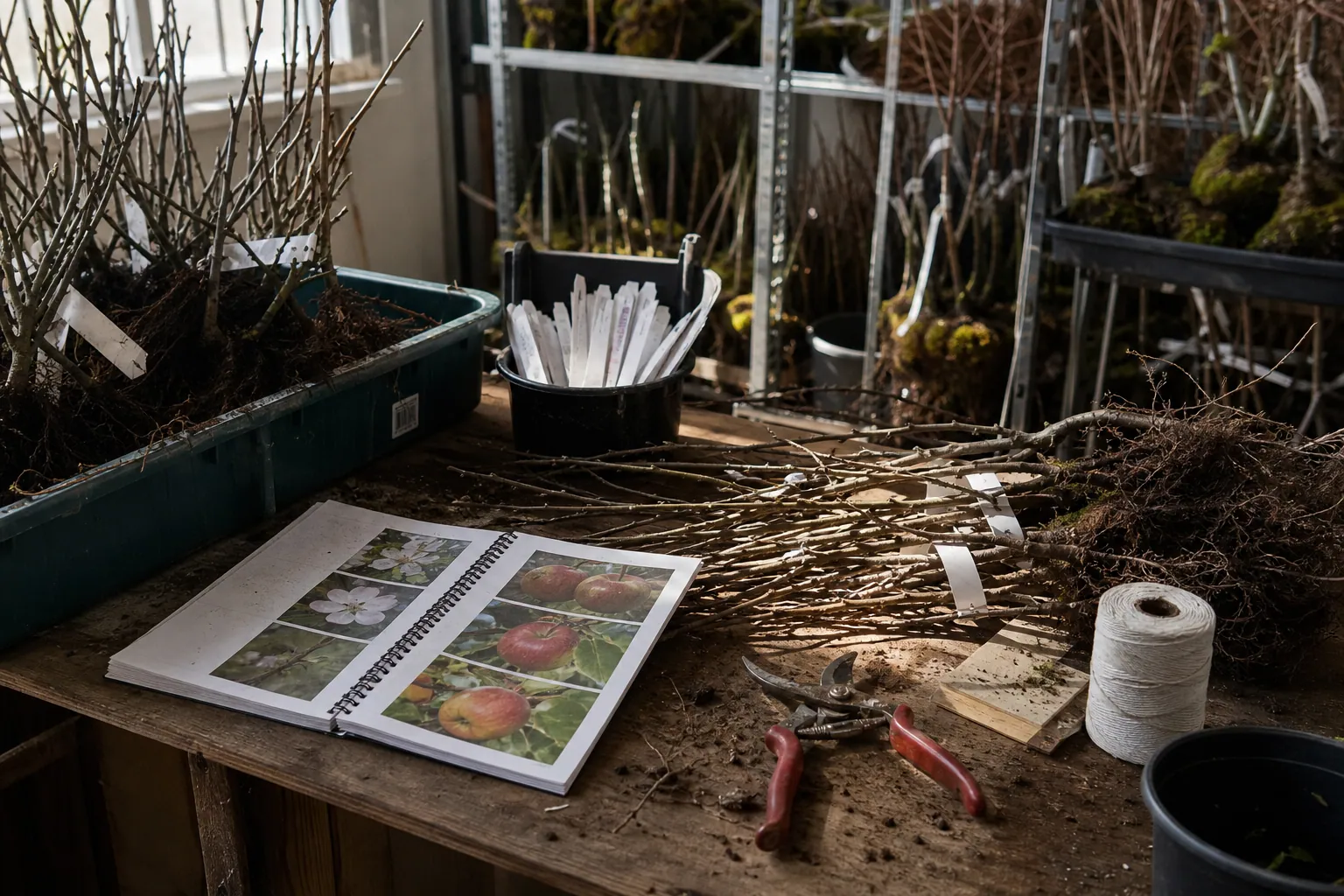
The AI Preorder Content Desk for Bare-Root Fruit Tree Nurseries
A practical AI-assisted Pinterest operating system for fruit tree nurseries that need accurate, inventory-aware preorder traffic before spring shipping.

AI Pinterest Content for Residential Architects: 5 Approaches Compared
Compare five ways residential architecture studios can use AI for Pinterest—without inventing project details, publishing stale plans, or attracting the wrong inquiries.
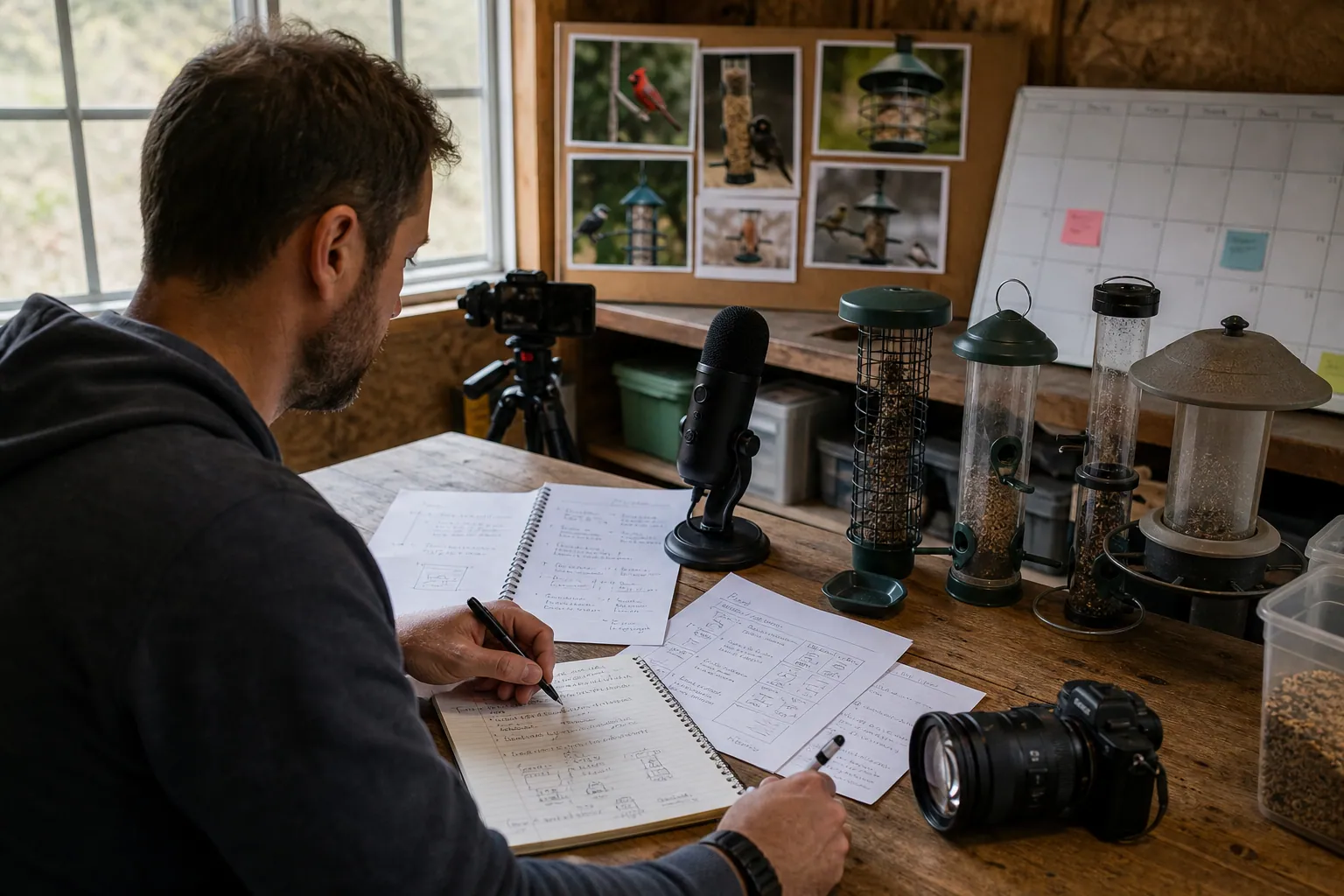
Strategy Memo: Pinterest SEO for Squirrel-Proof Bird Feeder Shops
A focused Pinterest SEO plan for bird feeder retailers: choose problem-solving content over generic bird inspiration, define useful metrics, and launch in 30 days.

Project Posts vs Plan Pages: What a Woodworking Plan Shop Should Link From Pinterest
Compare five Pinterest destinations for PDF woodworking plans—from direct product pages to cut lists—and choose the route that fits each searcher's build decision.

Strategy Memo: Pinterest for HVAC Filter Shops Before Winter
A September Pinterest strategy for replacement air-filter stores: use size, MERV, and change-schedule content to turn seasonal research into compatible orders.