When Canning Checklist Signups Don’t Buy: A Pinterest Funnel Review
A practical analytics review for canning educators turning Pinterest checklist downloads into paid workshops, course sales, and useful affiliate revenue.
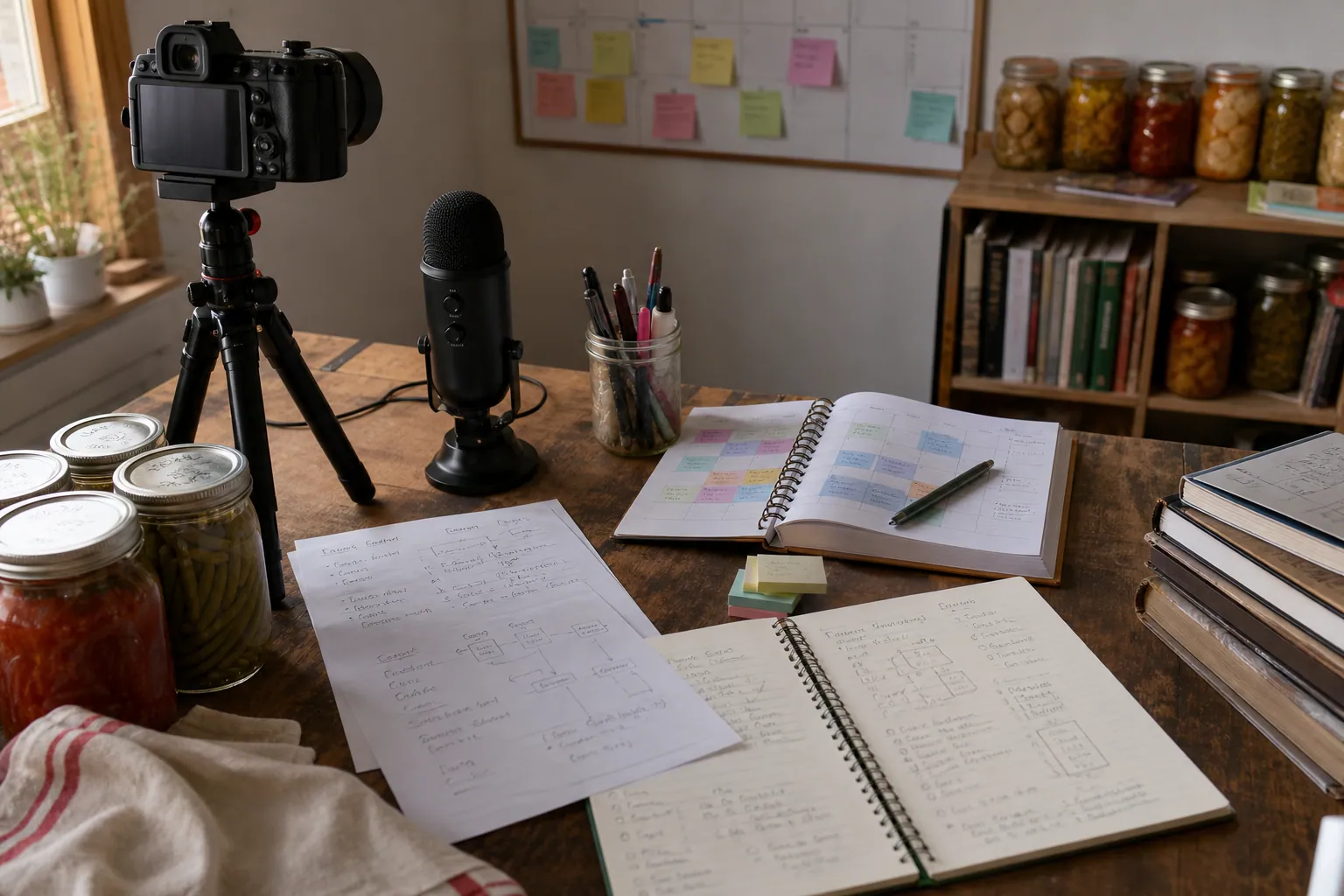
Your Pinterest numbers look healthy: 1,800 outbound clicks this month, 612 downloads of your “Safe Canning Starter Checklist,” and a few pins still getting saves from last summer.
But your paid canning workshop sold 9 seats.
That is not a Pinterest failure by itself. It is a funnel measurement problem. For food preservation educators, late July and August traffic can look exciting because people are actively searching for tomato canning, peach jam, salsa safety, freezer meals, and beginner equipment lists. The mistake is treating every signup as the same kind of buyer.
A person who wants “cute jar labels” is not in the same moment as a person searching “pressure canning green beans safely.” Your analytics review should tell you which moment you attracted, where the visitor landed, what they did next, and what offer they were ready to consider.
Start with the money question, not the traffic question
For a canning course creator, the useful question is not:
Did Pinterest grow my list?
It is:
Which Pinterest searches are creating subscribers who trust me enough to buy the next safe, practical step?
That distinction matters because canning content has several levels of intent:
- Inspiration intent: pantry shelf ideas, giftable jam labels, garden harvest photos.
- Beginner setup intent: canning equipment checklist, water bath canning supplies, jars for beginners.
- Problem-solving intent: jam didn’t set, salsa too watery, lids not sealing.
- Safety intent: pressure canning vs water bath, tomato acidity, tested recipe questions.
- Seasonal urgency: what to do with 20 pounds of tomatoes this weekend.
All five can produce saves. Not all five should be sent into the same email sequence.
Measure the funnel in four layers
Do not review Pinterest Analytics in isolation. A pin can look successful and still send the wrong person to the wrong next step.
For this kind of monetization funnel, review four layers together.
1. Pinterest discovery metrics
At the pin and board level, track:
- Impressions
- Saves
- Outbound clicks
- Outbound click rate
- Save-to-click pattern
- Board where the pin gained traction
- Pin title and keyword angle
- Destination URL
For example, a pin titled “Beginner Canning Equipment Checklist” may earn fewer saves than “Beautiful Pantry Shelf Ideas,” but the equipment pin may create more subscribers who later click your paid workshop offer.
That is the point of Pinterest analytics: not just finding your prettiest pin, but finding the pin that reveals useful intent.
2. Landing page behavior
For each Pinterest landing page, measure:
- Pinterest sessions
- Opt-in conversion rate
- Mobile conversion rate
- Time on page
- Scroll depth if you track it
- Clicks to your paid offer
- Bounce rate or quick exits
Your “Safe Canning Starter Checklist” page might convert at 48%, while your blog post on peach jam converts at 9%. That does not automatically mean the checklist page is better. It may mean the checklist page asks for an email quickly, while the peach jam reader needs a more relevant invitation.
A better question: did the page create the right next action?
3. Email funnel signals
Inside your email platform, create a segment for Pinterest subscribers. If possible, keep segments by campaign, not just source.
Track:
- Confirmation rate if you use double opt-in
- Welcome email open rate
- Click rate on the first paid-offer email
- Clicks to safety resources
- Replies with questions
- Unsubscribes
- Sales page visits from email
- Purchases by original UTM campaign
A canning educator may discover that “equipment checklist” subscribers click affiliate links for starter tools, while “tomato canning safety” subscribers click the paid workshop link. Both are valuable, but they should not be judged by the same metric.
4. Revenue and offer fit
Finally, connect the subscriber to money signals:
- Workshop sales
- Full course sales
- Tripwire purchases, such as a batch logbook printable
- Affiliate clicks and commission
- Refunds
- Average revenue per subscriber by campaign
- Days from signup to purchase
Pinterest traffic is often early, but preserving season creates urgency. Someone who signs up because their tomatoes are ripening may buy within 48 hours. Someone saving pantry organization ideas may buy in three months, if ever.
Use UTMs that show the buyer moment
If every pin uses utm_campaign=pinterest, your review will be vague.
Use UTMs that preserve intent. For example:
utm_source=pinterest
utm_medium=organic
utm_campaign=2026_late_summer_canning
utm_content=tomato_safety_checklist_pin_a
A simple naming structure could be:
season_topic_offer_pinvariant
Examples:
august_tomato_safety_workshop_pin_aaugust_equipment_checklist_freebie_pin_bpeach_jam_troubleshooting_logbook_pin_cpressure_canning_beginner_course_pin_a
For teams producing several pin angles per landing page, a Pinterest-focused workspace like PinPinMe can help keep pin titles, Pinterest descriptions, destinations, and tagged URLs together before anything goes live.
The important part is consistency. If you cannot tell whether a sale came from “cute labels” or “pressure canning safety,” you cannot improve the funnel with confidence.
Read the patterns before you change the offer
Once your data is tagged, look for patterns across pins, pages, and emails.
Pattern: high saves, low outbound clicks
This often happens with aesthetic pantry content, jar label ideas, and beautifully styled harvest photos.
Interpretation: the content is useful for planning or aspiration, but the viewer may not need help today.
What to do:
- Keep these pins for reach, but do not let them dominate production.
- Add more specific pin titles, such as “Beginner Water Bath Canning Supplies Checklist” instead of “Canning Season Ideas.”
- Send this traffic to a soft lead magnet, not directly to a $149 course.
- Test a seasonal board strategy around “Late Summer Canning for Beginners” rather than broad food inspiration boards.
Pattern: high clicks, low opt-ins
This usually means the pin promise and page promise do not match.
Example: a pin says “Tomato Canning Safety Chart,” but the page opens with your personal story and asks readers to join a general newsletter.
Interpretation: the visitor arrived with a practical concern and did not immediately see the promised help.
What to do:
- Put the promised chart, checklist, or decision guide near the top.
- Repeat the exact language from the pin title in the page heading.
- Use a specific opt-in: “Get the Tomato Canning Safety Checklist” instead of “Join my email list.”
- Add a short note about tested recipes and safe sources so trust is established before the signup box.
Pattern: high opt-ins, low email clicks
This is common when the lead magnet is too broad.
A “Beginner Canning Checklist” can attract people who are curious, cautious, or just collecting free resources. That is not bad. But if your next email immediately pushes a full course, the leap may feel too large.
Interpretation: your freebie is working, but your bridge is weak.
What to do:
- Add a diagnostic email: “Are you water bath canning, pressure canning, or still gathering supplies?”
- Segment subscribers based on what they click.
- Offer a low-priced batch logbook or seasonal planning template before the full course.
- Send safety-intent subscribers to a workshop sooner than inspiration-intent subscribers.
Pattern: strong sales page visits, weak purchases
This is no longer a Pinterest problem. It is an offer-page problem.
Interpretation: Pinterest and email created enough interest to earn the visit, but the sales page did not resolve the buyer’s hesitation.
Common canning-course objections include:
- “Is this safe and based on tested methods?”
- “Is this for water bath or pressure canning?”
- “Do I need special equipment?”
- “Can I use this if I’m only preserving tomatoes?”
- “Will I get overwhelmed?”
What to do:
- Add a clear “who this is for” section.
- Separate water bath and pressure canning outcomes.
- Show the first small win students will complete.
- Include a module list organized by seasonal use case, not just lesson titles.
- Add a short FAQ about safety boundaries and recipe sources.
Pattern: affiliate revenue beats course revenue
This can be a good sign, not a failure.
If pins around jars, lids, funnels, labels, and canning racks create affiliate clicks, those visitors may be in buying mode for tools before education.
Interpretation: you attracted setup intent, not necessarily course intent.
What to do:
- Build a dedicated “beginner canning equipment” page with affiliate links and safety notes.
- Add an email path for supply shoppers: setup guide first, workshop later.
- Use Pinterest product-style visuals for tools, but keep safety claims careful.
- Track affiliate revenue per 1,000 Pinterest sessions alongside course revenue.
A healthy canning business may monetize different Pinterest searches in different ways: affiliate for equipment, tripwire for planning, workshop for seasonal urgency, and full course for committed learners.
Map decisions to actions
Here is a practical review table you can copy into a spreadsheet.
| What you see | Likely meaning | Decision | Next action |
|---|---|---|---|
| Pantry shelf pins get saves but few clicks | Inspiration, not urgency | Keep for reach, reduce volume | Create more beginner and safety-intent pins |
| Tomato safety pins get clicks and opt-ins | Strong seasonal problem | Scale this topic | Add 5 pin variations and a workshop CTA |
| Equipment checklist gets opt-ins but no course sales | Setup intent | Monetize differently | Add affiliate guide and beginner email path |
| Jam troubleshooting pins get clicks but low opt-ins | Page mismatch | Fix destination | Add a troubleshooting checklist above the fold |
| Email subscribers click sales page but do not buy | Offer objection | Improve sales page | Add safety FAQ, outcomes, and beginner scope |
| Pressure canning pins produce fewer leads but more sales | Smaller, higher-intent audience | Prioritize quality | Create a focused board and course email sequence |
This is where Pinterest SEO becomes more than keyword research. The goal is not to rank for every canning phrase. The goal is to match search intent to a landing page and a monetization path.
Build three funnel paths instead of one
If all Pinterest visitors enter the same welcome sequence, your analytics will stay muddy. Use three simple paths.
Path A: The beginner setup path
Best for searches like:
- canning equipment checklist
- water bath canning supplies
- beginner canning tools
- how to start canning at home
Best offer sequence:
- Free equipment checklist
- Affiliate supply guide
- Beginner safety email
- Low-priced batch logbook or planning printable
- Invitation to a seasonal beginner workshop
Primary metric: revenue per subscriber from affiliate plus tripwire, not immediate full-course sales.
Path B: The seasonal urgency path
Best for searches like:
- what to do with lots of tomatoes
- tomato canning for beginners
- peach jam troubleshooting
- salsa canning safety
Best offer sequence:
- Specific seasonal checklist
- Quick safety lesson
- Paid live or recorded workshop
- Full course follow-up
Primary metric: workshop conversion rate within 7 to 14 days.
Path C: The safety-confidence path
Best for searches like:
- pressure canning vs water bath
- canning safety for beginners
- do I need a pressure canner
- why did my jars not seal
Best offer sequence:
- Decision guide or safety checklist
- Educational email series
- Course invitation with clear safety framework
- Optional consultation or office-hours bonus
Primary metric: sales page click rate and full-course conversion.
This structure also protects your brand. Canning is not a topic where you want vague advice or casual shortcuts. Your funnel should reinforce trust at every step.
Review by cohort, not by yesterday’s pins
Pinterest needs time. Email funnels need time. Buyers need time to pick tomatoes, buy jars, or decide whether they trust you.
For organic Pinterest traffic, review cohorts instead of only current-week performance.
Use these windows:
- 7 days: early landing page and opt-in signals
- 14 days: email clicks and tripwire purchases
- 30 days: workshop and course sales
- 60 days: delayed course sales and affiliate revenue
If you published a pressure canning pin three days ago, do not declare it a loser because it has two clicks. But if a pin cohort has 400 clicks after 30 days and a 2% opt-in rate, you have enough evidence to inspect the page.
A weekly review ritual for canning-season revenue
Set aside 35 minutes every Friday during preserving season. Do not open every dashboard and wander.
Minute 1-5: Pick one cohort
Choose pins that are at least 14 days old. If you are reviewing course sales, choose pins at least 30 days old.
Minute 6-12: Find the top intent pockets
Sort by outbound clicks, then tag each winner:
- Inspiration
- Beginner setup
- Seasonal urgency
- Safety confidence
- Troubleshooting
Do not judge them together.
Minute 13-20: Check the next step
For the top three Pinterest destinations, write down:
- Opt-in rate
- Email click rate
- Sales page visit rate
- Revenue
- Biggest suspected leak
Minute 21-28: Choose one repair
Only pick one:
- Rewrite a landing page intro.
- Add a more specific opt-in box.
- Create a segmented email.
- Improve the sales page FAQ.
- Add affiliate links to a setup guide.
- Create five new pin titles for the highest-intent topic.
Minute 29-35: Log next week’s test
Write one sentence:
Because tomato safety pins created the highest workshop clicks, next week we will publish five new tomato-safety pin variations and add a workshop CTA above the checklist download.
That sentence is the difference between “Pinterest is bringing traffic” and “Pinterest is teaching us what to sell next.”
For canning educators, the best funnel is not the one with the most subscribers. It is the one that respects the reader’s moment: curious, equipped, overwhelmed, urgent, or ready to learn properly. Measure that moment, and your Pinterest traffic becomes much easier to monetize without pushing people before they are ready.

Pinterest Funnel Comparison for Beekeeping Course Creators
Compare five Pinterest paths for beekeeping educators, from winter-readiness worksheets to direct course enrollment, then choose a September funnel that fits learner intent.
The Weeknight Flavor Planner Funnel for Small-Batch Spice Shops
Turn Pinterest dinner searches into sampler orders and repeat spice buyers with a practical flavor-planner funnel, a weekly pin cadence, and a maintenance routine.

A Two-Lane Pinterest Funnel for Halloween ESL Printable Sellers
A practical September memo for ESL resource sellers: send ready-to-buy teachers to a bundle, route idea seekers to a useful sample, and measure revenue before Halloween demand fades.
The Backyard Office Budget Funnel for Custom Shed Builders
Turn Pinterest searches for backyard offices into better estimate requests with a site-readiness tool, a short email sequence, and a weekly publishing routine.

Strategy Memo: Pinterest for Beginner Cake Decorating Courses
A 30-day Pinterest strategy for cake educators who want holiday-baking discovery to become qualified email subscribers and evergreen course enrollments.

Pinterest Traffic Paths for Beginner Upholstery Courses: Calculator, Tutorial, or Enrollment Page?
Compare five Pinterest destinations for beginner upholstery educators, then choose the route that best turns chair-repair searches into subscribers and course students.