Case Study: How a Home Recording Course Turned Studio Setup Pins Into Evergreen Enrollments
A composite teardown of a home-recording educator who replaced aesthetic studio Pins with setup decisions, practical resources, and a clearer route to course enrollment.
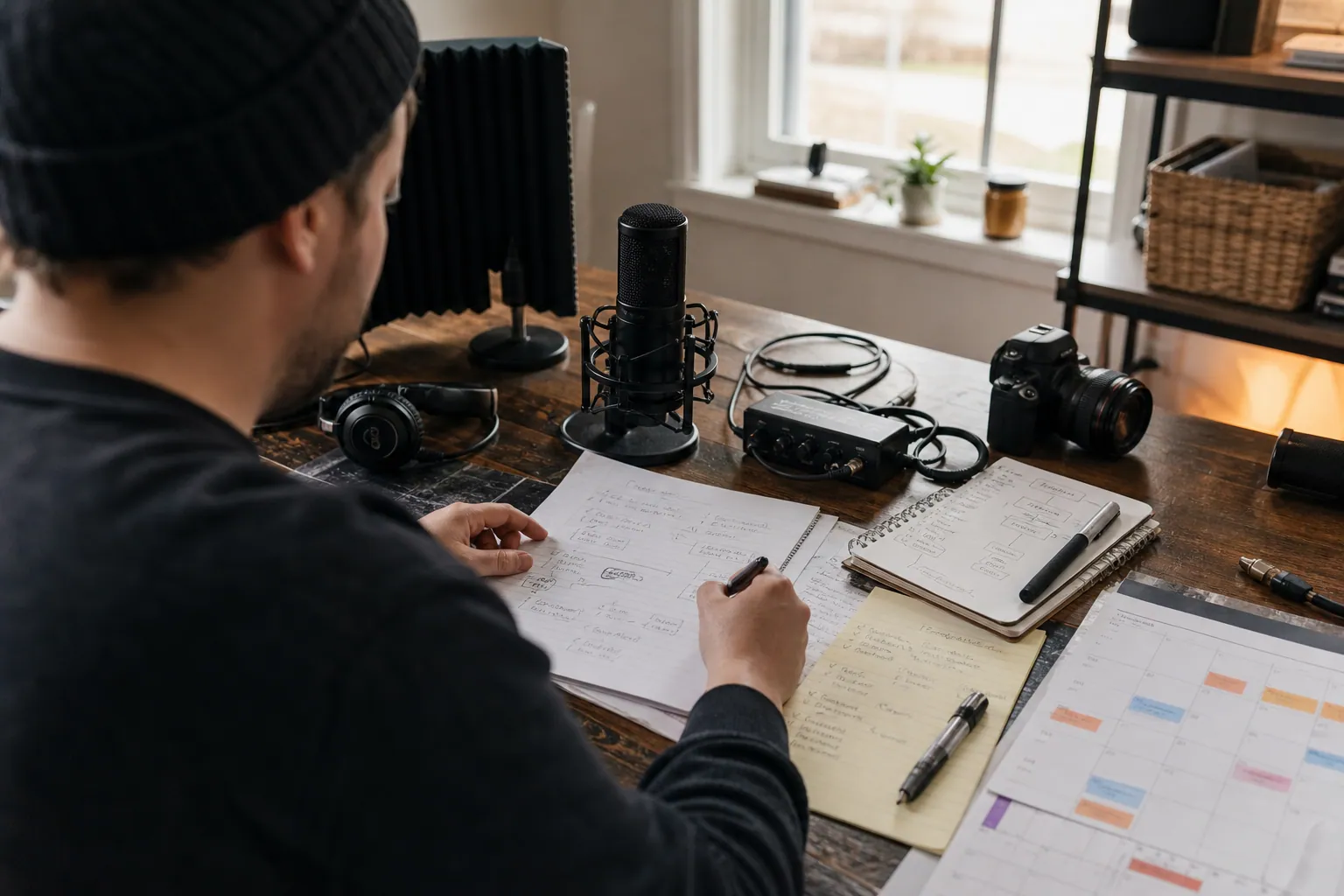
Aesthetic home-studio content can earn impressive saves and still produce very little course revenue.
That was the problem for this composite home-recording educator. She sold a self-paced course for singers, podcasters, and independent musicians who wanted to record clean vocals at home. Her Pinterest account had attractive desk setups, moody LED lighting, and microphone flat lays—but few email subscribers and even fewer enrollments.
The turning point was not posting more. It was treating each Pin as an answer to a recording decision a beginner was already trying to make.
Note: This is a composite case study based on common creator-account patterns. Metrics are illustrative, but the decisions and measurement approach are practical.
The baseline: plenty of inspiration, weak buyer intent
The educator published 10 to 15 Pins a month. Most pointed to a broad course sales page or an Instagram profile.
Her highest-save Pins looked like this:
- “Cozy Bedroom Studio Ideas”
- “Dream Home Vocal Booth Setup”
- “My Favorite Studio Aesthetic”
- “Pink Desk Setup for Music Creators”
They attracted people planning rooms, browsing gear, and collecting design inspiration. Those are real audiences—but they were not necessarily people who needed a course on recording vocals with basic equipment.
A 30-day review showed the mismatch:
| Metric | Studio-aesthetic Pins | Practical setup Pins |
|---|---|---|
| Saves per 1,000 impressions | 42 | 17 |
| Outbound clicks per 1,000 impressions | 8 | 31 |
| Email signup rate from visits | 1.1% | 7.4% |
| Course sales attributed within 30 days | 1 | 9 |
The aesthetic Pins were not bad content. They were simply being judged by the wrong outcome. Saves indicated that the images were inspirational. They did not establish that the visitor had a recording problem, wanted instruction, or was ready to learn from this educator.
The diagnosis: the course solved problems Pinterest visitors could name
The educator reviewed three sources before choosing new content themes:
- Questions from course-office-hours recordings.
- Replies to her welcome emails.
- Pinterest search suggestions for beginner recording topics.
The language was much more specific than “home studio ideas.” Prospective students asked:
- Why does my vocal recording sound echoey?
- Do I need an audio interface to record vocals?
- How far should I stand from a microphone?
- Why is my recording clipping?
- What is the simplest home vocal recording setup?
- How can I record in a bedroom without a vocal booth?
This created a useful distinction.
| Searcher’s immediate job | Better destination | Appropriate next step |
|---|---|---|
| Choose basic gear | Beginner setup guide | Course lesson preview |
| Fix a bad-sounding recording | Troubleshooting article | Free recording checklist |
| Build a first setup | Setup planner | Email sequence and course invitation |
| Compare methods or equipment | Focused comparison page | Relevant course module page |
| Browse studio decor | Inspiration gallery | No aggressive course pitch |
The team stopped making every Pin carry the same sales message. A person asking why their vocals sound distorted needs help first—not a generic “enroll now” button.
Decision one: create three pages before making new Pins
Rather than redesigning the whole website, the educator built three durable Pinterest landing pages around recurring beginner decisions.
1. The Bedroom Vocal Setup Checklist
This was a one-page guide covering the minimum viable setup:
- microphone type options without declaring one universal winner
- headphones
- interface or USB microphone decision
- quietest available recording location
- basic distance and monitoring checks
- a short pre-recording checklist
The page included a downloadable “first vocal recording” checklist. The opt-in was positioned after the practical advice, not before it.
2. The Echo and Room Noise Troubleshooting Guide
This page carefully separated room reflections, background noise, microphone placement, and input-level problems. It avoided promising that a blanket or foam panel would solve every issue.
It linked to a free five-minute lesson from the course: “Hear the Difference Between Noise, Echo, and Clipping.”
3. The First Recording Session Planner
This simple worksheet helped a beginner choose one song, make a gear list, reserve 45 minutes, and run a repeatable first-session routine.
It was the strongest bridge to the paid course because the course itself was structured around completing a first usable vocal recording—not buying more equipment.
Decision two: make Pin families around one question, not one visual
Previously, the educator made one Pin per blog post. The new approach created four to six distinct Pins for a resource, each with a different promise and visual treatment.
For the echo guide, the Pin family included:
| Pin angle | Example title | Visual direction |
|---|---|---|
| Diagnosis | “Why Your Bedroom Vocal Recording Sounds Echoey” | Before-and-after waveform-style graphic with plain labels |
| Constraint | “Recording Vocals in a Small Bedroom: Start Here” | Small-room photo with three callouts |
| Checklist | “5 Things to Check Before Buying Acoustic Foam” | Clean numbered checklist |
| Beginner reassurance | “You Do Not Need a Vocal Booth to Start Recording” | Simple desk-and-mic image with a realistic subhead |
| Lesson preview | “Hear the Difference: Echo vs Background Noise” | Short video Pin with captions |
The Pin titles used the language people searched, while the descriptions added context rather than repeating keywords. That is the practical balance behind Pinterest keyword research: use the words a learner would use, then make sure the click leads to the answer promised.
The team also stopped using gear-heavy stock photos as the default. A beginner with one microphone could assume the course was not for them. Instead, visuals showed normal rooms, attainable setups, and marked-up examples.
Decision three: give each opt-in a job in the email sequence
At first, every lead magnet entered the same broad welcome sequence. This made it hard to tell what problem had brought a subscriber in—and emails about vocal recording gear were irrelevant to a person who had downloaded a session-planning worksheet.
The educator split the sequence into three light tracks.
Setup checklist track
- Email 1: Deliver the checklist and explain the one decision to make before buying anything.
- Email 2: A short lesson on choosing a quiet recording location.
- Email 3: A student example showing a modest setup and an early recording mistake.
- Email 4: Invite to the course’s foundational setup module.
Echo troubleshooting track
- Email 1: Deliver the guide and ask the subscriber to identify their most likely issue.
- Email 2: Teach one no-purchase test for room reflections.
- Email 3: Explain what the paid course covers beyond room sound.
- Email 4: Invite to enroll before the next live feedback week.
Session planner track
- Email 1: Deliver the planner.
- Email 2: Encourage scheduling one 45-minute recording session.
- Email 3: Share a pre-session routine from the course.
- Email 4: Invite the learner to complete their first track with the full program.
This was not a complicated funnel. It was a relevance fix.
What changed after 10 weeks
The educator did not abandon studio-aesthetic content. She reduced it to approximately 15% of publishing, used it to support brand recognition, and made the majority of content problem-led.
Over the next 10 weeks, her account published 32 new Pins across the three resource pages, plus a few refreshed versions of older Pins with better destinations.
Here is what changed compared with the prior 10-week period:
| Metric | Before | After | Why it mattered |
|---|---|---|---|
| Monthly outbound clicks | 310 | 1,140 | More visitors reached useful, intent-matched pages |
| Email subscribers from Pinterest | 14 | 96 | The opt-in offered immediate help, not vague updates |
| Course checkout visits from Pinterest email leads | 21 | 138 | Email content continued the problem the Pin introduced |
| Course enrollments attributed to Pinterest touchpoints | 4 | 23 | Better-qualified discovery outweighed lower save rates |
| Revenue per 100 Pinterest landing-page visits | $38 | $164 | A useful commercial metric for deciding what to maintain |
The best-performing Pin by saves was still a home-studio inspiration image. The best-performing Pin by enrollments was “Why Your Vocal Recording Sounds Echoey (and What to Test First).”
That distinction changed what the team made next.
The operating details that kept the project manageable
This was not a daily content job. The educator handled it in a 90-minute weekly block.
Monday: collect one source question
She selected one question from office hours, student support, or a course survey. Questions had to be evergreen enough to help a beginner in any month.
Tuesday: produce a small Pin batch
For one approved page, she produced:
- two static Pins with different titles
- one checklist-style Pin
- one short video Pin from an existing lesson clip, when available
A lightweight PinPinMe queue helped keep approved Pins spaced out without turning publishing into another daily task.
Friday: review outcomes, not just saves
The weekly sheet included:
- Pin URL and title
- destination page
- board
- publish date
- tagged URL using Pinterest UTM tracking
- outbound clicks
- email signups
- course checkout visits
- purchases within 30 days
- notes from subscriber replies
The educator waited at least 21 to 30 days before declaring a Pin a failure. Course purchases often happened after someone saved a guide, returned later, and joined through email.
What did not work
The case is useful partly because several reasonable ideas underperformed.
“Best microphone” list Pins
These earned clicks but attracted shoppers comparing expensive equipment. Many left after learning that the course did not include detailed gear reviews. The educator reframed the topic as “USB mic or interface: which setup lets you record today?” and linked to the setup checklist instead.
Broad “music production tips” wording
This widened impressions but brought in beat-makers, mixing engineers, and people looking for advanced production methods. The course was explicitly for people recording vocals at home, so the team narrowed its Pinterest SEO language.
Direct enrollment Pins for beginner searches
“Join my home recording course” Pins produced occasional sales but were less efficient for broad queries such as “how to record singing at home.” The strongest direct enrollment Pins targeted people who had already shown a more developed intent, such as “home vocal recording course for beginners.”
Too many boards
The account had 22 boards, including vague categories like “Creative Inspiration” and “Music Vibes.” The team consolidated into six boards that reflected actual learning needs:
- Home Vocal Recording for Beginners
- Bedroom Studio Setup
- Vocal Recording Tips
- Recording Troubleshooting
- Songwriting and Demo Planning
- Music Creator Learning Resources
Board organization did not create the sales lift by itself. It made the account easier to understand and gave each new Pin a sensible home.
Transferable lessons for course creators
A home-recording course is not a watercolor class, financial literacy program, or language course. But the underlying decisions transfer well.
1. Start with the problem before the aspiration
Aspiration content makes people imagine a future identity. Problem-led content helps them act today.
Use inspiration when it supports your brand, but build your enrollment engine around decisions, mistakes, checklists, comparisons, and small wins your course genuinely helps solve.
2. Match the next step to the reader’s readiness
A visitor searching “how to stop vocal clipping” is probably not ready for a full curriculum overview. Give them a clear diagnosis, then offer a related next step.
A visitor searching your exact course topic may be ready for an enrollment page. These are different Pinterest landing pages for different levels of intent.
3. Measure the point after the click
Pinterest impressions and saves show discovery. They cannot tell you whether the right people subscribed, watched a lesson, visited checkout, or bought.
At minimum, use tagged URLs and connect each Pin family to a named landing page. Review outcomes by topic, not only at an account-wide level.
4. Repurpose teaching evidence, not just promotional copy
Office-hour questions, student mistakes, lesson diagrams, annotated examples, and course checklists are richer raw material than sales-page headlines. They also make more credible Pins.
5. Keep an accuracy boundary
For educational content involving equipment, finances, health, legal issues, or other consequential decisions, say what your resource covers and what it does not. Helpful specificity builds trust; sweeping promises create the wrong expectations.
A practical first move this week
Pull up the last 20 questions students or prospects have asked. Highlight the ones that contain a decision, obstacle, or repeated beginner mistake.
Choose one question that:
- can be answered accurately in a useful page
- connects to one lesson or outcome in your offer
- has a natural next step beyond “buy my course”
- will still be useful in six months
Create that page, make four Pins that frame the question differently, and track the journey from Pin to signup to enrollment.
That is how Pinterest becomes more than a gallery of attractive ideas. It becomes a dependable discovery channel for the learners your course is designed to help.

Case Study: How a Podcasting Course Creator Turned Planning Pins Into Evergreen Enrollments
A composite teardown of a podcasting educator who replaced aesthetic creator Pins with planning resources that attracted more course-ready subscribers and buyers.

Case Study: How an Etsy Product Photography Course Turned Styling Saves Into Evergreen Enrollments
A composite teardown of a product photography educator who replaced generic styling inspiration with decision-led Pinterest content that produced better leads and course sales.

The Portfolio-Review Pinterest Operator Playbook for UX Course Creators
Turn repeated UX portfolio questions into Pinterest Pins, useful review resources, and evergreen course discovery—without promising job outcomes or chasing inspiration saves.
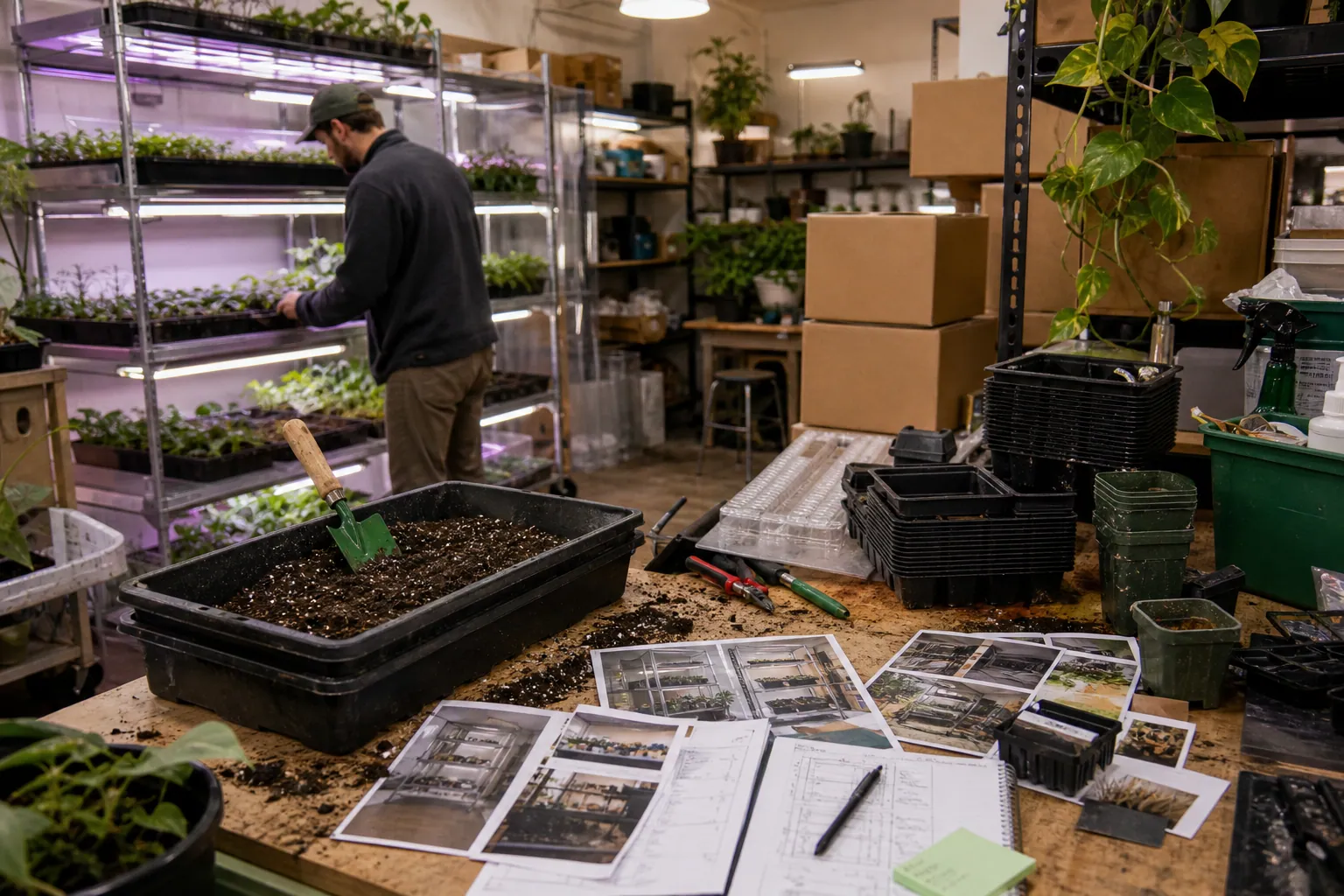
Case Study: How a Seed-Starting Light Shop Turned Pinterest Questions Into Kit Sales
A composite teardown of a seed-starting light retailer that replaced catalog-only Pins with setup and troubleshooting content that sold more complete kits.
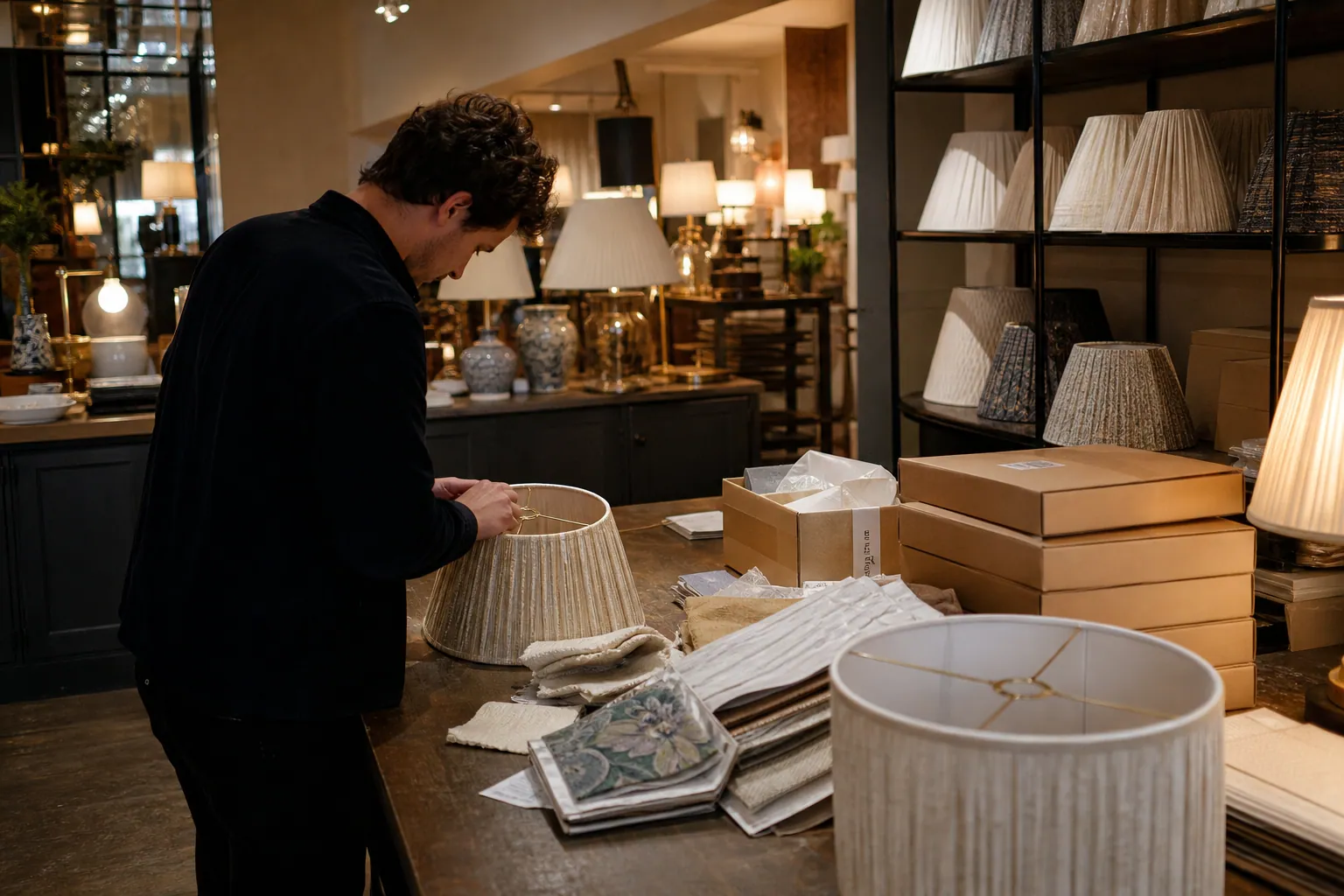
Case Study: How a Custom Lampshade Studio Turned Room Saves Into Swatch Kit Orders
A composite Pinterest teardown of a made-to-order lampshade studio that replaced generic room inspiration with sizing and fabric decisions that led to more swatch-kit orders.

Case Study: How a Virtual Garden Designer Turned Pinterest Planting Plans Into Paid Site Reviews
A composite teardown of a virtual garden designer who replaced broad inspiration Pins with intent-led routes to paid site reviews, email guidance, and full design plans.