The Paint-Color Audit Funnel: A Pinterest Content Desk for Independent Color Consultants
Turn paint-color planning searches into useful email subscribers, paid room audits, and higher-fit full-home color consultations with a steady Pinterest operating rhythm.

A color consultant’s best Pinterest content is rarely a finished living room with the words “dream home” on it.
The content that earns business usually starts earlier, when someone is stuck: their “warm white” looks yellow, a north-facing room feels gray, or the new sofa makes the old wall color look wrong. Those are planning problems—and Pinterest users actively look for help solving them.
For an independent paint-color consultant, the opportunity is to connect those searches to a small, credible offer ladder:
- A free decision aid that helps someone name the problem.
- A low-friction paid room color audit.
- A full-home palette or local consultation for people with a larger project.
This article lays out a repeatable content operation to do that without needing to invent new advice every week.
Start with an offer ladder that respects the buyer’s stage
Do not send every pin to a “Book a $1,500 full-home consultation” page. Most people searching Pinterest are still figuring out whether their issue is light, undertones, trim, flooring, or paint sheen.
Build three destinations instead.
| Buyer moment | Pinterest promise | Destination | Next action |
|---|---|---|---|
| “Why does my white paint look yellow?” | A fast diagnosis guide | Free “Room Light + Undertone” worksheet | Join a short email series |
| “I need help choosing between these two colors.” | A practical comparison process | Paid $89–$149 room color audit page | Submit photos and purchase an audit |
| “We are renovating three rooms.” | A plan for making whole-home choices | Full-service color consultation page | Apply or book a discovery call |
The free resource should solve a narrow decision, not attempt to replace your expertise. A useful worksheet might ask for room direction, existing fixed finishes, time of day, and the paint samples being considered. It gives subscribers enough clarity to take a better next step—and gives you a cleaner signal of their project.
A room audit is a particularly good middle offer because it lets a hesitant buyer experience your judgment before committing to a larger project.
Give each landing page one job
A common leak in a Pinterest funnel is a busy website page with several unrelated offers, generic portfolio images, and no clear next step.
For each page, check four things:
- The first heading restates the exact issue named in the pin.
- The visual shows the decision being made, not only a polished final room.
- One primary call to action appears above the fold.
- The page answers practical objections: turnaround time, deliverables, what the client must submit, price, and location limits if applicable.
For example, a pin titled “How to Choose White Paint for a North-Facing Bedroom” should lead to the relevant guide or worksheet—not your general services page.
Build the input tray before you build pins
A sustainable Pinterest presence comes from evidence you already collect while doing client work. The goal is not to turn every project into content. It is to capture recurring decisions before they disappear into inboxes, voice notes, and project folders.
Keep one shared input tray with five sections.
1. Client-language notes
After each call, save exact phrases clients use:
- “The paint is fighting our oak floor.”
- “I want warm, but not beige.”
- “The trim looks dingy next to the wall.”
- “Every sample changes at night.”
These phrases make excellent Pinterest keyword research prompts. Search them in Pinterest, note the suggested wording and dominant result types, then create content around the actual decision—not the industry terminology.
2. Before-and-after decision records
For each completed room, capture the non-confidential reason behind the recommendation:
- Room direction and daylight pattern
- Existing fixed finishes
- The options that were eliminated
- The final paint family and why it worked
- The client’s initial concern
You do not need to publish every brand, color code, or client address. The useful lesson is the decision logic.
3. Seasonal planning triggers
Create a dated list of moments when people start making color decisions:
- Late August: settling into a new home before fall entertaining
- September and October: pre-holiday living room and entry refreshes
- January: “fresh start” bedroom and home office updates
- March and April: exterior color and renovation planning
Pinterest content has a longer runway than an Instagram post. Produce seasonal material before the peak planning window, then let it gather search history.
4. Offer and capacity updates
Once a month, record what you can actually sell:
- Number of room audits available this month
- Consultation lead time
- Whether virtual work is open nationwide
- Whether local site visits are limited to selected zip codes
- Any service that should be paused
This protects you from producing pins for an offer you cannot fulfill.
5. Performance notes
Add a short note beside content that already produces useful behavior. Track the pin theme, landing page, outbound clicks, worksheet signups, audit purchases, and qualified consultation inquiries. Use PinPinMe if you want a lighter way to organize publishing and keep those destination links consistent across a recurring pin queue.
Turn inputs into a four-week production cadence
A one-person consultancy does not need daily design work. It needs a predictable conversion of raw material into publishable assets.
Here is a realistic monthly cadence for a consultant who can reserve roughly two focused hours each week.
Week 1: Choose one decision cluster
Pick one cluster from the input tray. Do not mix unrelated problems in the same batch.
Example cluster: white paint in low-light rooms.
Create:
- One helpful article or detailed landing page
- One worksheet opt-in section on that page
- One room-audit page module explaining when the paid service is the better answer
- A list of 6–8 search phrases and question variations
Possible pin angles from that single cluster:
- Why warm white paint can look yellow in a dark room
- North-facing bedroom paint: a simple sample-testing order
- White wall, white trim, or contrast trim? What changes the result
- Three details to photograph before requesting a room color audit
- How flooring undertones affect “neutral” wall paint
- When paint samples are not enough—and an audit saves time
The first five can lead to the free guide or educational page. The last one can point directly to the paid audit page because the searcher is already closer to a decision.
Week 2: Produce a small visual family
Create six to eight pins from the chosen cluster. Use two or three visual treatments so you can learn what earns clicks without creating a pile of near-duplicates.
A useful mix:
- Diagnostic pin: a room image with a direct problem statement
- Process pin: a short step sequence, such as “Check light → compare undertones → view at night”
- Comparison pin: two labeled swatches or room crops with a clear question
- Service-fit pin: “Need a second opinion before painting? Here is what a room audit includes”
Use readable text, true-to-life color whenever possible, and generous space around type. A beautiful but heavily filtered room image can undermine a color professional’s credibility.
Write a distinct Pinterest pin title and description for every asset. The title handles the main search phrasing; the description can add context, such as room type, lighting condition, or buyer stage. Do not stuff every variation into one sentence.
Week 3: Review for trust, not just aesthetics
Run every pin and destination through a short review before scheduling. If you work alone, do it the next morning with fresh eyes. If you have an assistant, this is the best point for them to check details.
Use this review list:
- Is the advice appropriate without seeing the reader’s exact room?
- Does the photo accurately represent the colors discussed?
- Is any paint brand reference current and properly contextualized?
- Does the pin make one clear promise?
- Does the landing page fulfill that promise within the first screen?
- Is the offer availability accurate?
- Does the link use a consistent UTM convention?
- Is the pin assigned to the most relevant board?
For color content, avoid absolute claims such as “this white always works.” Light and surrounding finishes are too variable. Confidence comes from explaining conditions, tradeoffs, and when a personalized recommendation is warranted.
Week 4: Schedule, observe, and prepare the next cluster
Publish the six to eight pins across two to three weeks rather than all at once. Pair them with boards that reflect real planning intent, such as:
- Choosing Paint Colors
- Small Room Color Ideas
- Living Room Renovation Planning
- Exterior Color and Curb Appeal
- Home Office Updates
Avoid creating boards around every paint color name. Boards should help a person continue planning, not mirror your internal project folder.
At the end of the week, choose the next decision cluster based on both season and evidence. If “low-light room” pins earn outbound clicks but no worksheet signups, review the opt-in page before declaring the topic a failure.
Write an email path that continues the same conversation
A worksheet signup should not receive a generic welcome sequence followed by a hard sell. The emails need to carry the original Pinterest promise forward.
Here is a five-email sequence for the room-light worksheet.
| Timing | Email purpose | Core message | CTA |
|---|---|---|---|
| Immediately | Deliver and orient | How to use the worksheet at two times of day | Download and complete it |
| Day 2 | Build confidence | The difference between wall color and fixed-finish undertones | Reply with the room they are working on |
| Day 4 | Teach a boundary | Three signs a larger paint sample will not solve the uncertainty | View the room audit details |
| Day 7 | Show the service | What a client receives in a room audit, including options considered | Purchase an audit |
| Day 12 | Segment gently | Help for a single room versus a multi-room renovation | Choose the audit or apply for full-service help |
The sequence does not need a discount to work. It needs specificity. Someone who downloaded a guide because their white paint looks yellow wants a more certain decision, not a general newsletter about decorating trends.
Add one segmentation question to the opt-in form or first email: “Are you deciding for one room, several rooms, or an exterior?” That one answer makes later offers more relevant and helps your monthly content planning.
Use a publishing rhythm that matches buyer intent
A practical starting rhythm is two to three fresh pins per week, with roughly this distribution:
- 60% diagnostic and educational pins to a guide or opt-in
- 25% comparison and decision pins to an article or audit explainer
- 15% direct service-fit pins to the paid audit or consultation page
That mix keeps the account useful to early-stage planners while still giving ready buyers a clear purchase path.
For each published pin, use a UTM pattern that preserves the content theme. For example:
source=pinterest | medium=organic | campaign=low_light_white | content=diagnostic_01
The exact convention matters less than using the same fields every time. You want to be able to answer, several weeks later, whether low-light content produced better audit buyers than exterior-color content.
Run a weekly review that makes revenue decisions possible
A weekly review should take 20 minutes. It is not a hunt for vanity metrics; it is a small set of decisions.
Look at the last 30 to 60 days because Pinterest distribution and planning cycles can be slower than other channels.
Check three layers of performance
Layer 1: Discovery
- Impressions by topic
- Saves by topic
- Search visibility for priority terms
Saves can indicate that a diagnostic topic is useful, but they do not prove purchase intent.
Layer 2: Site behavior
- Pinterest outbound clicks
- Landing page engagement
- Worksheet conversion rate
- Exit rate on the audit page
If a pin receives clicks but the worksheet page converts poorly, fix the page headline, preview, or form before making new designs.
Layer 3: Commercial quality
- Audit purchases by UTM campaign
- Consultation applications
- Percentage of leads with an active project and realistic timing
- Revenue per 100 Pinterest visitors, when volume permits
A pin with fewer clicks can be more valuable if it consistently brings buyers who have chosen paint samples and need expert confirmation.
Make only one change per weak link
Use this diagnosis table to avoid changing everything at once.
| Signal | Likely issue | Next test |
|---|---|---|
| High saves, few outbound clicks | Inspiration is stronger than the next step | Make the pin promise more actionable and show the guide outcome |
| Clicks, weak opt-ins | Message mismatch on the landing page | Match the first page heading to the pin’s exact problem |
| Opt-ins, no audit purchases | Email sequence ends before the decision point | Add an audit-fit email with a concrete example of deliverables |
| Audit page views, few purchases | Offer clarity or price confidence issue | Add turnaround, sample deliverables, and a “best for” section |
| Good audits, poor full-service applications | The offer ladder has a gap | Invite audit buyers to credit part of their payment toward a multi-room package |
Maintain the library so evergreen content stays accurate
Paint product lines, finish names, service capacity, and seasonal project needs change. Schedule a quarterly maintenance session rather than waiting until a high-performing pin sends visitors to an outdated offer.
Review your content in four groups:
- Evergreen winners: Refresh the pin visual or destination page only when accuracy, branding, or conversion needs improvement.
- Seasonal winners: Resurface exterior, holiday-hosting, or moving-season content several weeks before the planning period.
- High-click weak converters: Repair the page or offer match before expanding the pin family.
- No-signal assets: Archive mentally, not necessarily publicly. Do not keep remaking the same angle just because it looked attractive.
Also remove pins from active rotation when they reference discontinued colors, a fully booked service, or pricing that is no longer valid.
Your first two weeks
If this feels like a lot, do not build the whole library first. Start with one common, costly decision: low-light rooms, open-plan color flow, choosing trim contrast, or exterior paint testing.
In the next two weeks:
- Define one free decision aid and one paid room-audit offer.
- Gather ten real client phrases on the chosen issue.
- Build one focused landing page and tag it with UTMs.
- Create six pins around different versions of the same decision.
- Draft the five-email sequence before publishing.
- Schedule the pins across the following two weeks.
- Set a recurring 20-minute review with one question: which topic produced the strongest next step?
This approach turns Pinterest from a gallery of attractive rooms into a reliable source of helpful decisions, paid audits, and better-qualified consultations.

The Collection-to-Enrollment Pinterest Desk for Surface Pattern Design Courses
A copyable Pinterest content operation for surface pattern design educators who want sketchbook searches to become useful email subscribers and course enrollments.

Strategy Memo: Build a Pinterest Revenue Ladder for Chicken Coop Plan Sellers
Turn coop-size, winter ventilation, and predator-control searches into plan sales without forcing every Pinterest visitor into the same email funnel.

The October Pinterest Funnel for Royal Icing Template Shops
Turn holiday cookie-planning searches into template sales with a two-lane Pinterest funnel for ready buyers and beginner decorators.
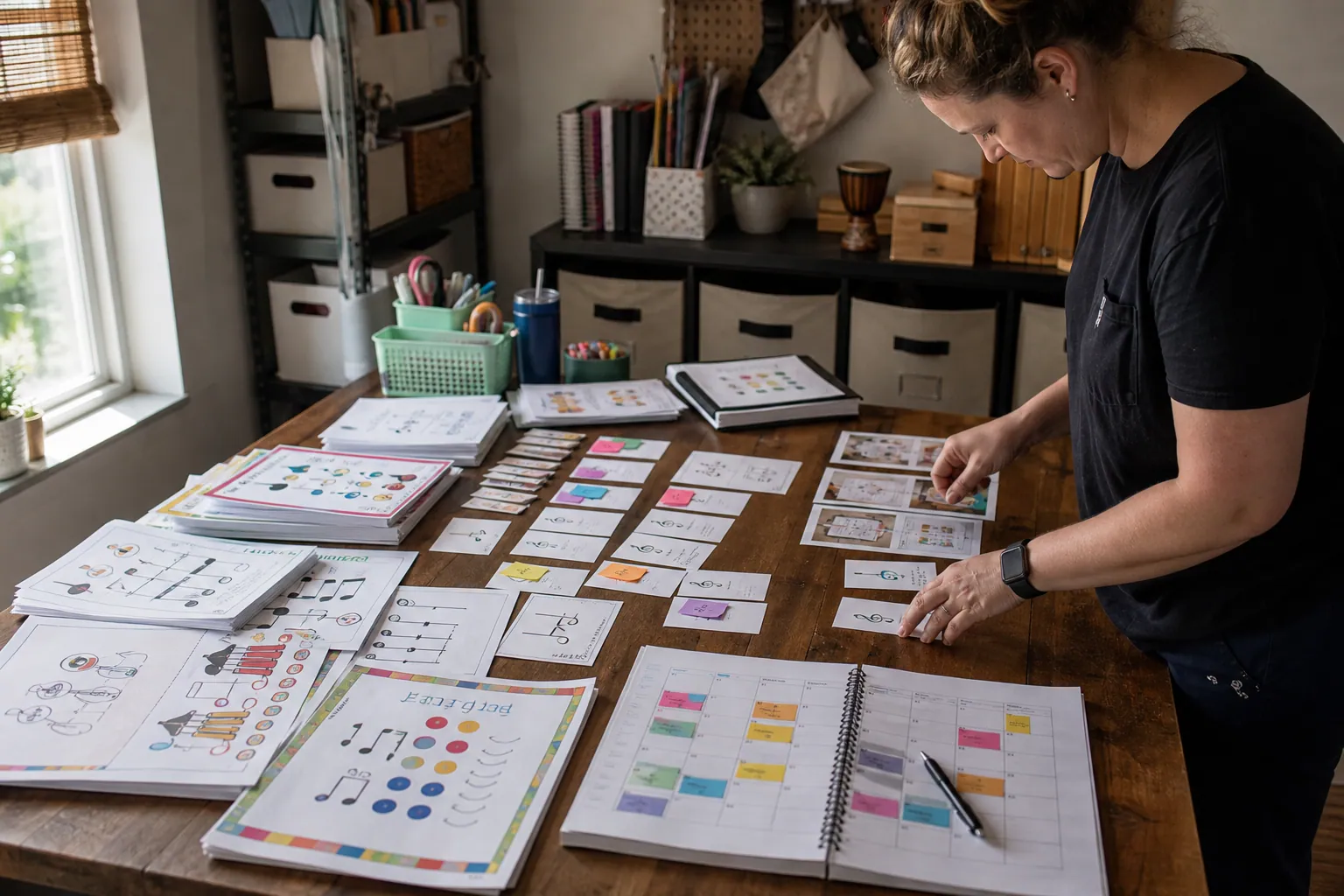
Case Study: How an Elementary Music Printable Shop Turned Pinterest Freebies Into Bundle Sales
A composite teardown of a music printable seller that stopped sending every Pinterest visitor to one freebie and built intent-led paths to bundle sales.

The Consult-Ready Pinterest Operator Playbook for Custom Closet Studios
Turn closet, pantry, and mudroom planning searches into better in-home design consultations with intent-led boards, useful Pins, and a simple weekly routine.

The AI Consultation-Note Pinterest Desk for Landscape Lighting Designers
Turn site-walk notes, before-and-after photos, and homeowner questions into accurate Pinterest content—without letting AI invent project claims or local pricing.