The Dormancy-to-Repotting Pinterest SEO Desk for Bonsai Supply Shops
A practical Pinterest SEO routine for bonsai retailers that turns winter research into spring-ready traffic for tools, soil, pots, and beginner kits.

It is November, and a bonsai supply shop has a familiar problem: its educational Pins about tiny trees earn saves, but its spring repotting kits, substrate, wire, and pots are discovered too late—or not at all.
The opportunity is not to turn Pinterest into a stream of product cards. It is to help a future buyer make one clear decision at a time.
A shopper searching “bonsai repotting tools” may be preparing for a first spring project. Someone searching “bonsai pot size” may already own a tree and need confidence before ordering. A person searching “winter bonsai care” may not be ready to buy anything, and may need climate- and species-specific advice rather than a generic sales message.
For a small bonsai retailer, the job in early winter is to publish accurate, decision-led content while the next season’s buyers are still collecting ideas.
Diagnose where research traffic loses its buying path
Start with the last 60 to 90 days of Pinterest, storefront, and customer-service data. You are looking for gaps between the language people use and the pages they reach.
A simple diagnosis often reveals one of three issues:
- The Pin answers a question but gives no next decision. A beautiful pruning photo sends visitors to the homepage rather than to a beginner tool collection or care guide.
- The destination is a product list without buying context. Shoppers see twelve soil mixes but cannot tell which product fits indoor tropical bonsai, deciduous trees, or a first repotting project.
- The shop makes advice sound universal. Bonsai care varies by species, season, climate, and the tree’s condition. Broad claims can erode trust and create unnecessary support requests.
Build four intent buckets before writing titles
Do not start with a list of products. Start with decisions a customer must make.
| Search cluster | The customer is deciding | Best page to send them to | What the Pin should promise |
|---|---|---|---|
| “bonsai tools for beginners” | What do I actually need? | Beginner kit collection with a contents comparison | A simple starter-tool checklist |
| “bonsai soil mix” | Which substrate is appropriate? | Soil chooser with clearly labeled use cases | How to compare bonsai soil components |
| “bonsai pot size” | What dimensions should I measure? | Pot-sizing guide plus filtered pot collection | A measuring checklist before buying a pot |
| “repotting bonsai supplies” | What should I prepare? | Repotting supply bundle or project checklist | A first-repotting supply list |
| “winter bonsai care” | Is this action appropriate now? | Species- and region-qualified care article | Questions to check before winter work |
This is Pinterest search intent in practical form: the phrase is less important than the decision behind it.
Make an accuracy ledger
Bonsai content can become misleading quickly when a title implies a universal rule. Create a one-page reference sheet for anyone writing Pins. Include:
- Species groups you actively support
- Geographic or hardiness-zone caveats used on your site
- Advice that requires a “check your local conditions” note
- Products that are seasonal, discontinued, or temporarily unavailable
- Claims that need review from a knowledgeable grower before publication
For example, “When to repot a bonsai” is too broad for a product Pin. “First repotting supplies: what to prepare before your local repotting window” is more accurate and still useful.
That small distinction protects customer trust while making the commercial next step clearer.
Run a 2.5-hour weekly publishing desk
A bonsai shop does not need thirty new ideas every week. It needs a dependable way to turn real questions into a few well-matched Pins and destinations.
Monday: collect decision language for 25 minutes
Open four sources:
- Pinterest search suggestions for your core terms
- Store search terms, especially searches with no results
- Customer emails, live-chat logs, and product-review questions
- The prior week’s Pinterest outbound clicks and landing-page behavior
Log each phrase in a sheet with five columns: exact wording, intent bucket, seasonal relevance, best destination, and factual reviewer.
If customers repeatedly ask whether they need mesh, wire, and chopsticks for repotting, that is not three separate blog ideas. It is one useful “repotting supplies explained” page and several Pinterest entry points.
Tuesday: improve one destination for 45 minutes
Choose one existing page each week. Give it the context that a Pinterest visitor lacks.
A strong bonsai supply destination usually has:
- A plain-language explanation of the decision
- A short “who this is for” section
- Product choices organized by use case, not only price or SKU
- Measurements, contents, or compatibility notes near the products
- A note when conditions depend on species, climate, or tree health
- One next action: shop a collection, compare options, or save a checklist
For a pot-sizing guide, add a printable measuring diagram, then place filtered links below it for shallow oval pots, training pots, or drainage mesh. The guide earns the click; the collection gives the visitor somewhere sensible to go.
Wednesday: turn one page into a four-Pin family for 45 minutes
A Pin family uses the same destination but approaches it through different questions. This lets you test language and visuals without creating four disconnected articles.
For a “bonsai pot size” guide, make:
- A measurement-diagram Pin
- A before-you-buy checklist Pin
- A beginner mistake Pin
- A comparison Pin for training pots versus display pots
Keep the visual promise specific. A labeled diagram tends to fit a measurement search better than a moody photo of a finished tree.
Use one primary phrase naturally in the Pin title, then explain the value in the description. Pinterest descriptions should clarify the result, not repeat a phrase five times.
Thursday: review, schedule, and tag for 35 minutes
Before publishing, check the Pin against the actual page.
- Does the title match what the visitor will see immediately?
- Are products in stock or routed to an evergreen category?
- Is the care guidance reviewed and qualified where needed?
- Is the image readable at mobile size?
- Does the URL include a consistent UTM source, medium, campaign, and content label?
A light scheduling queue is enough. The important part is having a visible record of what was published, where it points, and why. A queue in PinPinMe can be useful when a small team needs to keep Pin versions, destinations, and publish dates organized in one place.
Friday: read the right signals for 20 minutes
For content published for spring projects, do not make a keep-or-kill decision after two days. Use a rolling 28-day view, then compare Pins by intent group.
Track:
- Impressions by Pin family
- Outbound clicks per 1,000 impressions
- Engaged sessions from Pinterest UTM traffic
- Product or collection views per Pinterest session
- Add-to-cart rate by landing page
- Revenue and assisted purchases when your reporting can show them
A care Pin can have a lower immediate conversion rate than a tool-kit Pin and still be valuable. The question is whether it sends visitors to a relevant next step, rather than trapping them in an informational dead end.
Three Pins that match bonsai buyer decisions
These examples are deliberately more useful than “Beautiful bonsai ideas.”
Example 1: beginner repotting kit
Pin title: Bonsai Repotting Tools for Beginners: What You Actually Need
Visual: A clean flat lay with labels for shears, root rake, chopsticks, drainage mesh, wire, and soil scoop.
Description: Preparing for your first bonsai repot? Use this equipment checklist to compare the essential tools, understand what each item does, and choose a kit that matches your project. Timing and technique vary by species and local conditions.
Destination: A beginner repotting-kit page with an itemized list, optional upgrades, and a link to a care article.
Why it works: it serves a shopper who is already close to purchasing but needs confirmation that the kit is complete.
Example 2: pot-sizing guide
Pin title: Bonsai Pot Size Guide: 4 Measurements to Check Before Ordering
Visual: A top-down pot diagram with width, depth, drainage-hole, and root-mass labels.
Description: Measure before selecting a bonsai pot. This guide covers the dimensions to record, common fit considerations, and how to browse pots by shape and size.
Destination: A guide with an interactive or printable measurement list followed by a size-filtered pot collection.
Why it works: it pairs a high-confidence search phrase with an equally high-confidence purchase path.
Example 3: soil comparison
Pin title: Bonsai Soil Components Explained: Akadama, Pumice, and Lava Rock
Visual: Three labeled substrate samples with a short “water / air / structure” explainer.
Description: Learn the role of common bonsai soil components before choosing a mix. Compare particle size, drainage considerations, and product options for your species and growing setup.
Destination: A soil-component explainer that links to mixes by use case, not a generic all-products grid.
Why it works: this is research content with a natural bridge to a curated collection.
Mistakes that make bonsai Pinterest SEO harder than it needs to be
Sending every Pin to a collection page
Collections are good purchase destinations, but they rarely answer a beginner’s first question. Pair them with a guide, chooser, or checklist. The page does not need to be long; it needs to resolve the decision that caused the click.
Treating every seasonal question as an immediate sales opportunity
Winter care researchers are not necessarily buyers today. Give them a save-worthy, responsibly framed resource and a low-pressure route to relevant supplies. This also helps your Pins remain useful after seasonal demand changes.
Reusing one image with only new text overlays
A Pin family should test a real angle: diagram versus checklist, product contents versus comparison, beginner concern versus advanced detail. Replacing “tools” with “supplies” on the same design teaches you very little.
Publishing product claims without operational checks
A beautiful Pin that promotes an unavailable pot size, retired soil blend, or outdated kit creates avoidable disappointment. Give one person responsibility for stock and destination checks before Pinterest scheduling.
Measuring saves as the main result
Saves can indicate future consideration, especially for spring projects. They do not prove that a Pin delivered qualified catalog traffic. Review saves alongside outbound clicks, destination engagement, and downstream product views.
Short operating checklist
Use this before next week’s batch:
- Choose one buyer decision, not one broad bonsai topic.
- Match that decision to a page with a clear next step.
- Check species, climate, season, and safety caveats before publishing care advice.
- Create three to four Pins with genuinely different angles for the same destination.
- Put the primary search phrase in a readable Pinterest pin title.
- Write a description that states the benefit and sets accurate expectations.
- Confirm stock status, collection filters, and product URLs.
- Apply consistent Pinterest UTM tracking.
- Review results after enough time for research-led visits to develop.
The durable advantage for a bonsai supply shop is not posting more Pins than competitors. It is becoming the retailer that helps a careful grower make the next correct decision—and makes the right supplies easy to find when they are ready.

The Cold-Weather Pinterest SEO Playbook for Merino Sock Shops
A practical weekly routine for merino sock retailers to turn weather, boot-fit, and gift questions into Pinterest search traffic that reaches the right collection.
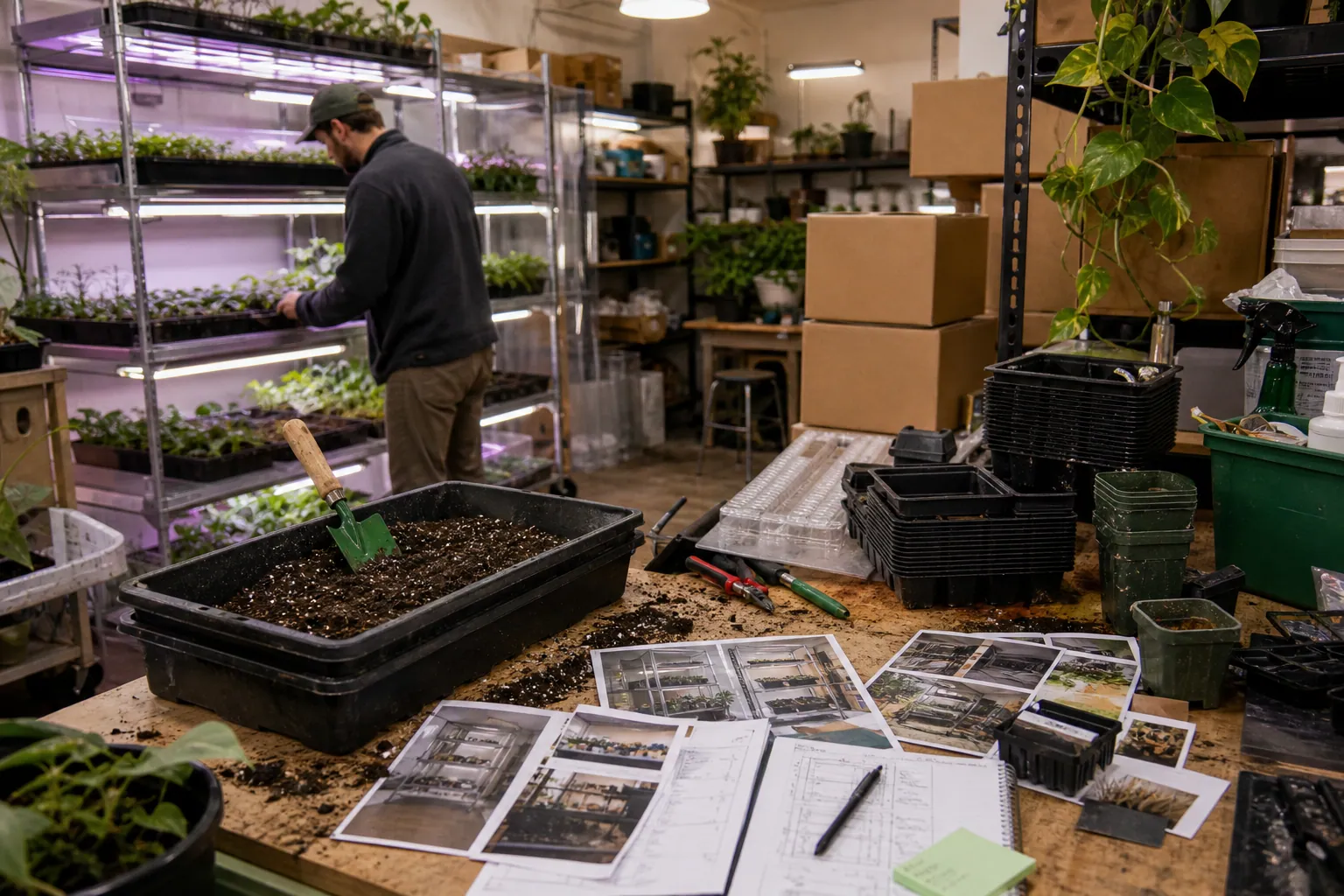
Case Study: How a Seed-Starting Light Shop Turned Pinterest Questions Into Kit Sales
A composite teardown of a seed-starting light retailer that replaced catalog-only Pins with setup and troubleshooting content that sold more complete kits.

The Jar-Eligibility Pinterest SEO Playbook for Candle Refill Shops
Turn candle-jar, refill, care, and gift searches into qualified Pinterest traffic without making unsafe compatibility claims or relying on cozy-photo saves.

The AI Class-Calendar Pinterest Desk for Cooking Schools
A practical AI-assisted Pinterest routine for cooking class studios that need seasonal Pins to fill real seats without publishing stale dates, menus, or availability.

The Fit-First Pinterest Operator Playbook for Sofa Slipcover Shops
A practical Pinterest routine for slipcover retailers that turns room inspiration into fit-confident collection visits, fewer wrong orders, and stronger catalog revenue.

The Stock-Safe Pinterest Tool Stack for Independent Bookshops
A practical Pinterest tool audit for independent bookshops that need holiday gift-guide traffic to reach available titles, durable collections, and measurable sales.