Strategy Memo: Pinterest Funnels for Low-FODMAP Meal Plan Memberships
A practical memo for dietitians turning low-FODMAP Pinterest searches into email subscribers, starter-kit sales, memberships, and consults.

Strategic thesis: a low-FODMAP meal plan membership should not treat Pinterest as a direct checkout channel first. Most searchers arrive anxious, confused, and overloaded. The better revenue path is to use Pinterest to answer one immediate food decision, earn an email signup, segment by need, then move the reader toward the right paid next step.
For a registered dietitian, nutrition educator, or digestive-health creator, Pinterest can bring steady discovery from searches like low FODMAP grocery list, IBS meal prep, low FODMAP lunches for work, and low FODMAP snacks. The mistake is sending all of that intent to one generic membership page.
A person searching for safe work lunches is not in the same buying moment as someone comparing a paid meal plan club. Your funnel should respect that difference.
The operating moment: what the searcher actually wants
Low-FODMAP searches are practical. People are usually trying to solve one of these problems:
- What can I eat this week without making symptoms worse?
- What can I buy at the grocery store?
- What can I pack for work?
- How do I stop eating the same three meals?
- Is a membership worth it, or do I just need a starter list?
That means your Pinterest strategy needs more than pretty recipe pins. It needs destinations that reduce decision fatigue.
A strong funnel starts with a useful page, not a sales pitch. For example:
- A low-FODMAP lunch ideas page that includes five simple combinations
- A grocery-list landing page with categories, swaps, and a downloadable version
- A meal-prep page organized by protein, carb, vegetable, and sauce
- A snack guide with pantry and travel options
- A beginner page explaining elimination, reintroduction, and why professional guidance matters
The membership can be present, but it should not interrupt the reader before they trust you.
Funnel options compared
There is no single best monetization path. The right choice depends on offer maturity, audience trust, and how much follow-up you can support.
| Funnel option | Best use | Tradeoff | Primary metric |
|---|---|---|---|
| Direct membership page | Warm audience, strong brand trust, clear offer | Low conversion from cold Pinterest traffic | Membership page conversion rate |
| Free grocery list lead magnet | Beginner traffic and broad searches | Can attract freebie collectors | Email signup rate and subscriber revenue |
| Free 3-day meal plan | Higher-intent meal planning searches | Requires more content maintenance | Signup-to-paid conversion |
| $9 starter kit tripwire | Buyers who want immediate structure | Needs careful promise and onboarding | Revenue per subscriber |
| Recipe cluster with soft CTA | Long-term Pinterest SEO growth | Slower monetization | Outbound clicks, email assisted revenue |
| Affiliate pantry guide | Useful for product recommendations | Can distract from your core offer | Affiliate EPC and email retention |
| Consult application path | Credentialed dietitians with limited capacity | Lower volume, higher qualification need | Qualified consult applications |
If I were building this from scratch, I would not start with direct membership traffic. I would start with a free grocery list or 3-day meal plan, then introduce a low-priced starter kit or the monthly membership in email.
Why? Because the reader’s first job is not to admire your offer. It is to get through breakfast, lunch, and dinner without feeling lost.
The recommended path: practical help first, paid structure second
For most low-FODMAP meal plan memberships, the cleanest path looks like this:
- Pinterest pin answers a specific meal-planning problem.
- Reader lands on a focused guide, not a homepage.
- The page offers a useful free download related to that exact problem.
- The email sequence delivers quick wins and sets expectations.
- The paid offer appears as the structured next step.
- The buyer is onboarded into the membership with a simple first-week plan.
Here is a concrete example.
Pin topic: Low-FODMAP lunches for work.
Landing page: A guide with 12 lunch combinations, a section on safe assembly meals, and a note that ingredients should be checked against current clinical guidance.
Opt-in: Free printable 5-day low-FODMAP work lunch plan.
Email sequence:
- Email 1: Deliver the lunch plan and explain how to use it this week.
- Email 2: Show three common lunch mistakes, such as stacking too many borderline ingredients.
- Email 3: Share a grocery list and prep routine.
- Email 4: Introduce the paid starter kit or membership as a way to stop rebuilding meals from scratch.
- Email 5: Answer objections: variety, family meals, reintroduction support, and time.
Paid offer: A monthly meal plan membership with weekly menus, shopping lists, swap options, and symptom-friendly planning education.
The sales message is simple: you do not need more random recipes; you need repeatable meal decisions.
When each option is worth choosing
Choose a free grocery list if your audience is mostly new
A grocery list works well because it matches broad Pinterest keyword research. People search for lists before they are ready to buy.
Good pin title examples:
- Low-FODMAP Grocery List for Beginners
- IBS-Friendly Grocery Staples for Easy Meals
- Low-FODMAP Pantry List for Simple Weeknight Dinners
The downside is quality. Some subscribers will download and disappear. Improve quality by making the freebie specific enough to attract the right reader. A generic food list is weaker than a 5-day grocery list for work lunches.
Choose a 3-day meal plan if you want stronger buying intent
A 3-day plan asks for more commitment from the reader. It also demonstrates the value of your paid meal plan membership.
Good pin title examples:
- 3-Day Low-FODMAP Meal Plan for Busy Weeks
- Low-FODMAP Meal Prep Plan With Grocery List
- Simple IBS Meal Plan for Workdays
This is usually the best bridge to a membership because it lets the reader experience your planning style.
Choose a tripwire if you have a clear starter product
A $7 to $19 starter kit can work if it solves a bounded problem:
- Low-FODMAP lunch box kit
- 14-day beginner meal plan
- Pantry reset guide
- Dining-out cheat sheet
Do not make the tripwire a smaller, messier version of the membership. Make it a useful first purchase that naturally leads to the ongoing plan.
Choose affiliate content only if it supports the reader
Affiliate paths can be useful for pantry staples, lunch containers, cookbooks, or kitchen tools. But in digestive-health content, trust is fragile.
Only recommend products you would be comfortable explaining in detail. Avoid letting affiliate income turn your page into a shopping list with weak nutrition context.
Choose consult applications if you need fewer, better leads
If you are a credentialed dietitian selling one-to-one services alongside the membership, Pinterest can feed qualified consult inquiries. The page should make scope clear:
- Who the consult is for
- What you can and cannot provide
- Whether insurance, location, or licensure affects availability
- How the membership differs from individualized care
A consult path will convert fewer people, but each conversion may be worth much more.
The page architecture I would build first
Do not build twenty thin blog posts. Build five durable landing pages that match real search intent.
Page 1: Beginner grocery list
Purpose: capture early-stage readers.
Include:
- Simple categories
- Common mistakes
- Printable download
- A short explanation of why tolerance varies
- CTA to the free grocery list
Page 2: Work lunch guide
Purpose: attract weekday planners.
Include:
- Assembly-style meals
- No-reheat options
- Prep tips
- Downloadable 5-day lunch plan
- CTA to starter kit or membership after the freebie
Page 3: Meal prep plan
Purpose: attract people closer to buying structure.
Include:
- 2-hour prep outline
- Shopping list
- Mix-and-match meals
- Membership preview
Page 4: Snack guide
Purpose: earn saves and repeat visits.
Include:
- Pantry snacks
- Travel snacks
- Office snacks
- Label-reading reminders
- Email opt-in tied to snack planning
Page 5: Membership comparison page
Purpose: convert warmer visitors.
Include:
- Who the membership helps
- What is included each month
- Sample week
- FAQs
- Difference between education, meal plans, and personalized nutrition counseling
These pages give you enough destinations to test Pinterest pin titles, descriptions, boards, and offers without scattering your effort.
Pinterest angles to test
The same page can support several pin angles. For the work lunch page, test:
- Problem angle: Low-FODMAP lunches that are not boring
- Time angle: 10-minute IBS-friendly work lunches
- Planning angle: 5-day low-FODMAP lunch plan
- Grocery angle: What to buy for low-FODMAP work lunches
- Mistake angle: Low-FODMAP lunch mistakes that make planning harder
For the grocery list page, test:
- Beginner angle: Low-FODMAP grocery list for beginners
- Pantry angle: IBS-friendly pantry staples
- Budget angle: Low-FODMAP groceries without wasting food
- Family angle: Low-FODMAP staples for shared meals
This is where a Pinterest-specific production tool can help. If you already have the page and keyword pocket chosen, PinPinMe can help turn one destination into multiple search-aware pin variants without starting every title and description from a blank screen.
Tradeoffs to accept before you start
You will get saves before sales
Low-FODMAP content is planning-heavy. Saves may rise before outbound clicks and purchases. That is not failure. It means the content is entering meal-planning boards.
Watch whether saved pins later produce outbound clicks. If a pin gets saves but never clicks, adjust the creative to make the destination more obvious.
Broad beginner keywords bring mixed-quality leads
Pinterest SEO around beginner terms can drive volume, but not every visitor is ready for a paid plan.
Use email behavior to sort this out. A subscriber who clicks a meal prep email, views the membership page, and downloads a shopping list is different from someone who only grabs a free PDF.
Medical trust matters more than aggressive conversion
Be precise with claims. Avoid promising symptom relief. Make it clear when readers should seek individualized guidance.
Your funnel can still sell. It just needs to sell structure, clarity, and support rather than certainty.
Membership sales may lag by weeks
Pinterest discovery is not always a same-day conversion channel. A reader may save a pin, click three weeks later, join your list, and buy after trying the free plan.
This is why Pinterest UTMs and email tagging matter. Without them, the channel will look weaker than it is.
Metrics: what to measure and what to ignore
You need two layers of measurement: Pinterest behavior and funnel economics.
Pinterest metrics
Track by page and pin angle:
- Impressions: useful for reach, not proof of demand
- Saves: planning intent and topic fit
- Outbound clicks: real interest in the destination
- Outbound click rate: creative and promise quality
- Top boards: clues about how Pinterest categorizes your content
- Pin age: many pins need several weeks before judgment
A low-FODMAP snack pin with high saves and low clicks may still be valuable if it feeds future traffic. But if the pattern repeats across a whole topic, your pin may be giving away too much without creating a reason to visit.
Landing page metrics
Track:
- Visitor-to-email signup rate
- Scroll depth on long guides
- CTA clicks
- Freebie confirmation rate
- Membership page views from each guide
For cold Pinterest traffic, a focused landing page may convert to email at 3% to 10%, depending on relevance, page speed, and trust. If you are below that, check the offer match before blaming the traffic.
Email and revenue metrics
Track:
- Welcome sequence open and click rates
- Freebie-to-tripwire conversion
- Freebie-to-membership conversion
- Revenue per subscriber by source
- Trial-to-paid conversion, if you offer a trial
- First-month churn
- Consult applications from Pinterest-sourced subscribers
The most useful number is not total subscribers. It is revenue per qualified subscriber by entry point.
For example:
- Grocery list subscribers may convert at 1% but arrive in higher volume.
- 3-day meal plan subscribers may convert at 4% with lower volume.
- Meal prep page subscribers may produce fewer signups but more membership starts.
That is the decision you need Pinterest analytics to support.
UTM structure for clean reporting
Use simple UTMs that your future self can read.
Example:
utm_source=pinterest&utm_medium=organic&utm_campaign=low_fodmap_membership&utm_content=work_lunch_problem_angle
Keep campaign names stable. Change content names for the test angle.
Useful utm_content examples:
- grocery_list_beginner
- lunch_plan_workday
- snack_guide_travel
- meal_prep_budget
- membership_sample_week
Then review performance by landing page and angle, not just by individual pin.
The 30-day action plan
Days 1-3: Pick one paid path
Choose the primary monetization goal for the month:
- Email signup to membership
- Email signup to starter kit
- Email signup to consult application
- Starter kit to membership
Do not try to optimize all four at once.
For most membership owners, the best first target is email signup to membership page view. You need proof that Pinterest subscribers are interested in the paid structure before you obsess over checkout conversion.
Days 4-7: Build or improve two landing pages
Create two pages only:
- Low-FODMAP grocery list for beginners
- Low-FODMAP work lunch plan
Each page should include:
- A clear promise above the fold
- Useful content before the opt-in
- One primary freebie
- A soft membership CTA after the reader gets value
- Credentials or trust markers
- A note about individualized nutrition needs
Do not send these pins to your homepage.
Days 8-10: Write the email bridge
Create a five-email sequence for each freebie, or one shared sequence with small segmentation.
Keep the emails practical:
- Deliver the download
- Teach one planning habit
- Share one common mistake
- Show a sample paid resource
- Invite the reader to join or learn more
If you sell a starter kit, introduce it before the membership. If your membership is already low-priced and easy to understand, send readers directly to the membership sample week.
Days 11-16: Produce the first pin batch
Create 24 pins:
- 12 pins for the grocery list page
- 12 pins for the work lunch page
Use four angles per page and three creative variations per angle.
Example for the lunch page:
- 3 problem-angle pins
- 3 time-angle pins
- 3 planning-angle pins
- 3 grocery-angle pins
Write descriptions that add context rather than repeating the title. A good description might mention work lunches, meal prep, grocery planning, and beginner-friendly low-FODMAP structure without stuffing keywords.
Days 17-20: Publish and tag carefully
Schedule pins across relevant boards such as:
- Low-FODMAP Meal Planning
- IBS-Friendly Recipes
- Easy Work Lunch Ideas
- Meal Prep for Sensitive Stomachs
- Grocery Lists and Pantry Planning
Make sure every pin has the correct URL and UTM. One broken tracking setup can waste a month of learning.
Days 21-24: Add one paid-intent page
Now build a membership sample week page.
This page should not be a long sales letter. It should show the product clearly:
- What a member receives
- A sample menu
- A sample shopping list
- How swaps work
- Who it is not for
- Price and cancellation details
Create six pins for this page, but expect lower volume. These pins are for warmer searchers and retargeted interest, not broad reach.
Days 25-27: Review early signals
Do not judge revenue yet. Review setup quality and early engagement:
- Are pins indexing under the right topics?
- Are saves showing up on relevant boards?
- Which pin angles are earning outbound clicks?
- Are landing pages converting visitors to subscribers?
- Are subscribers clicking the first two emails?
Fix obvious mismatches. If the work lunch pins get clicks but the page gets no signups, the freebie may be too weak or hidden. If the grocery list pins get saves but no clicks, the creative may not make the download valuable enough.
Days 28-30: Decide the next test
Choose one of three moves:
- Scale the winning angle with 12 more pins.
- Improve the landing page offer if clicks are strong but signups are weak.
- Improve the email bridge if signups are strong but paid clicks are weak.
Do not create a new topic just because you are impatient. Pinterest needs time, and your first month is about building a clean funnel with readable signals.
The memo in one decision
If your low-FODMAP membership is not converting Pinterest traffic, the problem may not be Pinterest. It may be that you are asking a confused meal planner to become a member before you have helped them plan one meal.
Start with the meal decision. Offer a useful free next step. Use email to show your planning method. Then sell the paid structure as relief from starting over every week.
That is a healthier funnel for the reader and a more measurable revenue path for the operator.

Strategy Memo: Build a Pinterest Revenue Ladder for Chicken Coop Plan Sellers
Turn coop-size, winter ventilation, and predator-control searches into plan sales without forcing every Pinterest visitor into the same email funnel.
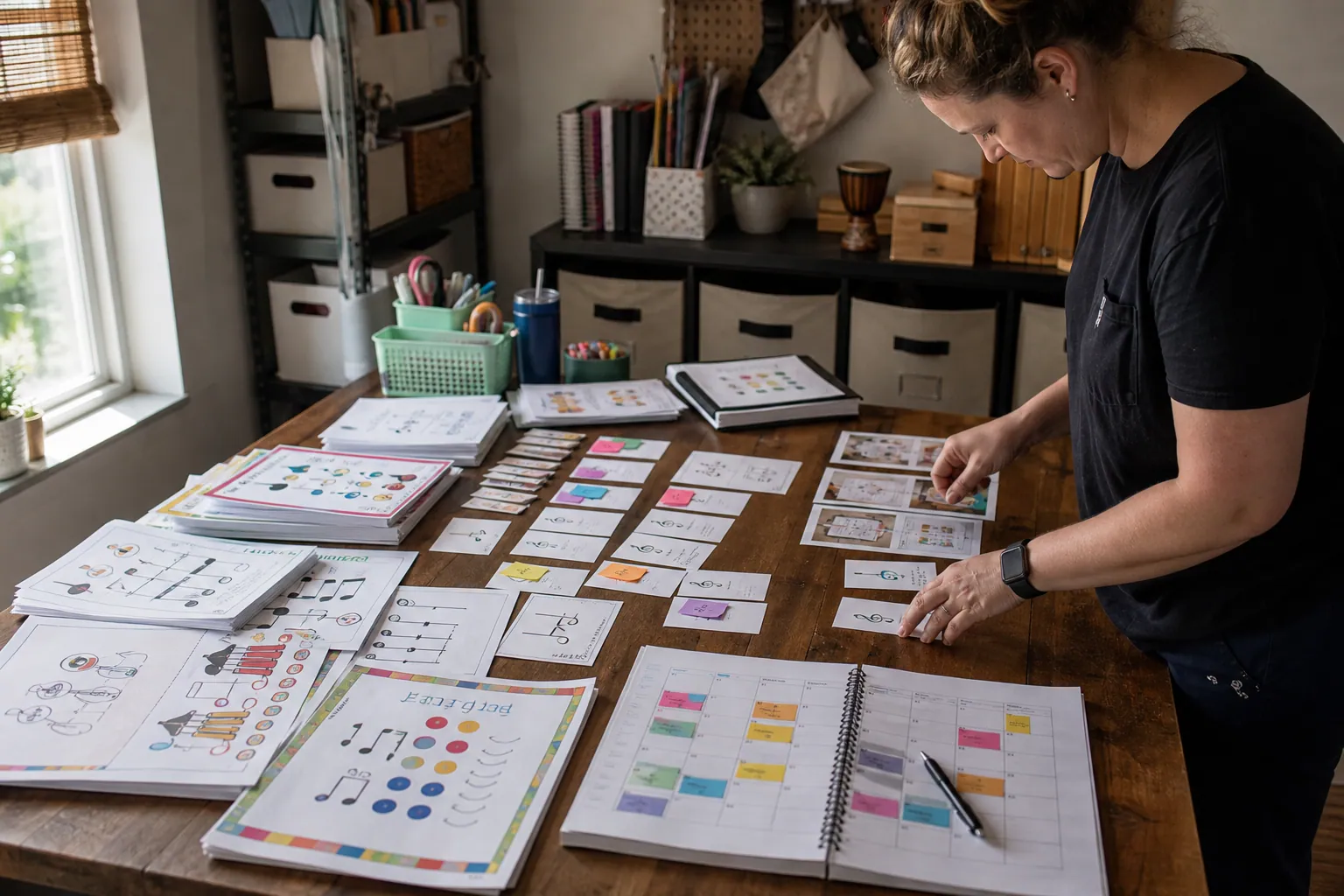
Case Study: How an Elementary Music Printable Shop Turned Pinterest Freebies Into Bundle Sales
A composite teardown of a music printable seller that stopped sending every Pinterest visitor to one freebie and built intent-led paths to bundle sales.

The Collection-to-Enrollment Pinterest Desk for Surface Pattern Design Courses
A copyable Pinterest content operation for surface pattern design educators who want sketchbook searches to become useful email subscribers and course enrollments.

The October Pinterest Funnel for Royal Icing Template Shops
Turn holiday cookie-planning searches into template sales with a two-lane Pinterest funnel for ready buyers and beginner decorators.

Strategy Memo: Pinterest SEO for Gel Nail Brands—Prep and Removal First
A 30-day Pinterest SEO plan for at-home gel nail brands that prioritizes beginner prep, safe removal, and troubleshooting content over crowded shade inspiration.

Pinterest SEO for Backyard Greenhouse Kit Shops
A practical weekly Pinterest SEO routine for greenhouse kit sellers turning foundation, placement, and size questions into qualified spring catalog traffic.