The Two-Lane Pinterest Funnel for Freezer-Meal Cookbook Sellers
Turn Pinterest dinner-planning searches into cookbook revenue with a two-lane funnel: send ready buyers to the offer and planners to a useful prep guide.

On Monday morning, a digital cookbook creator opens analytics and sees a familiar picture: a Pin called “10 freezer meals for busy weeks” earned 18,000 impressions and 420 outbound clicks. Yet only two people bought the $24 cookbook.
The problem is not necessarily the Pin. It is that one promise is trying to serve three different people:
- A parent who needs dinner tonight.
- A planner who wants to stock the freezer on Sunday.
- A shopper who is ready to buy a complete recipe collection.
Those people should not all land on the same generic sales page. A freezer-meal cookbook seller needs two Pinterest paths: a short route for purchase-ready planners and a longer route for people who need proof, a small win, and a reason to return.
Diagnose the leak before making another Pin
Start by mapping the current route from search to revenue. Do this for the top five Pins that send traffic, not the five Pins with the most impressions.
| Funnel stage | What to inspect | A common leak |
|---|---|---|
| Pin | Title, visual promise, destination | The Pin promises a free recipe but links to a sales page |
| Landing page | Match between Pin and first screen | The reader sees a cookbook cover before seeing a meal plan |
| Opt-in | Form completion and delivery | The freebie is too broad or arrives without a usable next step |
| Clicks and purchases by subscriber source | Every subscriber receives the same generic promotion | |
| Checkout | Product-page views, carts, purchases | The page does not show recipes, prep time, servings, or what is included |
Sort traffic by planning moment
Do not segment only by broad terms such as “easy dinners.” The useful distinction is the moment that triggered the search.
Buy-now planning intent often includes searches such as:
- freezer meal cookbook
- make ahead dinner plan
- freezer meal bundle
- 30 day freezer meal plan
These visitors can go to a focused product page. Show the cookbook contents, prep-day timing, dietary notes where relevant, a few finished dishes, and a clear purchase option.
Plan-first intent often includes:
- freezer meals for busy families
- Sunday meal prep ideas
- easy meals to freeze
- what meals freeze well
These visitors are looking for a way to decide or begin. Send them to a practical opt-in, such as a three-dinner prep map with a grocery list and freezer labels. The free resource should solve one small planning problem without giving away the entire paid cookbook.
Recipe-now intent includes searches such as “freezer chicken enchiladas” or “lasagna to freeze before baking.” A recipe page is the honest destination here. Place a contextual upgrade after the recipe: “Want a four-week freezer rotation with coordinated shopping lists?”
This is Pinterest search intent in practice: match the destination to the decision a person is making, rather than forcing every click into the same funnel entrance.
Establish a small baseline
For the next four weeks, record these numbers separately for each route:
- Outbound clicks from each tagged Pin.
- Landing-page conversion rate: email signup or purchase.
- Email subscribers by Pin topic and landing page.
- Cookbook revenue from direct visits and from email subscribers acquired through Pinterest.
- Refunds or support questions that reveal an expectation mismatch.
Use one readable UTM pattern. For example:
?utm_source=pinterest&utm_medium=organic&utm_campaign=freezer_prep&utm_content=three_dinners_checklist_v1
The campaign should name the search theme. The content should identify the exact creative or Pin family. That makes Pinterest UTM tracking useful when you later compare “Sunday prep” against “new baby meal train” or “back-to-school dinners.”
Run the two lanes every week
A lean operation does not require daily publishing. It requires a dependable loop that begins with a commercial question: Which planning moment can we help this week, and which route should it take?
Monday: choose one search pocket and one offer
Pick a narrow topic with a clear destination. For example:
- “Freezer meals for a new baby” → three-meal prep guide → cookbook
- “Back-to-school freezer dinners” → direct cookbook page or weekly dinner bundle
- “Meals to make before surgery” → practical planning article → prep-guide signup
- “Freezer meals for one person” → portioning guide → a smaller paid recipe pack
Do not publish every theme to every board. Choose the board and page that best reflect the promise.
Write a one-sentence Pin brief before designing:
For people planning weekday dinners on Sunday, show how three recipes share one prep session and send them to the three-dinner prep map.
That sentence prevents vague “easy dinner ideas” content from taking over the account.
Tuesday: build three distinct Pins, not three near-duplicates
Make a small Pin family around the same destination, with each creative emphasizing a different reason to click.
For a three-dinner prep-map opt-in:
- Time angle: “Prep 3 Freezer Dinners in 90 Minutes”
- Decision angle: “Which Dinners Freeze Best? Start With These 3”
- Outcome angle: “A Sunday Prep Plan for 3 No-Decision Weeknights”
Keep each Pinterest pin title specific. A visual that says “Easy freezer meals” is not enough; it does not tell the visitor whether they will receive recipes, a shopping list, or a full plan.
Use photos that show the actual outcome: labeled containers, a packed freezer shelf, or a finished reheated meal. Avoid styling a dish as if it were a same-night recipe when the linked resource is a prep planner.
Wednesday: check the page like a skeptical visitor
Open the destination on a phone and answer these questions in under 20 seconds:
- Does the headline repeat the Pin’s promise?
- Can a visitor see what they receive without scrolling through a biography?
- Is the form asking only for the information needed to deliver the resource?
- Does the thank-you page offer a useful next step?
- Does the paid cookbook page state recipe count, prep time, format, ingredient assumptions, and price clearly?
A reliable landing-page sequence might look like this:
- Pin: “Prep 3 Freezer Dinners in 90 Minutes.”
- Page: a preview of the three-dinner plan and email form.
- Thank-you page: download link plus a $7 “weeknight freezer labels” add-on or a preview of the $24 cookbook.
- Email: delivery, practical prep guidance, recipe proof, then cookbook invitation.
The point is not to force a tripwire into every funnel. It is to give a motivated planner an appropriate next move while their intent is still high.
Thursday: publish and tag accurately
Publish the three-Pin family across the relevant board placements, each with its own utm_content value. A Pinterest-specific scheduler can reduce the manual publishing burden; if a queue and tagged-link library are the bottleneck, PinPinMe can help keep those details organized.
Do not alter the destination halfway through the test. If one Pin reaches the prep map and another reaches a product page, treat that as two different tests—not a creative comparison.
Friday: review signal quality, not vanity totals
At the end of the week, ask:
- Did the Pins earn outbound clicks relative to their impressions?
- Did those visitors sign up or buy?
- Did one promise create more engaged subscribers than another?
- Did the direct-buy route produce cart starts but few orders?
A Pin with fewer clicks can be the better commercial asset. If “90-minute Sunday prep” sends 40 visitors and 10 subscribe, it may be worth far more than a broad recipe Pin that sends 300 visitors who leave immediately.
Give organic Pins time. Review early landing-page behavior after seven days, then assess sales and assisted email revenue after 21 to 30 days. Freezer-meal planning often happens before a busy period, not necessarily on the same day as the purchase.
Put the right offers behind the right Pins
Here are three practical routes for a cookbook business with a $24 flagship offer.
Example 1: The direct cookbook route
Search theme: “30 day freezer meal plan”
Pin title: “30-Day Freezer Meal Plan With 24 Family Dinners”
Destination: Cookbook sales page
Best when: The paid product genuinely contains the exact plan promised in the Pin.
Page requirement: Include a sample calendar, recipe list, prep-day structure, and clear notes on file format and access. A visitor should not have to infer whether the cookbook includes a plan or merely contains freezer-friendly recipes.
Example 2: The planner opt-in route
Search theme: “Sunday meal prep freezer meals”
Pin title: “Plan 3 Freezer Dinners From One Grocery List”
Destination: Free three-dinner prep map
Email sequence:
- Email 1, immediately: Deliver the map and tell readers which recipe to cook first.
- Email 2, day 2: Explain one freezer-prep mistake, such as cooling food before sealing or labeling with reheating instructions.
- Email 3, day 4: Share a recipe excerpt and show how the paid cookbook reduces repeat planning.
- Email 4, day 6: Invite the reader to purchase the cookbook with a time-bound bonus only if it is real, such as a seasonal substitution chart.
Best when: Your audience needs a planning win before buying a full collection.
Example 3: The recipe-to-upgrade route
Search theme: “chicken pot pie freezer meal”
Pin title: “Freezer Chicken Pot Pie: Assemble Now, Bake Later”
Destination: Full recipe post
Upgrade placement: After the recipe card, offer a related mini collection: “Get 12 make-ahead dinners with a coordinated grocery plan.”
Best when: The search is narrow and the visitor expects a usable recipe, not a gated download.
This route can create a dependable top-of-funnel library. Its mistake is treating every recipe reader as a cold lead forever. Tag the signup source so future emails can reference the topic they chose.
Mistakes that flatten cookbook revenue
Sending all Pins to the homepage
A homepage asks a Pinterest visitor to choose their own adventure. A Pin should send them to the page that completes the promise: a recipe, planner, bundle, or cookbook.
Using a lead magnet that attracts the wrong person
“100 Free Dinner Ideas” may grow a large list of people looking for inspiration. “Three freezer dinners from one grocery list” attracts people much closer to the operational problem your cookbook solves.
Hiding the price until the last click
For a low-ticket digital cookbook, withholding a $24 price usually does not create intrigue. It creates ambiguity. Be clear about what is paid and what is free.
Treating every new subscriber identically
A visitor who requested a postpartum freezer-prep guide should not get the same first email as someone who saved a holiday cookie board. Segment at the topic level, even if the rest of the automation stays simple.
Measuring only purchases inside a short window
Some visitors save a Pin, shop later from an email, or return through direct traffic. Track direct purchases, email-attributed sales, and assisted conversions from your Pinterest landing pages. Pinterest ecommerce analytics should guide decisions, but it should not erase delayed revenue just because it is harder to assign.
Publishing a high volume of almost identical graphics
Repeating a single promise in different colors does not reveal much. Test an angle: time saved, shared grocery list, freezer confidence, seasonal planning, or recipe outcome. Then give each angle a matching page and UTM label.
A short operating checklist
Before publishing this week’s batch, confirm:
- One narrow freezer-meal planning moment is selected.
- Every Pin has a specific promise, not a generic dinner claim.
- The destination matches the searcher’s expected next step.
- Direct-buy Pins lead to a product page with contents, price, and proof.
- Opt-in Pins deliver a useful, immediately usable planning asset.
- Email messages reflect the topic that earned the signup.
- Each creative has a distinct UTM content label.
- You have a 7-day behavior review and a 21- to 30-day revenue review scheduled.
A freezer-meal cookbook does not need a complicated funnel. It needs honest intent matching: help recipe searchers cook, help planners plan, and make it easy for ready buyers to see why the complete cookbook is worth purchasing.

Strategy Memo: Build a Pinterest Revenue Ladder for Chicken Coop Plan Sellers
Turn coop-size, winter ventilation, and predator-control searches into plan sales without forcing every Pinterest visitor into the same email funnel.

The October Pinterest Funnel for Royal Icing Template Shops
Turn holiday cookie-planning searches into template sales with a two-lane Pinterest funnel for ready buyers and beginner decorators.

The Collection-to-Enrollment Pinterest Desk for Surface Pattern Design Courses
A copyable Pinterest content operation for surface pattern design educators who want sketchbook searches to become useful email subscribers and course enrollments.
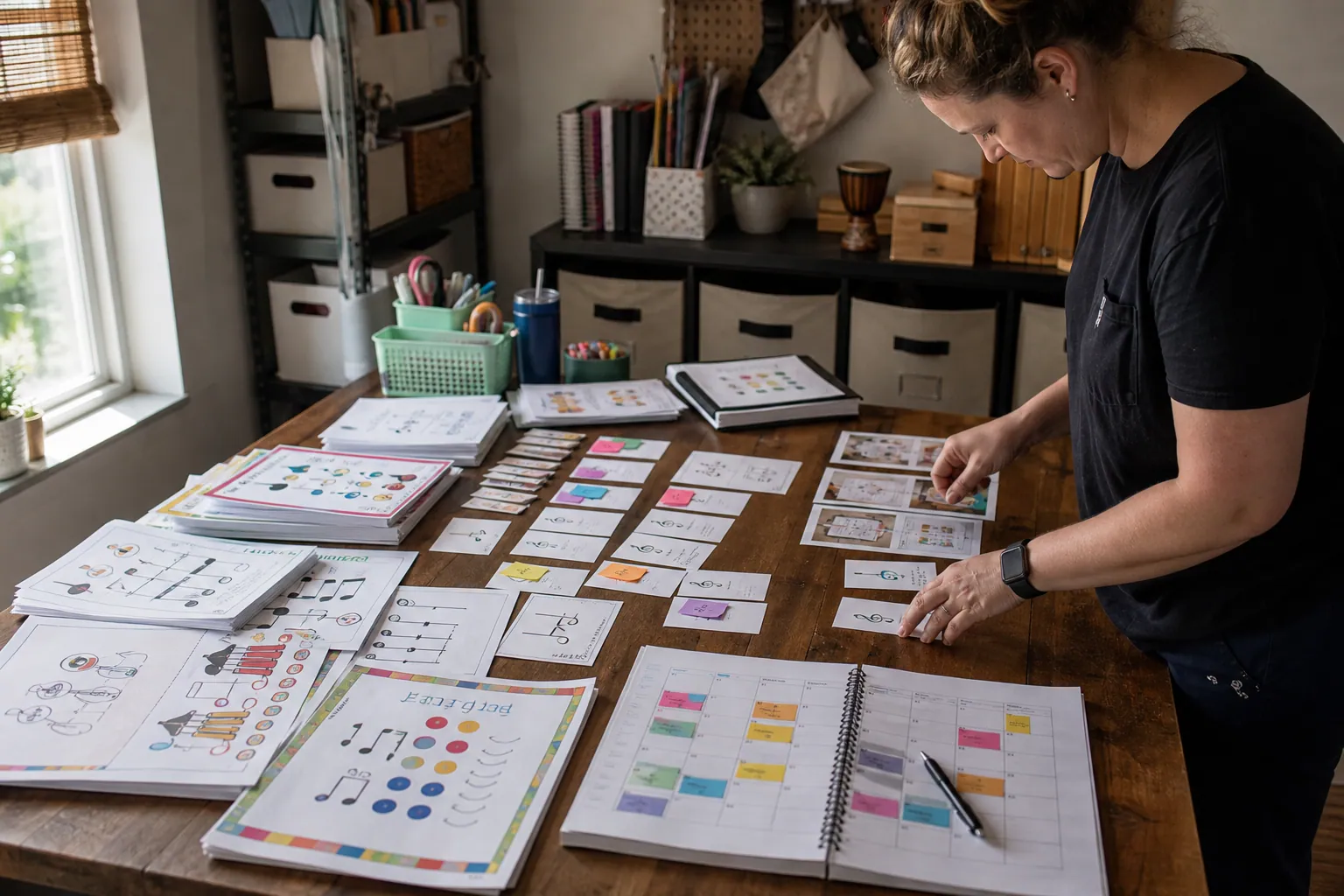
Case Study: How an Elementary Music Printable Shop Turned Pinterest Freebies Into Bundle Sales
A composite teardown of a music printable seller that stopped sending every Pinterest visitor to one freebie and built intent-led paths to bundle sales.

The AI Gift-Intent Pinterest Desk for Merino Sock Shops
A practical weekly routine for merino sock retailers using AI to turn verified product facts, gifting questions, and stock signals into accurate Pinterest traffic.

The Grant-Calendar Pinterest Content Desk for Self-Paced Courses
Turn real grant-writing questions into accurate Pinterest resources, email signups, and course discovery with a weekly publishing desk built to stay current.