Strategy Memo: The Cargo Bike Accessories Pinterest Rebuild
An anonymized case memo for a cargo bike accessory shop choosing between catalog pins, inspiration content, and search-led mission pages.

Strategic thesis: a cargo bike accessory shop should not treat Pinterest as a mirror of its catalog. The stronger bet is to organize pins around rider missions: school runs, grocery trips, rainy commutes, and weekend errands. People rarely search Pinterest for a specific pannier model name. They search for the life they are trying to make easier.
This memo is for a small ecommerce operator with practical gear, limited content time, and a catalog that is useful but not self-explanatory.
The case below is anonymized, but the pattern is common: good products, decent photography, scattered pinning, and no clear way to tell whether Pinterest is creating qualified traffic or just pleasant saves.
The business situation
The shop sells cargo bike bags, baskets, rain covers, child-seat organizers, and commuter accessories. It has 42 active SKUs, a Shopify store, and a small email list built mostly from post-purchase signups.
Before the rebuild, the Pinterest account looked tidy but passive:
- Product pins linked directly to individual product pages.
- Pin titles used internal product language like canvas pannier, rack bag, and roll-top tote.
- Boards were organized by product type rather than customer situation.
- UTMs were inconsistent, so Pinterest traffic blended into organic social.
- The team made pins when new products launched, then went quiet.
The issue was not effort. It was framing.
A parent planning a no-car school commute does not wake up thinking, I need the olive waterproof side pannier. They think:
- How do I carry two backpacks on a cargo bike?
- What do I need for biking to school in the rain?
- How do I grocery shop by bike without crushing everything?
- What should I keep on an e-bike for daily errands?
That is the Pinterest SEO opportunity.
The options on the table
The founder had four realistic choices. Each could work, but not for the same reason.
| Option | What it means | Upside | Risk | Best use |
|---|---|---|---|---|
| Catalog mirror | Pin every product to its product page | Fast to produce; easy to maintain | Low intent unless the product is already familiar | Always-on baseline |
| Lifestyle inspiration | Beautiful cargo bike scenes and family riding images | Strong saves; brand-building | Can attract dreamers who never click | Top-of-funnel reach |
| Rider-mission pages | Guides for school runs, grocery trips, rain, errands | Matches search intent; easier to merchandise multiple products | Requires landing pages and better copy | Main growth bet |
| Creator-led tutorials | Partner with riders for packing demos and setup posts | Trust, realism, proof | Slower approvals; inconsistent output | Later once pages convert |
My recommendation was not to abandon product pins. It was to stop making them carry the whole account.
A product pin can sell when someone already understands the problem. A mission page can educate the shopper before they know which product solves it.
Recommended bet: build around rider missions
The shop needed four mission pages, each supported by multiple pin angles. Not long essays. Practical, merchandised pages that help a rider make a decision.
Mission 1: the school run setup
Audience: parents using a cargo bike for elementary school drop-off.
Page promise: carry backpacks, lunchboxes, rain layers, and kid extras without turning the bike into a messy pile.
Suggested sections:
- A simple morning packing diagram
- Backpack placement options by bike style
- Wet-weather add-ons
- Kid-accessible storage vs parent-only storage
- Recommended products by budget
- A short email capture: printable school-run bike checklist
Pin angles:
- School run cargo bike setup for two kids
- How to carry backpacks on a cargo bike
- No-car school drop-off checklist
- Rainy morning bike commute with kids
- Cargo bike accessories for back-to-school season
This is especially useful in July. By the time back-to-school searches rise in August, new pins already need a little history.
Mission 2: the grocery run
Audience: city riders and e-bike owners replacing short car trips.
Page promise: bring home groceries without smashed bread, leaky produce, or overloaded handlebars.
Pin angles:
- Grocery shopping by bike packing guide
- Front basket vs pannier for groceries
- Cargo bike bags for farmers market trips
- E-bike grocery setup for small apartments
- How to keep cold items separated on a bike ride home
This page should not feel like a product grid. It should feel like someone who actually rides bikes wrote it.
Include details like where eggs go, why milk belongs low, and which bags are easiest to remove at the checkout counter.
Mission 3: the rainy commute
Audience: commuters who want to ride more consistently but hate damp gear.
Page promise: keep work items, jackets, laptops, and kid supplies dry.
Pin angles:
- Rainy bike commute gear checklist
- Waterproof pannier setup for work days
- How to bike commute in the rain without soaking your bag
- Fall e-bike commute essentials
- Best cargo bike storage for wet weather
This mission can lead to higher order values because it bundles problems: dry storage, visibility, organization, and spare layers.
Mission 4: the weekend errand loop
Audience: casual riders who need a reason to buy accessories before they become daily commuters.
Page promise: pack for the library, bakery, park, and picnic without overthinking it.
Pin angles:
- Weekend cargo bike packing list
- Family bike picnic setup
- E-bike accessories for errands around town
- Bike basket ideas for library and market days
- Minimal cargo bike setup for new riders
This is the softer, save-friendly content. It may not convert first, but it can introduce the brand to riders before school and commute urgency appears.
Before and after: how the pins changed
The original pins were technically fine. They had product photos, reasonable design, and clear links.
The problem was that the copy assumed too much.
Before
Pin title: Waterproof Side Pannier in Navy 22L
Description: Durable waterproof pannier for cargo bikes and commuters. Available in navy, black, and moss.
Destination: product page
This pin is accurate, but it does not meet a planning search.
After
Pin title: Rainy Bike Commute Setup That Keeps Your Work Bag Dry
Description: A practical wet-weather cargo bike setup with low storage, quick-access layers, and waterproof panniers for daily commuting.
Destination: rainy commute guide
The product still appears, but the entry point is the rider’s problem.
Before
Pin title: Front Rack Tote Bag for E-Bikes
Description: A canvas tote designed for front racks, errands, and everyday use.
Destination: product page
After
Pin title: Grocery Shopping by Bike Without Crushing the Bread
Description: See where to pack produce, bread, cold items, and heavy bottles on a cargo bike or e-bike grocery run.
Destination: grocery run guide
This is the core shift: from item to use case.
Tradeoffs to accept on purpose
A strategy memo should make the costs visible. This approach has real tradeoffs.
You will publish fewer product-only pins
That can feel uncomfortable when the catalog is large. But catalog coverage is not the same as demand creation.
The shop still needs product pins, especially for strong visuals and shopping surfaces. But the weekly publishing mix should lean toward mission-led pins until the data says otherwise.
A practical split for the first month:
- 60% mission-led guide pins
- 25% product pins tied to those missions
- 15% lifestyle or save-friendly inspiration pins
Landing pages will take more work than pins
This is the main operational cost. A pin can be created in minutes. A useful page requires choices: copy, photography, product order, internal links, email capture, and mobile QA.
But one strong mission page can support dozens of pins over time.
If the team only has capacity for one page, start with the school run setup. It has seasonal urgency, product bundling potential, and clear Pinterest search behavior.
Saves may look weaker at first
Pretty bike lifestyle pins often earn saves because they represent an identity. Practical problem-solving pins may earn fewer saves but better outbound clicks.
Do not judge the rebuild only by saves. Saves matter, but they are not the whole scorecard.
Search timing matters
Pinterest content often needs time. If you want fall commute and back-to-school traffic, July is not early. It is appropriate.
For holiday gifting, start the gift and winter riding content before the store feels busy.
Metrics that decide whether this is working
The old account looked at monthly views and occasional Shopify sessions. That was not enough.
For this rebuild, I would define three levels of measurement.
1. Pin-level signals
Use these to understand which ideas deserve more creative variations.
| Metric | What it tells you | Watch after |
|---|---|---|
| Impressions | Whether Pinterest understands the topic | 2-4 weeks |
| Save rate | Whether the idea is useful or aspirational | 2-6 weeks |
| Outbound click rate | Whether the pin creates enough curiosity to leave Pinterest | 2-6 weeks |
| Top pin titles | Which language matches search intent | Monthly |
A pin with modest impressions but a strong outbound click rate can be more valuable than a high-impression pin that attracts casual browsers.
2. Page-level signals
Use these to decide whether the landing page is doing its job.
Track Pinterest sessions by mission page with Pinterest UTMs. A simple campaign structure works:
utm_source=pinterest&utm_medium=organic&utm_campaign=school_run_bike_setup&utm_content=checklist_pin_blue
Review:
- Time on page
- Product clicks from the guide
- Email signup rate
- Add-to-cart rate
- Revenue per Pinterest session
- Assisted conversions if your analytics setup supports them
For a shop like this, a qualified Pinterest session is not only a purchase. It can be a visitor who reads the school-run page, clicks two product links, and joins the checklist email list.
3. Business-level signals
Pinterest should support revenue, not just reporting.
Look for:
- Growth in sales of products featured on mission pages
- Higher average order value from bundled page visits
- Email subscribers tagged by mission interest
- Repeat traffic to seasonal pages
- Product questions that mention use cases from the guides
The founder should not ask, Did Pinterest work? after 30 days.
A better question is: Which rider mission showed enough evidence to deserve another month?
The 30-day action plan
This plan assumes a small team: founder, freelance designer, and someone who can edit Shopify pages.
Days 1-3: audit the current account
Export or manually review the last 90 days of Pinterest analytics.
Make a simple sheet with:
- Pin URL or title
- Destination page
- Board
- Impressions
- Saves
- Outbound clicks
- Pin format
- Product or mission angle
Then label each pin by intent:
- Product-specific
- Packing or setup
- Seasonal
- Lifestyle inspiration
- Gift or occasion
- How-to
The goal is not perfect analysis. The goal is to find whether any existing pin already hints at a rider mission.
Look for titles or images that mention school, grocery, rain, commute, errands, or family riding. Those are your clues.
Days 4-7: build the mission map
Choose four missions, but rank them.
For July, I would rank them this way:
- School run setup
- Rainy commute
- Grocery run
- Weekend errand loop
For each mission, define:
- Primary searcher
- Problem they are solving
- Products to feature
- One printable or email capture idea
- 10 pin titles
- 2 boards where the pins can live
- One hero image needed
Do Pinterest keyword research manually before writing. Type phrases into Pinterest search and collect autocomplete suggestions. Pay attention to modifiers like checklist, setup, ideas, essentials, for kids, rainy day, small space, family, and beginner.
Do not chase only broad terms like e-bike accessories. The money is often in longer phrases with a clear situation.
Days 8-12: create two mission pages
Do not build all four at once.
Start with:
- School run cargo bike setup
- Rainy bike commute gear checklist
Each page should include:
- A clear promise above the fold
- One practical diagram or labeled image
- 3-5 product recommendations with reasons
- A section for common mistakes
- A short FAQ
- Internal links to relevant product pages
- Email signup if you have a useful checklist
Avoid turning the page into a wall of product cards. The guide must teach first.
A good test: if all product mentions were removed, would the page still help a rider? If yes, you are on the right track.
Days 13-16: produce the first 32 pins
Create 16 pins per mission page.
For each mission, use four creative types:
- Checklist pin: practical list with 4-6 items
- Diagram pin: labeled cargo bike setup
- Comparison pin: pannier vs basket, front rack vs rear rack
- Mistake pin: what not to pack where
Then make four variations of each type.
For example, the school run batch could include:
- Cargo Bike School Run Checklist for Two Kids
- Where to Put Backpacks on a Cargo Bike
- Front Basket vs Pannier for School Drop-Off
- 5 School Run Packing Mistakes That Make Mornings Harder
Use product photography, but annotate it. A plain product image asks the viewer to imagine the use. A labeled setup does the work for them.
If you want a lighter way to turn guide URLs and product URLs into organized, tracked pin batches, a Pinterest-focused tool like PinPinMe can support this part of the process while you keep control of the strategy and page choices.
Days 17-20: rebuild boards lightly
Do not spend a week reorganizing every board.
Create or refresh only the boards needed for the test:
- Cargo Bike School Run Ideas
- Rainy Bike Commute Gear
- E-Bike Errand Setup
- Grocery Shopping by Bike
- Family Cargo Bike Accessories
Board descriptions should use natural Pinterest descriptions, not keyword lists.
Example:
Family cargo bike ideas for school runs, grocery trips, rainy commutes, and weekend errands, including storage, panniers, baskets, and packing tips for everyday riding.
Then place each new pin on the most relevant board first. Secondary boards can come later if they genuinely fit.
Days 21-27: publish with discipline
Publish 1-2 pins per day rather than dumping the whole batch.
A simple cadence:
- Monday: school run checklist pin
- Tuesday: rainy commute diagram pin
- Wednesday: product pin tied to school run page
- Thursday: grocery or errand inspiration pin
- Friday: rainy commute comparison pin
- Saturday: school run mistake pin
- Sunday: no publishing or one lifestyle pin
The exact schedule matters less than consistency and tagging.
Before each pin goes live, check:
- Is the title written around a rider problem?
- Does the image make sense without reading the description?
- Does the destination match the promise?
- Is the UTM campaign correct?
- Is the landing page mobile-friendly?
Pinterest will not fix a mismatched promise. If the pin says rainy commute checklist, do not send people to a generic all-products page.
Days 28-30: review early signals and choose the next bet
Thirty days is early for Pinterest, but it is not too early to inspect behavior.
Do not overreact to total revenue yet. Instead, compare missions.
For each mission page, review:
- Which pins earned impressions first?
- Which pins earned saves?
- Which pins earned outbound clicks?
- Which page drove product clicks?
- Which products received add-to-carts from Pinterest sessions?
- Which email capture converted better?
Then make one of three decisions:
| Signal | Decision |
|---|---|
| High saves, low clicks | Test clearer titles and more specific destination promises |
| Low saves, high click rate | Make more variations; the audience may be smaller but qualified |
| Clicks but weak page behavior | Improve the landing page before making more pins |
The most common mistake is making more pins when the page is the bottleneck.
What I would not do yet
A focused memo should also say no.
For the first 30 days, I would not:
- Launch Pinterest ads before organic messaging is clearer
- Pin every SKU just to feel productive
- Create 20 boards with thin overlap
- Send all traffic to product pages
- Judge success by monthly views
- Use only polished brand images with no practical labels
- Build a creator program before the mission pages convert
Each of those can be useful later. None should distract from proving the rider-mission approach.
The day-31 decision rule
On day 31, the founder should choose one mission to expand, one to revise, and one to pause.
A realistic decision might look like this:
- Expand: school run setup, because it drove the most product clicks and email signups.
- Revise: rainy commute, because saves were good but outbound clicks were weak.
- Pause: weekend errand loop, because it earned impressions but little qualified behavior.
Then repeat the cycle with sharper inputs.
The lesson from this cargo bike shop is simple: Pinterest rewards specificity when the business sells products people need help imagining in real life.
Do not ask your catalog to explain the customer’s day. Build the page around the day, then let the catalog solve it.

Case Study Memo: How a Murphy Bed Studio Replaced Room-Photo Pins With Fit-Plan Traffic
A composite case study for Murphy bed studios: compare room photos, sizing guides, catalog Pins, and local pages, then run a 30-day test for better design consultations.

Case Study: The Project-First Pinterest Rebuild for a Stained-Glass Supply Shop
A composite case study showing how a small stained-glass supply shop can turn workshop notes, inventory, and maker questions into a maintainable Pinterest content operation.

Case Study: How an Acoustic Panel Shop Turned Pinterest Planning Traffic Into Sample Kit Orders
A composite operator case study of an acoustic panel shop that replaced vague “soundproofing” Pins with accurate room-planning content and a sample-first path to purchase.

Case Study: A Residential Architect’s Pinterest Pivot to Feasibility Studies
A composite case study of a small residential architecture studio comparing portfolio, floor-plan, checklist, and feasibility pins to earn better renovation inquiries.
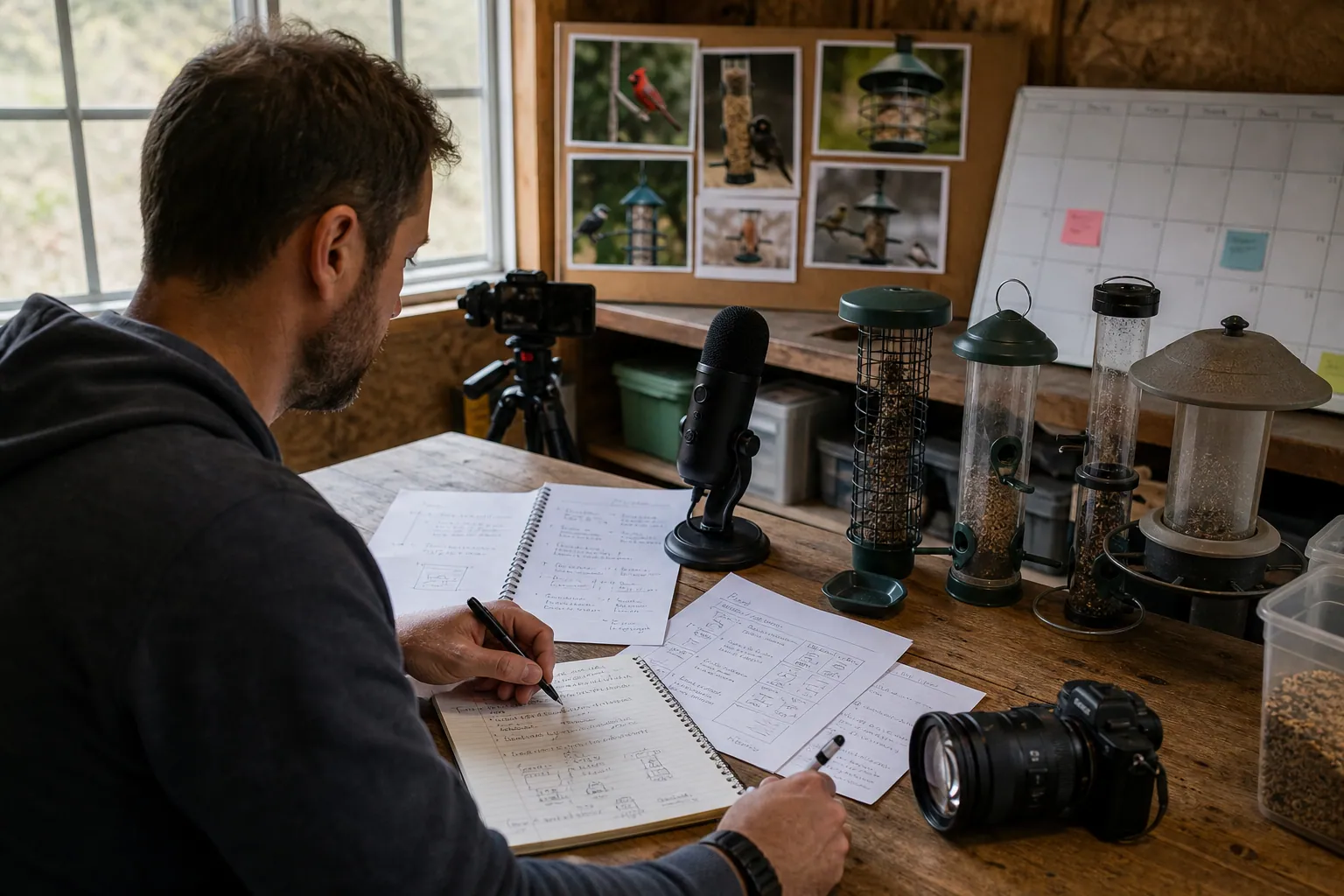
Strategy Memo: Pinterest SEO for Squirrel-Proof Bird Feeder Shops
A focused Pinterest SEO plan for bird feeder retailers: choose problem-solving content over generic bird inspiration, define useful metrics, and launch in 30 days.

Product Pins vs Routine Guides for Refillable Cleaning Shops
Compare product, bundle, routine, and problem-solution Pinterest pins to choose the right catalog-growth mix for a refillable cleaning brand this fall.