Case Study: Product Pins vs Care Guides for a Houseplant Shop
An anonymized breakdown of how a houseplant shop compared catalog pins, care-guide pins, and room-inspiration pins—and chose the mix that grew qualified traffic.

A houseplant shop can look perfect for Pinterest and still struggle to turn pinning into revenue.
Plants are visual. The search demand is there. The products fit home decor, gifting, wellness, and hobbyist boards. But the operating reality is messier: inventory changes weekly, the most beautiful plants sell out quickly, and care questions often appear before purchase intent.
This anonymized case study follows a small Shopify-based houseplant retailer with local pickup and nationwide shipping for selected plants and accessories. The team had 186 product pages, a growing email list, and a Pinterest account that was mostly reposted product photography.
The question was not simply: Should we do Pinterest?
It was: Should Pinterest point to product pages, plant care content, or room-inspiration landing pages?
We compared all three approaches over 90 days, then rebuilt the publishing mix around what each one did best.
The starting point: good visuals, weak destinations
The shop was not starting from zero. It had:
- Attractive product photos taken near a bright greenhouse wall
- Product pages for plants, pots, soil mixes, and plant-care accessories
- A small blog with six old care posts
- A few collection pages, mostly organized by taxonomy, such as tropical plants and ceramic pots
- About two Pinterest posts per week, usually when a new plant dropped
The problem was that Pinterest was being treated like a real-time announcement channel.
That created four predictable issues:
- Pins kept sending people to sold-out product pages.
- Pin titles used shop language like new arrival instead of Pinterest SEO language like low light trailing plant.
- Boards were too broad: houseplants, decor, and our shop.
- Pinterest analytics showed impressions and saves, but no clean picture of ecommerce impact because Pinterest UTMs were inconsistent.
The team needed a strategy that could survive long after a specific plant batch was gone.
The three approaches we tested
We did not test random pin designs. We tested three different ways to connect Pinterest search intent to the store.
Approach 1: catalog-first product pins
This is the most obvious ecommerce Pinterest approach: create pins for individual products and send clicks directly to product pages or collection pages.
For the plant shop, that meant pins like:
Hoya Carnosa Tricolor in 4 Inch Nursery PotPet Safe Parlor Palm for Bright Indirect LightCeramic Self-Watering Planter for Small Apartments
The product-page version worked best for accessories and stable plant varieties. Pots, fertilizer, moss poles, pruning shears, and soil mixes stayed in stock long enough for Pinterest’s slower discovery curve.
For rare plants, direct product pins were risky. A pin could start performing three weeks after the plant sold out.
The fix was to reserve direct product pins for inventory that met at least two of these conditions:
- Restocked frequently
- Available in multiple sizes
- High-margin enough to justify creative effort
- Supported by similar alternatives if sold out
- Not dependent on a single photographed specimen
Catalog-first was not wrong. It just needed boundaries.
Approach 2: care-guide pins
The second approach treated Pinterest as an education channel before a shopping channel.
Instead of sending every click to a product page, pins led to evergreen guides such as:
How to Keep Calathea Leaves From CurlingBeginner Hoya Care: Light, Water, Soil, and Common MistakesWhy Your Pothos Has Yellow LeavesBest Soil Mix for Aroids in Humid Apartments
These guides included product modules, not hard sales pitches. A pothos care guide linked to pruning scissors, soil mix, hanging planters, and similar beginner-friendly plants.
This was especially useful because plant buyers often search Pinterest before they are ready to buy. They might be diagnosing a leaf problem, planning a plant shelf, or deciding whether they can keep a plant alive in a dark apartment.
Care-guide pins earned more saves than product pins. They also created email opportunities, such as a plant watering checklist or a beginner plant-care calendar.
The downside: they required more content effort. A thin 400-word post with generic tips did not perform like a specific care guide with symptoms, photos, recommended products, and internal links.
Approach 3: room-inspiration pins
The third approach sat between education and shopping.
Instead of one SKU or one care question, the shop built small landing pages around buyer situations:
Pet Safe Plants for a Living Room ShelfLow Light Houseplants for North-Facing ApartmentsSmall Bathroom Plants That Like HumidityEasy Desk Plants for Home OfficesHouseplant Gift Ideas for New Apartment Owners
These pages worked like curated Pinterest landing pages. Each one included a short buying guide, plant recommendations, pot pairings, care difficulty, and alternatives if a plant was out of stock.
This approach solved a major ecommerce problem: Pinterest traffic often comes with a mood, not a SKU.
A pinner may not know they want a Peperomia obtusifolia. They know they want a small, non-toxic plant for a bookshelf that will not punish them for missing a watering day.
Room-inspiration pins let the shop meet that search intent without forcing a single product page too early.
Decision matrix: which approach fits which operating reality?
Here is the practical comparison we used with the shop owner.
| Decision factor | Catalog-first product pins | Care-guide pins | Room-inspiration pins |
|---|---|---|---|
| Best destination | Product page or stable collection page | Blog post or evergreen guide | Curated landing page or collection page |
| Best for | Stable inventory, accessories, repeatable SKUs | Education-heavy categories and pre-purchase questions | Shoppers planning spaces, gifts, or plant groupings |
| Buyer intent | Highest purchase intent | Mixed intent, often early-stage | Medium intent with strong merchandising potential |
| Biggest strength | Clear path to purchase | Long-term organic Pinterest traffic and saves | Bridges inspiration and shopping |
| Biggest risk | Sold-out clicks and short-lived products | Traffic that reads but does not buy | Too broad if the page lacks product recommendations |
| Primary metric | Product clicks, add-to-cart rate, assisted orders | Saves, outbound clicks, email signups, assisted conversions | Outbound clicks, collection engagement, revenue per landing page |
| Content effort | Low to medium | Medium to high | Medium |
| Best pin title style | Specific plant or product plus use case | Problem or care outcome | Room, lifestyle, constraint, or occasion |
| When to avoid | Inventory changes fast and no alternatives exist | No one can maintain content quality | You have no curated collections or merchandising logic |
The matrix made the choice less emotional.
The owner liked product pins because they felt closest to sales. The analytics showed product pins converted best when the item was available, but they also produced the most dead ends.
Care guides felt slower, but they created the largest surface area for Pinterest keyword research. Room-inspiration pages became the best middle ground for growing Pinterest outbound clicks without depending on one plant staying in stock.
The mix we chose
The final recommendation was not to pick a winner forever. It was to assign each approach a job.
For the next 90 days, the shop used this publishing mix:
- 35% catalog-first pins for stable SKUs and accessories
- 40% care-guide pins for evergreen plant problems and beginner questions
- 25% room-inspiration pins for apartment, pet-safe, low-light, and gift searches
That split reflected the business model.
If this had been a shop selling only ceramic pots and plant stands, catalog-first could have carried 60% of the plan. If it had been a local nursery with no ecommerce checkout, room-inspiration and local Pinterest SEO pages would have mattered more. If it had been a plant educator selling a paid care course, care-guide pins would have dominated.
A useful Pinterest ecommerce strategy has to match the inventory pattern, not just the visual appeal of the product.
What changed in the account
The team made six changes before judging results.
1. Boards were rebuilt around search intent
The old boards were broad and brand-centric.
They became boards such as:
- Low Light Houseplants
- Pet Safe Indoor Plants
- Hoya Plant Care
- Small Apartment Plant Ideas
- Houseplant Shelf Styling
- Beginner Plant Parent Tips
- Indoor Plant Gift Ideas
- Plant Care Tools and Supplies
This gave each new pin a more relevant home and made board strategy support Pinterest SEO instead of merely organizing the shop’s catalog.
2. Product pins stopped pointing to fragile URLs
A rare plant with limited inventory no longer received a direct product pin unless a restock was planned.
Instead, those visuals were used in broader destinations:
- Rare hoya collection page
- Hoya care guide
- Trailing plants for shelves landing page
- Gift guide for experienced plant collectors
This preserved the value of the photo without making the buyer hit an unavailable product page.
3. Pin titles became use-case specific
The shop moved from titles like:
Philodendron BrasilNew Ceramic Pot DropOur Favorite Plants This Week
To titles like:
Easy Trailing Plant for a Bright Apartment ShelfPet Safe Houseplants for a Cozy Living RoomBeginner Hoya Care for Indoor Plant CollectorsSmall Ceramic Planter for Desk Plants and Herbs
The titles were still honest. They simply matched how people search and save on Pinterest.
4. Descriptions stopped sounding like product captions
A weak description said:
Beautiful Hoya available now. Shop this plant online.
A better description said:
A beginner-friendly Hoya care guide for plant owners who want waxy trailing vines, bright indirect light tips, watering advice, and product recommendations for soil and small planters.
The second version gave Pinterest more context and gave the pinner a clearer reason to click.
5. UTMs were standardized
Every pin used a consistent tagging pattern:
- Source: pinterest
- Medium: organic
- Campaign: plant-care, product-pin, or room-inspiration
- Content: short pin angle, such as pet-safe-shelf or hoya-watering
This made ecommerce Pinterest analytics more useful. The shop could compare categories of intent, not just individual pins.
6. Batch creation replaced one-off posting
The team stopped creating one pin at a time when someone remembered Pinterest.
Each Friday, they chose one plant family, one buyer situation, and one product category. Then they created a small batch:
- 3 product pins
- 4 care-guide pins
- 3 room-inspiration pins
A tool like PinPinMe can help at this stage when a small team wants to turn product URLs, care topics, and landing pages into organized pin variants without rebuilding the plan from scratch each week.
The numbers after 90 days
These results are directional, not a promise. They matter because they show the difference between pinning more and pinning to the right destination.
| Metric | Before | After 90 days | What changed |
|---|---|---|---|
| Monthly Pinterest outbound clicks | 410 | 1,260 | More pins led to evergreen guides and curated pages |
| Monthly saves | 1,900 | 5,850 | Care-guide and room-inspiration pins were saved heavily |
| Pins with consistent UTMs | Under 10% | 100% | Reporting became usable |
| Pinterest-assisted orders tracked in Shopify and analytics | Not reliable | 23 in month three | Mostly accessories, pots, and beginner plants |
| Email signups from Pinterest | 6 per month | 74 per month | Care guides added relevant opt-ins |
| Clicks to sold-out product pages | Frequent | Reduced sharply | Rare plants pointed to collections or guides instead |
The surprise was that catalog pins still mattered.
They did not produce the largest traffic lift, but they produced some of the clearest purchase paths. The mistake had been expecting product pins to carry the whole account.
Care-guide pins made the account discoverable. Room-inspiration pins made the store shoppable for people who did not know plant names. Product pins captured the highest-intent clicks when the SKU was stable.
How to choose the right approach for your shop
If you run a plant shop, decor store, garden brand, or specialty ecommerce business with changing inventory, use these rules.
Choose catalog-first when inventory is stable
Product pins are strongest when the destination will still be useful months later.
Use them for:
- Planters
- Tools
- Soil mixes
- Fertilizer
- Plant stands
- Common plants with predictable restocks
- Bundles and kits
Do not waste your best Pinterest creative on a one-off item unless it points to a durable collection page.
Choose care guides when buyers need confidence
If people hesitate because they fear failure, education can drive revenue.
This is true for plants, skincare, sewing supplies, specialty food ecommerce, camera gear, fitness equipment, and many other categories.
Care-guide content works when it answers a real pre-purchase or post-purchase question:
- Will this survive in my apartment?
- Is this safe for my pet?
- How often do I use this?
- What accessories do I need?
- What mistake should I avoid?
This is where Pinterest keyword research pays off. The best phrases often come from customer support questions, product reviews, and search bar suggestions.
Choose room-inspiration pages when shoppers know the situation, not the SKU
Room-inspiration is useful when customers search by context.
For the plant shop, context looked like:
- Low light apartment
- Bathroom shelf
- Pet-safe living room
- Dorm room
- Housewarming gift
- Home office desk
For another store, the same idea might become:
- Pantry organization for small kitchens
- Guest bathroom towel ideas
- Capsule wardrobe for travel
- Backyard dinner party setup
- Gluten-free holiday dessert table
The page must still help the reader choose. A pretty image gallery is not enough. Include products, comparisons, constraints, and next steps.
The pin examples that performed best
The strongest pins were not the most clever. They were specific.
Product pin examples
Self-Watering Ceramic Pot for Small Indoor PlantsMoss Pole Kit for Monstera and Philodendron CareBeginner-Friendly Snake Plant for Low Light Rooms
These worked because they paired the product with a use case.
Care-guide pin examples
Why Calathea Leaves Curl and How to Fix ItHow Often to Water Hoya Plants IndoorsBest Soil Mix for Philodendron Roots
These worked because they sounded like problems the buyer already had.
Room-inspiration pin examples
Pet Safe Plants for a Living Room ShelfLow Light Plants for North-Facing ApartmentsSmall Houseplant Gift Ideas for New Plant Parents
These worked because they helped pinners imagine the product in their life.
Mistakes the shop stopped making
The 90-day test also revealed what to avoid.
Mistake 1: treating Pinterest like Instagram
A new-arrival post can work on Instagram because followers see it now. Pinterest discovery is slower and search-driven. A pin should make sense weeks or months later.
Mistake 2: using only botanical names
Plant collectors may search by Latin name. Beginners often do not.
The shop used both where appropriate:
Hoya Carnosa Care for Beginner Indoor Plant Collectors
That title served hobbyists and newer buyers.
Mistake 3: sending inspiration clicks to a generic homepage
If a pin promises pet-safe plants, the click should land on pet-safe plants. If it promises low-light ideas, the page should not force the visitor to filter the whole store.
Pinterest landing pages do not need to be complex, but they do need message match.
Mistake 4: measuring only impressions
Impressions helped spot reach, but they did not answer the business question.
The shop watched:
- Pinterest outbound clicks by campaign
- Saves by topic
- Email signups by destination
- Add-to-cart rate from Pinterest sessions
- Assisted orders from organic Pinterest traffic
- Revenue by destination type
This made the Pinterest revenue test more grounded. A pin with fewer impressions but higher product engagement could be more valuable than a viral care tip with no commercial path.
Recommended next steps for the next 14 days
If you want to apply this case study to your own ecommerce shop, do not start by making 100 pins.
Start by sorting your destinations.
Day 1: label your top pages
Make a simple sheet with your top 25 product, collection, and content pages. Add three labels:
- Stable product
- Evergreen education
- Inspiration or use case
If a product sells out often, mark it as collection-first rather than product-first.
Day 2: choose your starting mix
Use your inventory pattern to choose a split.
- Stable catalog: 60% product, 25% inspiration, 15% education
- Changing inventory: 30% product, 40% education, 30% inspiration
- Education-heavy products: 20% product, 55% education, 25% inspiration
- Local shop with limited ecommerce: 15% product, 35% education, 50% local inspiration
This is a starting point, not a permanent rule.
Days 3 to 5: build 3 durable landing pages
For a houseplant shop, these might be:
- Pet-safe indoor plants
- Low-light houseplants
- Beginner plant care essentials
For your store, choose pages that will still make sense three months from now.
Days 6 to 10: create 30 pins across the three approaches
Do not make 30 variations of the same product photo.
Create:
- 10 product or collection pins
- 12 care, tutorial, or buying-guide pins
- 8 inspiration or use-case pins
Give each pin a distinct title, description, and destination.
Days 11 to 14: schedule and tag everything
Use a consistent UTM pattern before publishing. Then review weekly, not hourly.
For the first month, look for early signals:
- Which topics get saves?
- Which destinations earn outbound clicks?
- Which pages keep visitors engaged?
- Which pin angles produce add-to-cart events or email signups?
The answer will tell you whether to lean harder into catalog, care guides, or inspiration pages.
The takeaway
The houseplant shop did not win by deciding that product pins were good or bad.
It grew by matching each Pinterest approach to the job it could actually do.
Product pins helped ready buyers act. Care guides built evergreen discovery and trust. Room-inspiration pages translated vague Pinterest intent into shoppable collections.
That comparison is the real lesson for operators: Pinterest works better when the destination is chosen before the design is made.

Case Study Memo: How a Murphy Bed Studio Replaced Room-Photo Pins With Fit-Plan Traffic
A composite case study for Murphy bed studios: compare room photos, sizing guides, catalog Pins, and local pages, then run a 30-day test for better design consultations.

Case Study: The Project-First Pinterest Rebuild for a Stained-Glass Supply Shop
A composite case study showing how a small stained-glass supply shop can turn workshop notes, inventory, and maker questions into a maintainable Pinterest content operation.

Case Study: How an Acoustic Panel Shop Turned Pinterest Planning Traffic Into Sample Kit Orders
A composite operator case study of an acoustic panel shop that replaced vague “soundproofing” Pins with accurate room-planning content and a sample-first path to purchase.

Case Study: A Residential Architect’s Pinterest Pivot to Feasibility Studies
A composite case study of a small residential architecture studio comparing portfolio, floor-plan, checklist, and feasibility pins to earn better renovation inquiries.

Product Pins vs Routine Guides for Refillable Cleaning Shops
Compare product, bundle, routine, and problem-solution Pinterest pins to choose the right catalog-growth mix for a refillable cleaning brand this fall.
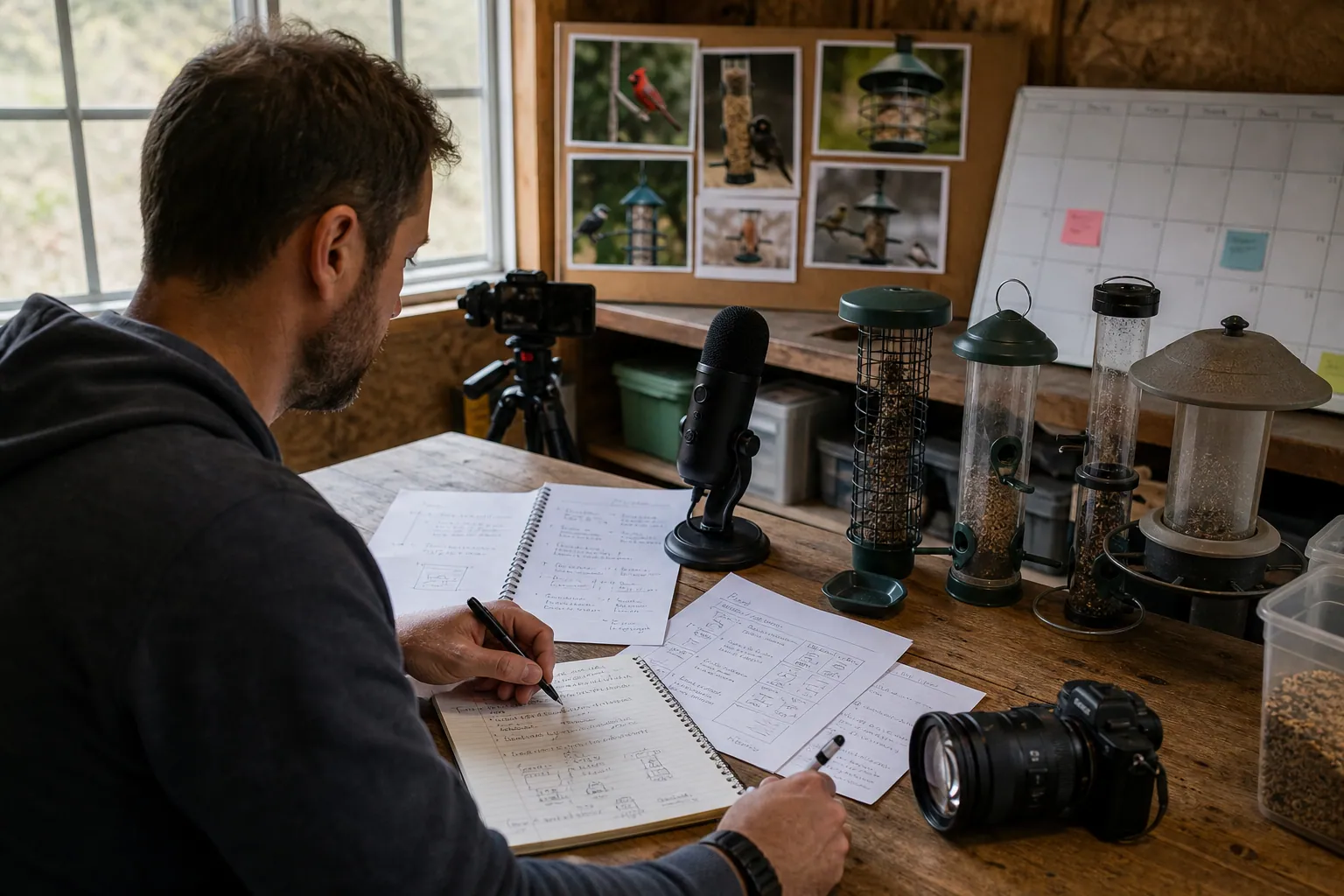
Strategy Memo: Pinterest SEO for Squirrel-Proof Bird Feeder Shops
A focused Pinterest SEO plan for bird feeder retailers: choose problem-solving content over generic bird inspiration, define useful metrics, and launch in 30 days.