Build an AI Refresh Queue for Pinterest Recipe Traffic
A step-by-step tutorial for specialty food brands that want to turn old recipe posts into fresh, search-ready Pinterest traffic using AI without losing quality.
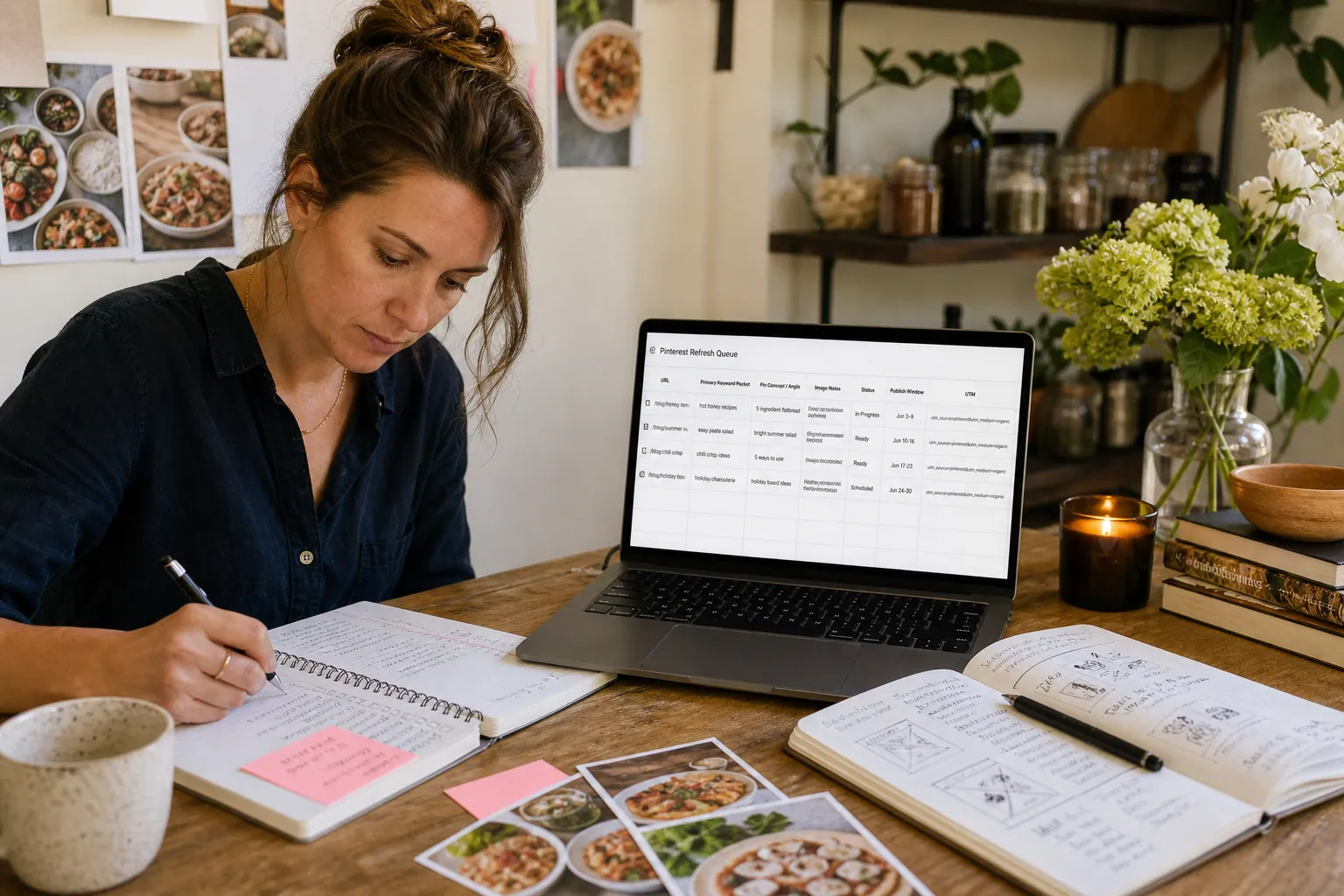
Most specialty food brands have the same hidden asset: a recipe archive that was exciting on launch day and then quietly disappeared.
The hot honey flatbread post. The summer pasta salad. The “five ways to use chili crisp” guide. The holiday grazing board. Each one can still earn discovery on Pinterest, but only if it is turned into fresh, specific, search-aligned pins over time.
This tutorial is for a small ecommerce food brand with 30 to 300 existing recipes, serving ideas, or ingredient guides. Think olive oil, spice blends, sauces, baking mixes, tea, preserves, or specialty pantry products.
The goal is not to ask AI to “make Pinterest content” from scratch. The goal is to build a refresh queue: a repeatable way to choose the right URLs, create better pin angles, schedule fresh pins, and measure what deserves another round.
What you are building
By the end, you will have:
- A scored list of recipe URLs worth promoting on Pinterest
- Keyword pockets for each URL based on real search behavior
- AI-assisted pin concepts that still feel human and brand-specific
- A production table your designer, VA, or founder can use
- Pinterest UTMs attached before anything goes live
- A quality-control pass to catch weak promises, duplicate titles, and bad landing pages
You can build version one in an afternoon. After that, it becomes a 30- to 45-minute weekly operating habit.
Step 1: Build the recipe inventory before touching AI
Start with a spreadsheet. Do not begin with prompts. AI performs better when you give it structured inputs, and you will make better decisions if you can see the whole archive.
Create one row per URL.
Use these columns:
| Column | Example |
|---|---|
| URL | /recipes/hot-honey-roasted-carrots |
| Page type | Recipe |
| Product featured | Hot honey |
| Season | Fall, holiday, weeknight |
| Main dish/use | Side dish |
| Buyer intent | Medium |
| Current organic traffic | 240 visits/month |
| Pinterest traffic last 90 days | 38 sessions |
| Email capture on page? | Yes |
| Product link visible? | Yes |
| Visual quality | Strong |
| Refresh priority | Blank for now |
If you use Shopify, pull product and blog URLs. If you use WordPress, export posts by category. If your analytics are messy, start manually with your top 50 recipe or guide pages.
Decision point: what should not enter the queue?
Exclude pages that fail any of these tests:
- The recipe is thin, outdated, or no longer matches your product line
- The page has no clear product path, email opt-in, or next click
- The visuals are poor and you cannot replace them soon
- The recipe depends on an out-of-stock or discontinued product
- The page loads slowly on mobile
Pinterest can send helpful visitors, but it cannot fix a weak destination. If a page is not ready for a new visitor, repair it before pinning it.
Step 2: Score each URL for Pinterest refresh potential
Do not only refresh your most popular recipes. A high-traffic Google post may not be the best Pinterest page. Pinterest often rewards visual planning moments: holidays, hosting, weeknight meals, lunch prep, gifting, seasonal ingredients, and “what to make with…” searches.
Use a simple 1-to-3 score for each factor.
| Factor | 1 point | 2 points | 3 points |
|---|---|---|---|
| Visual appeal | Plain or hard to show | Decent finished dish | Strong image potential |
| Search fit | Brand-specific only | Some broader use | Clear Pinterest search intent |
| Commercial path | No product/email path | One soft link | Product/email path visible |
| Seasonality | No clear moment | Mild seasonal fit | Strong seasonal or recurring moment |
| Existing proof | No saves/clicks/traffic | Some engagement | Already earning traffic or saves |
Add the total. Your first refresh batch should come from pages scoring 11 or higher.
Here is what that might reveal for a hot sauce brand:
- “Spicy Watermelon Margarita” scores 13 before summer and holidays
- “How We Source Peppers” scores 7 because it is brand story, not a strong Pinterest planning query
- “Sheet Pan Buffalo Cauliflower Tacos” scores 14 because it is visual, useful, and product-relevant
- “Our Founder’s Favorite Playlist” scores 4 and should stay off the queue
AI prompt: summarize URLs without pretending to know the data
Paste 10 to 20 rows at a time into your AI tool and ask it to summarize patterns, not make final decisions.
You are helping me prioritize recipe URLs for Pinterest refreshes.

Here is a table with URL, page type, product featured, season, main use, buyer intent, traffic, Pinterest traffic, email capture, product link, and visual quality.

Your job:
1. Identify which pages appear strongest for Pinterest based on visual planning intent, seasonality, and commercial path.
2. Flag pages that need landing-page fixes before promotion.
3. Suggest missing tags I should add to the spreadsheet.
4. Do not invent performance data or keywords.

Return a ranked list with brief reasoning.
AI is useful here because it sees patterns quickly. You still make the call.
Step 3: Create keyword pockets, not giant keyword lists
For each selected URL, build a small “keyword pocket.” This keeps your Pinterest SEO focused without stuffing the same phrase into every pin title.
A keyword pocket has three parts:
- Core query: the main idea a person would search
- Modifier phrases: seasonal, dietary, occasion, or format variations
- Adjacent searches: related ideas that still match the page
Example for a specialty olive oil shop:
| URL | Core query | Modifier phrases | Adjacent searches |
|---|---|---|---|
| Lemon olive oil cake | lemon olive oil cake | spring dessert, brunch cake, dairy free cake | citrus cake, loaf cake, tea party dessert |
| Herby potato salad | potato salad with olive oil | no mayo potato salad, summer side dish | picnic recipes, BBQ sides, make ahead salad |
| Garlic chili crisp noodles | chili crisp noodles | quick dinner, spicy noodles, pantry meal | weeknight noodles, easy Asian-inspired dinner |
Use Pinterest search suggestions, your own Pinterest analytics, Google Search Console, customer questions, and on-page language. AI can organize the pocket, but it should not be your only keyword source.
AI prompt: turn page notes into a keyword pocket
Create a focused Pinterest keyword pocket for this recipe URL.

Page topic: [paste recipe title]
Product used: [paste product]
Audience: [busy home cooks / hosts / gluten-free bakers / etc.]
Season or occasion: [paste if relevant]
Current page headings: [paste H2s]
Customer questions: [paste 3-5 real questions if available]
Pinterest search suggestions I found: [paste suggestions]

Return:
- 1 core query
- 8 modifier phrases
- 8 adjacent searches
- Phrases to avoid because they do not match the recipe

Do not include claims the page cannot support.
Decision point: when is a keyword too broad?
Avoid a broad phrase if the page would disappoint the click.
For example, a recipe for “chili crisp fried eggs” should not chase “breakfast ideas” as the main phrase. That search is too wide. Better options:
- chili crisp eggs
- spicy fried eggs
- quick savory breakfast
- easy breakfast with chili crisp
The more specific phrase may have fewer searches, but it is more likely to attract the right person.
Step 4: Ask AI for angles, not final copy
A common mistake is asking AI for “20 Pinterest pin titles” and publishing the output with minimal review. That creates bland pins, repeated wording, and promises that do not match the page.
Instead, ask for angles first.
For a recipe archive, use five angle types:
- Occasion angle: “A make-ahead side for summer dinners”
- Problem angle: “No-mayo potato salad that still feels rich”
- Ingredient angle: “What to make with lemon olive oil”
- Technique angle: “How to roast carrots so they caramelize”
- Product-use angle: “A simple way to finish roasted vegetables with hot honey”
For every URL, generate 6 to 10 angles. Approve only the ones that feel accurate and visually buildable.
AI prompt: create pin angles from one recipe
You are helping a specialty food ecommerce brand create Pinterest pin angles for an existing recipe.

Recipe title: [paste]
URL: [paste]
Product featured: [paste]
Audience: [paste]
Keyword pocket:
- Core query: [paste]
- Modifier phrases: [paste]
- Adjacent searches: [paste]

Create 10 distinct Pinterest pin angles.

For each angle, include:
- Angle type: occasion, problem, ingredient, technique, or product-use
- Search intent it serves
- Suggested visual direction
- Why someone would click

Rules:
- Do not write finished pin titles yet.
- Do not overpromise.
- Do not make the product sound required unless it truly is.
- Avoid repeating the same hook with different wording.
Step 5: Turn approved angles into pin production tickets
Once you approve the angles, create production tickets. This is where AI can draft Pinterest pin titles and Pinterest descriptions, but the ticket should include more than copy.
Use this format:
| Field | Example |
|---|---|
| URL | Hot honey roasted carrots recipe |
| Board | Vegetable Side Dishes |
| Keyword pocket | roasted carrots, hot honey carrots, holiday side dish |
| Angle | Holiday side dish that feels special but is easy |
| Pin title | Hot Honey Roasted Carrots for Holiday Dinners |
| Description | These hot honey roasted carrots are sweet, spicy, and simple enough for a weeknight but polished enough for a holiday table. Save this easy vegetable side dish for your next dinner menu. |
| Creative note | Overhead shot of carrots on platter, honey drizzle visible, small bowl of product in background |
| CTA | Save this side dish idea |
| UTM campaign | pinterest_recipe_refresh_q3_2026 |
| Status | Needs design |
AI prompt: draft titles and descriptions from approved angles
Write Pinterest pin titles and descriptions for these approved recipe angles.

Brand voice: [paste 3-5 voice notes]
Audience: [paste]
Keyword pocket: [paste]
Approved angles: [paste]
Destination URL: [paste]

For each angle, return:
- 2 title options under 95 characters
- 1 description between 180 and 350 characters
- 1 visual note
- 1 board recommendation from this board list: [paste boards]

Rules:
- Use natural Pinterest SEO, not keyword stuffing.
- Make the title specific to the recipe.
- Do not include unsupported health claims.
- Do not use clickbait.
- Vary the first words across titles.
Decision point: how many pins per URL?
For the first pass, keep it modest.
Use this rule:
- High-priority seasonal URL: 5 to 8 pins over 8 to 12 weeks
- Evergreen recipe URL: 3 to 5 pins over 8 to 12 weeks
- Product-use guide: 4 to 6 pins, especially if it links to a collection or email opt-in
- Unproven page: 2 to 3 pins, then wait for data
Fresh pins do not mean flooding Pinterest with near-duplicates. Change the angle, image, text overlay, or audience moment.
Step 6: Add UTMs before scheduling
If you skip campaign tracking, you will eventually wonder whether Pinterest is working and have no clean answer.
Use a consistent UTM pattern.
utm_source=pinterest
utm_medium=organic_social
utm_campaign=recipe_refresh_q3_2026
utm_content=[url-slug]_[angle-type]_[creative-number]
Example:
https://example.com/recipes/hot-honey-roasted-carrots?utm_source=pinterest&utm_medium=organic_social&utm_campaign=recipe_refresh_q3_2026&utm_content=hot-honey-carrots_holiday_01
Keep your utm_content readable. You are not writing code for a machine only; you are creating labels your future self can understand inside Pinterest analytics, GA4, Shopify, or your ecommerce Pinterest analytics dashboard.
Step 7: Batch design with constraints
AI can help with copy and organization, but design still needs restraint. Recipe pins often fail because they look pretty but do not communicate quickly.
Create three reusable design lanes:
Lane A: Finished dish with clear text overlay
Best for searchers who are deciding what to cook.
Example overlay:
- “Hot Honey Roasted Carrots”
- “No-Mayo Herby Potato Salad”
- “Lemon Olive Oil Cake”
Lane B: Ingredient or product-use visual
Best for “what to make with…” searches.
Example overlay:
- “What to Make With Chili Crisp”
- “3 Easy Uses for Lemon Olive Oil”
- “A Better Way to Finish Roasted Vegetables”
Lane C: Occasion or menu context
Best for hosting, holidays, meal prep, and seasonal planning.
Example overlay:
- “Easy Summer Dinner Side”
- “Holiday Vegetable Dish”
- “Make-Ahead Picnic Salad”
Keep the design constraints simple:
- One main image
- One clear promise
- Large readable text
- Brand mark optional but not dominant
- Product visible only when it helps the idea
- No tiny ingredient lists on the pin
If you use Canva Pinterest templates, build 3 to 5 layouts and reuse them. The variety should come from angle, photo, and promise—not from reinventing the design every time.
Step 8: Schedule the queue in waves
Do not publish every pin for a URL in the same week. Spread the batch so Pinterest has multiple chances to understand and distribute the destination.
A simple wave schedule:
| Week | Action |
|---|---|
| Week 1 | Publish 1 pin for each high-priority URL |
| Week 2 | Publish 1 alternate angle for top seasonal URLs |
| Week 3 | Publish product-use or ingredient angles |
| Week 4 | Review early saves and outbound clicks, but do not overreact |
| Weeks 5-8 | Continue approved pins, adjust only obvious weak spots |
| Weeks 9-12 | Decide what earns another refresh batch |
You can use the Pinterest native scheduler, another scheduler, or a lightweight planning tool. If you want one place to keep the URL, board, title, description, UTM, and queue together, PinPinMe can support that handoff without turning the process into a heavy tool stack.
Decision point: daily or weekly scheduling?
Choose based on capacity.
- If you are founder-led, schedule once per week in a 60-minute block
- If you have a VA, prepare tickets Monday and schedule Tuesday
- If you have a designer, batch creative every other week and schedule weekly
- If you are in peak season, schedule seasonal URLs 6 to 10 weeks before demand rises
For a specialty food brand, timing matters. A Thanksgiving side dish should not first appear on Pinterest the week before Thanksgiving. Start early enough for search discovery to build.
Step 9: Review results without killing pins too early
Pinterest is not always instant. Look at early directional signals, then evaluate clicks and assisted revenue over a longer window.
Review at three points:
After 14 days: distribution check
Look for:
- Impressions
- Saves
- Obvious creative issues
- Board mismatch
- Title mismatch
Do not judge revenue yet.
After 45 days: traffic check
Look for:
- Pinterest outbound clicks
- Sessions by UTM campaign
- Save-to-click pattern
- Top URLs by Pinterest traffic
- Pin formats or angles getting traction
If a pin gets saves but few clicks, it may be inspirational but not click-driven. That is not always bad, but you need to know the role it is playing.
After 90 days: business check
Look for:
- Email signups from Pinterest traffic
- Product page clicks from recipe pages
- Add-to-cart events
- Assisted conversions
- Repeat traffic to related recipes
- Revenue attribution where tracking allows it
This is where Pinterest conversion tracking and Shopify Pinterest marketing data become useful. Even if attribution is imperfect, compare refreshed URLs against non-refreshed URLs. You are looking for lift, not mathematical perfection.
The refresh decision matrix
At 90 days, sort each URL into one of four actions.
| Result | What it means | Next action |
|---|---|---|
| High saves, high clicks | Strong topic and creative | Create another batch with new images |
| High saves, low clicks | Useful idea, weak click promise | Test clearer titles and overlays |
| Low saves, some clicks | Niche but qualified | Keep if conversion quality is good |
| Low saves, low clicks | Poor fit or weak execution | Pause and improve page, keyword, or creative |
This prevents the two common mistakes: abandoning good URLs too soon or endlessly pinning pages that never earn attention.
A copyable weekly refresh routine
Once the first queue exists, keep the routine small.
Monday: choose URLs
- Review upcoming seasons, product pushes, and recipe traffic
- Select 3 to 5 URLs for the next refresh batch
- Check that each landing page still has product links, email capture, and current images
Tuesday: create keyword pockets and angles
- Validate Pinterest keyword research manually
- Use AI to organize keyword pockets
- Generate 6 to 10 angles per URL
- Approve only the strongest 3 to 5
Wednesday: draft tickets
- Create pin titles and descriptions
- Add board recommendations
- Add UTM links
- Write creative notes
Thursday: design
- Create pins from the ticket table
- Use approved layouts
- Export and name files clearly
Friday: schedule and log
- Schedule pins in waves
- Mark status in the spreadsheet
- Note campaign start date
- Add review dates at 14, 45, and 90 days
This is enough for most small teams. The point is consistency, not complexity.
Final quality-control pass before anything goes live
Use this checklist every time. It takes 10 minutes and saves weeks of weak data.
URL and offer check
- The destination URL works on mobile
- The recipe loads quickly
- The product mentioned in the pin is in stock
- The page has a visible product link, collection link, or email opt-in
- The page title matches the pin promise
Pinterest SEO check
- The pin title uses a clear phrase a real person might search
- The description includes related language naturally
- The board is relevant to the pin topic
- The pin is not chasing a keyword the page cannot satisfy
- Similar pins for the same URL are meaningfully different
Creative check
- Text overlay is readable on mobile
- The food is recognizable within one second
- The image matches the promised recipe or use case
- The design does not hide the main dish behind branding
- Seasonal pins feel timely, not generic
AI accuracy check
- No unsupported nutrition or health claims
- No invented ingredients
- No incorrect cook time or dietary label
- No exaggerated promise like “best ever” unless that fits your brand
- No repeated AI phrasing across multiple pins
Tracking check
- UTM source is consistent
- UTM campaign matches the batch
- UTM content identifies URL, angle, and creative number
- The scheduled pin URL includes the final tracked link
- The spreadsheet status matches what was scheduled
The operator takeaway
AI will not make a recipe archive valuable by itself. It will speed up the parts that are repetitive: summarizing pages, organizing keyword pockets, drafting angles, and preparing production tickets.
Your job is still the part that matters most: choosing pages with commercial potential, matching pins to real search intent, protecting brand quality, and reading the results with patience.
For a specialty food brand, the recipe archive is not just content. It is a product education layer. A good Pinterest refresh queue turns that layer into ongoing discovery instead of a pile of old posts waiting for someone to find them.

Strategy Memo: AI Pinterest Triage for Vintage Furniture Sellers
A 30-day plan for vintage furniture sellers using AI to turn fast-moving, one-of-a-kind inventory into accurate Pinterest discovery without leaving shoppers on sold-out listings.

The AI Project-Question Pinterest Desk for Mineral Paint Brands
A practical AI-assisted Pinterest routine for mineral paint sellers turning verified product facts, customer questions, and project intent into catalog traffic.
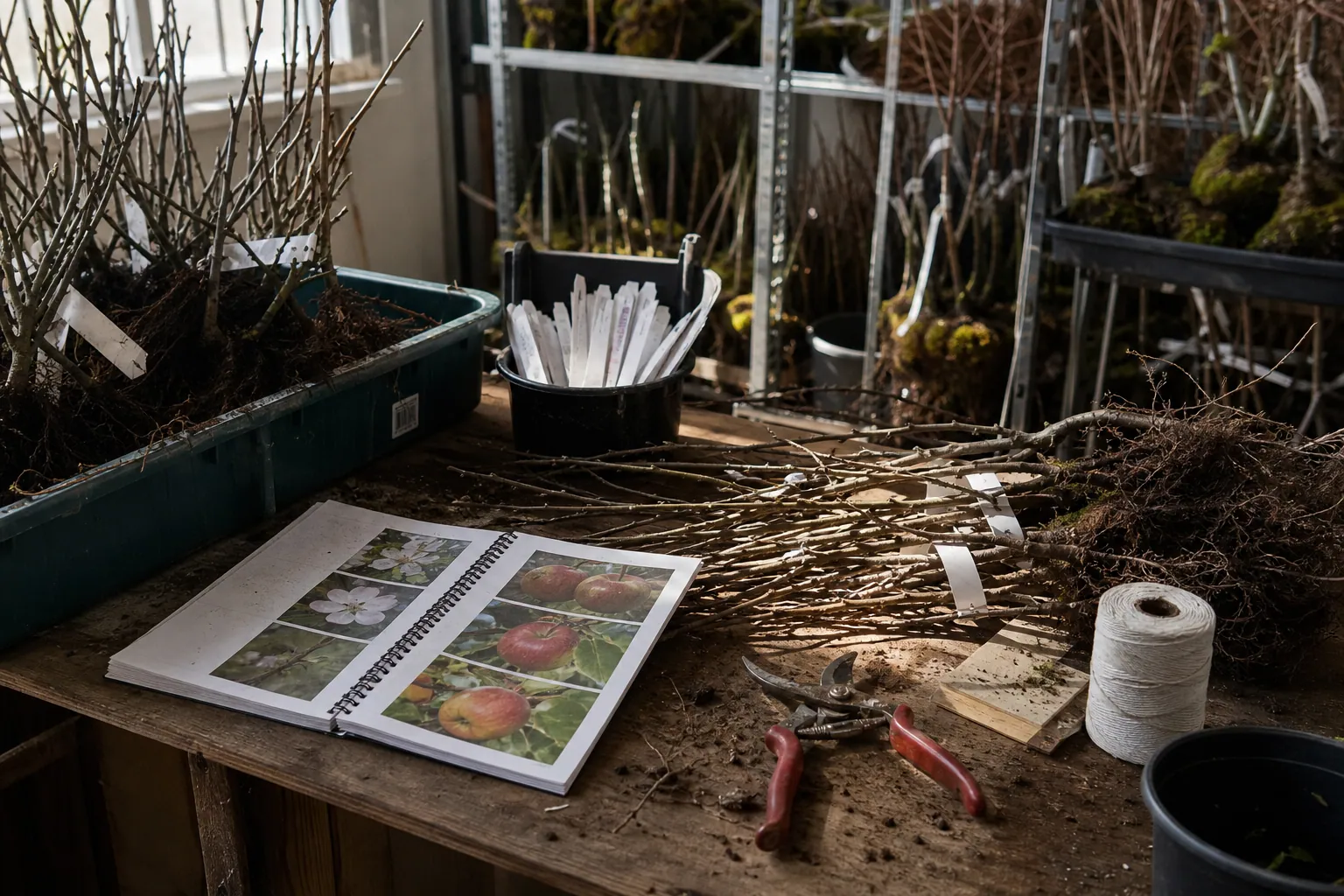
The AI Preorder Content Desk for Bare-Root Fruit Tree Nurseries
A practical AI-assisted Pinterest operating system for fruit tree nurseries that need accurate, inventory-aware preorder traffic before spring shipping.

AI Pinterest Content for Residential Architects: 5 Approaches Compared
Compare five ways residential architecture studios can use AI for Pinterest—without inventing project details, publishing stale plans, or attracting the wrong inquiries.
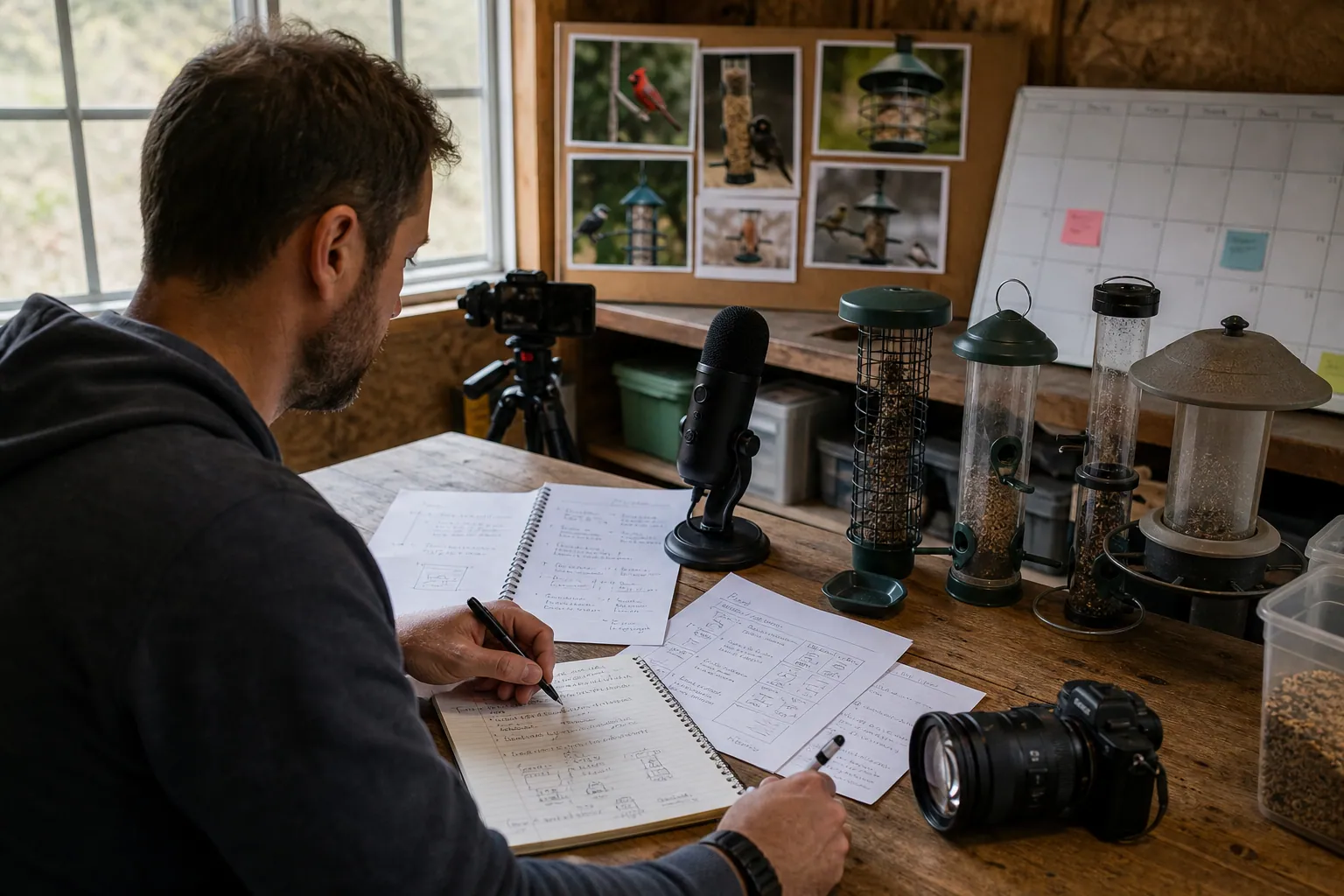
Strategy Memo: Pinterest SEO for Squirrel-Proof Bird Feeder Shops
A focused Pinterest SEO plan for bird feeder retailers: choose problem-solving content over generic bird inspiration, define useful metrics, and launch in 30 days.

The Measure-Visit Pinterest Desk for Custom Window Treatment Studios
Turn measuring appointments, fabric decisions, and installation photos into a steady Pinterest presence that earns better-fit window treatment consultations.