Build a Problem-First Pinterest Strategy for a Local Meal Prep Delivery Business
A step-by-step Pinterest strategy for meal prep delivery operators: choose one buyer moment, structure boards, plan pins, track clicks, and quality-check before publishing.

Pinterest can be awkward for local meal prep companies.
People search Pinterest for healthy lunches, macro bowls, family dinners, postpartum meals, and fridge organization. They do not always search for a specific local provider until much later. If your business only delivers within Raleigh, Austin, Phoenix, or a handful of suburbs, broad Pinterest traffic can feel wasteful.
The fix is not to ignore Pinterest. The fix is to build your account around one local buying moment instead of your full menu.
This tutorial is for a meal prep delivery operator who wants qualified discovery traffic: more menu views, email signups, trial orders, and repeatable demand before the busy back-to-routine months. You can complete the first version in an afternoon, then improve it over 30 to 60 days.
The build: one buyer moment, not one giant account
Before you create boards or design pins, pick a single problem your meal prep offer solves.
A local meal prep company usually has too many possible angles:
- High-protein lunches for office workers
- Family dinners for busy parents
- Macro-friendly meals for gym clients
- Postpartum meal support
- Diabetic-friendly prepared meals
- Gluten-free weekly meals
- College student meal bundles
- Senior meal delivery
All of these could become Pinterest topics. Publishing for all of them at once usually creates a scattered account with weak board signals, mixed landing pages, and pins that look unrelated.
For the first sprint, choose one beachhead.
Decision point: which buyer moment should you choose?
Score each option from 1 to 5:
| Buyer moment | Search demand | Visual appeal | Profit fit | Operational fit | Local urgency | Total |
|---|---|---|---|---|---|---|
| High-protein work lunches | 5 | 5 | 4 | 5 | 3 | 22 |
| Postpartum meal prep | 4 | 3 | 5 | 3 | 5 | 20 |
| Family dinner rescue | 4 | 4 | 4 | 4 | 4 | 20 |
| Macro meal prep | 5 | 5 | 4 | 4 | 3 | 21 |
Use your real data. If postpartum orders have the highest average order value but you only have two suitable menu items, do not make it your first Pinterest focus. If high-protein lunches are easy to photograph, easy to fulfill, and already convert, start there.
For the rest of this article, we will use this example:
A local meal prep company in Raleigh wants more weekly orders for high-protein work lunches.
You can swap in your city and buyer moment.
Step 1: write the positioning sentence
Your Pinterest strategy needs a sentence that keeps every board, pin, and landing page aligned.
Use this template:
We help [specific local audience] solve [meal problem] with [offer format] so they can [desired outcome].
Examples:
- We help Raleigh office workers solve weekday lunch fatigue with high-protein prepared meals so they can eat well without cooking every night.
- We help new parents in North Austin solve the first-month dinner gap with ready-to-heat meals so they can recover without relying on takeout.
- We help busy families in Scottsdale solve weeknight dinner chaos with prepared family-style meals so they can get dinner on the table in 10 minutes.
This sentence is not a tagline. It is an operating filter.
If a pin idea does not support the sentence, save it for later.
Step 2: build the Pinterest intent ladder
Pinterest users often move from idea to action in stages. Your pins should not all ask for the order immediately.
For local meal prep, build four intent levels.
Level 1: aspiration
These searches are broad and visual.
Examples:
- healthy work lunch ideas
- high protein lunch ideas
- meal prep bowls
- fridge meal prep organization
- easy lunches for busy weeks
Pin job: earn attention and saves.
Best destinations: blog posts, guides, menu inspiration pages, or a collection page with educational copy.
Level 2: problem solving
These searches show a stronger need.
Examples:
- no cook work lunches
- high protein lunch meal prep for the week
- healthy lunches for long shifts
- meal prep when you hate cooking
- macro friendly lunch ideas
Pin job: connect the problem to your offer.
Best destinations: focused landing pages, FAQs, or a product category page.
Level 3: provider comparison
These searches are closer to buying.
Examples:
- meal prep delivery Raleigh
- healthy meal delivery Raleigh NC
- high protein meal prep Raleigh
- prepared lunches near me
- weekly meal prep service Raleigh
Pin job: make the local service obvious.
Best destinations: service-area landing pages, order pages, sample menu pages, or pricing pages.
Level 4: retention and repeat orders
These searches support existing customers and future reactivation.
Examples:
- how to store prepared meals
- how long do meal prep meals last
- healthy lunch rotation ideas
- freezer friendly meal prep
- what to order for meal prep
Pin job: build trust and reduce purchase friction.
Best destinations: help articles, menu education, customer onboarding pages, or email signup pages.
Quick template: your intent ladder
Copy this into a doc:
| Intent level | Search phrases | Pin promise | Best page | CTA |
|---|---|---|---|---|
| Aspiration | Save this idea | |||
| Problem solving | See lunch options | |||
| Provider comparison | Check delivery area | |||
| Retention | Join menu reminders |
Fill at least three rows before creating pins.
Step 3: turn the ladder into a board structure
A good Pinterest board strategy helps Pinterest understand what your account is about. For a local meal prep company, boards should balance broad discovery with local buying cues.
Do not create boards named only after your internal categories, such as Menu, Favorites, or Weekly Specials. Those are not search-first board names.
Use this structure instead.
Board 1: the main buyer-moment board
Example name:
High Protein Work Lunch Ideas
Description template:
Healthy, high-protein work lunch ideas for busy weeks, including meal prep bowls, ready-to-heat lunches, office lunch inspiration, and prepared meal delivery ideas for Raleigh professionals.
Why it works: it includes the broad topic, the use case, and a light local cue without making the board too narrow.
Board 2: the problem board
Example name:
No-Cook Lunches for Busy Weeks
Description template:
Easy no-cook and low-prep lunch ideas for packed schedules, long shifts, office days, and weeks when cooking is not realistic.
Why it works: it captures the pain before the shopper is ready to search for a provider.
Board 3: the local purchase board
Example name:
Raleigh Meal Prep Delivery
Description template:
Prepared meal delivery ideas, high-protein lunches, weekly menus, and healthy ready-to-heat meals for Raleigh, Cary, Apex, Durham, and nearby delivery areas.
Why it works: it qualifies traffic and gives Pinterest a clear local context.
Board 4: the trust board
Example name:
How to Use a Meal Prep Service
Description template:
Tips for ordering weekly prepared meals, storing meal prep lunches, choosing portions, reading macros, planning delivery days, and making meal prep fit your routine.
Why it works: it handles objections that often block first orders.
Board decision rules
Use these rules before adding more boards:
- If you cannot publish at least 10 relevant pins to a board over the next 60 days, do not create it yet.
- If two board names target the same search intent, merge them.
- If a board only makes sense to existing customers, keep it off Pinterest for now.
- If a board name would not be typed by a real person, rename it.
Step 4: create the landing page before the pin batch
Many operators make Pinterest pins first, then send all traffic to the homepage. That is usually where local meal prep traffic goes cold.
A homepage has too many jobs. It introduces the brand, explains the model, shows current menu items, handles delivery details, and serves existing customers.
For this sprint, create one focused Pinterest landing page.
Example page:
High-Protein Meal Prep Delivery in Raleigh
The page should answer the questions a Pinterest visitor has after clicking from a lunch idea pin.
Landing page checklist
Include:
- A clear headline that repeats the buyer moment and location
- Three to six meal examples with photos
- Protein or macro details if that matters to your audience
- Delivery areas and order cutoff times
- How the meals arrive and how long they last
- Pricing or starting price range
- A first-order CTA
- An email signup for weekly menu reminders
- FAQ section for storage, allergens, substitutions, and delivery
- Internal links to the weekly menu and related meal categories
Local qualification matters
If your pin says healthy work lunch ideas but the page only reveals the delivery area at checkout, you will waste clicks.
Add local cues early:
- Serving Raleigh, Cary, Apex, and Durham
- Order by Thursday for Monday delivery
- Pickup available near North Hills
- Delivery available within 15 miles of downtown Raleigh
This is not just conversion copy. It is traffic qualification.
Step 5: draft 12 pins from one buyer moment
Now create the first pin batch. The goal is not 12 random designs. The goal is 12 angles that cover different intent levels.
Here is a starter set for high-protein work lunches.
| Pin angle | Intent level | Visual idea | Destination |
|---|---|---|---|
| 5 high-protein lunches for busy workweeks | Aspiration | Grid of five meals | Landing page |
| What to eat when you do not have time to cook lunch | Problem solving | Desk lunch photo | Landing page |
| Raleigh high-protein meal prep delivery | Provider comparison | Branded meal lineup | Landing page |
| No-cook lunches that do not feel like snacks | Problem solving | Bowl plus fork close-up | Blog or landing page |
| How weekly meal prep delivery works | Trust | Three-step process graphic | FAQ section |
| High-protein lunches under 600 calories | Aspiration | Macro callouts | Menu collection |
| Meal prep for long office days | Problem solving | Cooler bag or fridge stack | Landing page |
| Healthy lunch delivery in Raleigh | Provider comparison | Local text overlay | Landing page |
| Sunday reset without cooking all afternoon | Problem solving | Fridge stocked with meals | Landing page |
| How long do prepared meals last? | Trust | Storage label visual | FAQ article |
| Macro-friendly lunch bowls delivered weekly | Provider comparison | Three bowls | Menu collection |
| Stop buying emergency takeout lunches | Problem solving | Before/after contrast | Landing page |
Pin title templates
Use clear Pinterest pin titles. Avoid clever wording that hides the search phrase.
Templates:
- [Benefit] for [specific routine]
- [Meal type] for [audience] in [city]
- [Number] [meal ideas] for [problem]
- How [service] works for [buyer moment]
- [Problem] solved with [offer]
Examples:
- High Protein Work Lunches for Busy Weeks
- Raleigh Meal Prep Delivery for Healthy Lunches
- 5 No-Cook Lunch Ideas for Long Office Days
- How Weekly Meal Prep Delivery Works
- Stop Buying Emergency Takeout Lunches
Pin description template
Use this structure:
[Search phrase or problem]. [Specific promise]. [Local or offer cue]. [Soft CTA].
Example:
Looking for high-protein work lunch ideas that do not require Sunday cooking? See ready-to-heat lunch options, weekly menu examples, and meal prep delivery details for Raleigh, Cary, Apex, and Durham. Save this for your next busy week.
Another example:
Need healthy meal prep delivery in Raleigh? Browse high-protein prepared lunches, delivery areas, order cutoff times, and weekly menu options for busy workweeks.
Keep descriptions human. Pinterest SEO matters, but keyword stuffing makes the pin less useful.
Step 6: choose visuals that make the service believable
Meal prep visuals need more than pretty food. They need to prove convenience.
Use a mix of:
- Meal close-ups with texture and color
- Fridge stacks showing a full week
- Labeled containers with dates or macros
- Desk lunch setups
- Delivery bag or pickup visuals
- Menu screenshots cropped cleanly
- Behind-the-scenes prep photos
- Before-and-after routine visuals, such as takeout clutter vs stocked fridge
Decision point: stable menu or rotating menu?
If your menu is stable, use pins that point directly to collection pages or product pages.
If your menu changes weekly, do not create pins that promise a specific dish forever unless that page will stay accurate. Use evergreen angles instead:
- High-protein lunch bowls
- Weekly meal prep delivery
- Healthy prepared lunches
- Macro-friendly lunch options
Then let the landing page show the current menu.
Step 7: publish with tracking from day one
Do not wait until Pinterest is producing sales to set up tracking. You need clean data before you can make decisions.
Use a simple UTM format:
?utm_source=pinterest&utm_medium=organic&utm_campaign=high_protein_lunches&utm_content=pin_angle
Examples:
utm_content=fridge_stackutm_content=raleigh_deliveryutm_content=no_cook_lunchutm_content=macro_bowls
Track at least:
- Impressions
- Saves
- Outbound clicks
- Landing page conversion rate
- Email signups
- First orders
- Returning orders from Pinterest-acquired customers
Pinterest analytics will show early platform signals. Your site analytics will show whether the traffic is qualified. Both matter.
If you are turning one landing page into multiple pin variations, a tool like PinPinMe can help keep titles, descriptions, URLs, and creative angles organized without rebuilding the same batch by hand.
Step 8: set a publishing rhythm you can actually maintain
For the first 30 days, use a modest cadence:
- 3 fresh pins per week for the main landing page
- 1 fresh pin per week for a trust or FAQ page
- 1 board review every two weeks
- 1 landing page improvement every two weeks
That gives you around 16 to 20 pins in the first month without turning Pinterest into a full-time job.
Pin each creative to the most relevant board first. Do not scatter every pin across every board. If a pin is about how meal prep delivery works, it belongs on the trust board first, not the broad lunch ideas board.
Step 9: read the first signals without overreacting
Pinterest often needs time. Still, you can learn early.
Use this decision table after 30 days.
| Signal | Likely meaning | What to change |
|---|---|---|
| Impressions are low across all pins | Keywords or boards are too narrow, unclear, or new | Broaden board names and pin titles slightly |
| Saves are high but clicks are low | The idea is useful, but the next step is weak | Add clearer CTA text and stronger landing page promise |
| Clicks are high but orders are low | Traffic may be early-stage or landing page is not converting | Add delivery area, pricing, FAQs, and email capture higher on page |
| Out-of-area clicks dominate | Local cues are too hidden | Add city or delivery area to pin title, overlay, and first screen of page |
| Local clicks convert but volume is low | Strategy is qualified but too narrow | Add adjacent suburbs and broader problem-solving pins |
| Trust pins get clicks | Buyers need education | Create more FAQ, storage, and how-it-works content |
Do not judge the whole channel by one pin. Judge the buyer moment.
If high-protein lunches produce saves but no local clicks, test a stronger provider-comparison angle. If provider pins get impressions but no saves, add more aspiration and problem-solving content.
Step 10: expand only after one moment is working
Once the first buyer moment has signs of traction, add the next one.
Good expansion paths for a meal prep company:
- From high-protein work lunches to macro-friendly dinners
- From family dinner rescue to back-to-school meal routines
- From postpartum meals to freezer-friendly recovery meals
- From diabetic-friendly lunches to low-sugar prepared meals
Do not rebuild everything. Reuse the same structure:
- Positioning sentence
- Intent ladder
- Four-board set
- One focused landing page
- Twelve-pin starter batch
- UTM tracking
- Thirty-day decision review
Pinterest growth becomes easier when each new topic has a job.
Final quality-control pass before publishing
Run this checklist before your first pin goes live.
Strategy check
- The account has one clear buyer moment for this sprint.
- The positioning sentence names the audience, problem, offer, and outcome.
- Every pin in the batch supports that sentence.
- You are not mixing unrelated audiences in the same board set.
SEO check
- Board names use phrases real people search.
- Pin titles include specific Pinterest keywords naturally.
- Pin descriptions explain the problem, offer, location, and next step.
- Local terms appear where they help qualify traffic.
- You have not repeated the same keyword awkwardly across every field.
Landing page check
- The headline matches the pin promise.
- Delivery area is visible before the visitor scrolls too far.
- The page shows real meal examples.
- Pricing, ordering cadence, and cutoff times are clear.
- There is a first-order CTA and a lower-pressure email option.
- The page can stay accurate if the menu changes.
Tracking check
- Every pin URL has a UTM.
- Campaign names match the buyer moment.
- Content tags identify the pin angle.
- Pinterest analytics and site analytics are both part of the review.
- You have a simple place to record saves, outbound clicks, signups, and orders.
Trust check
- Food photos match what customers actually receive.
- Allergen, nutrition, and macro claims are accurate.
- Delivery promises match operations.
- The pin does not advertise a meal that will disappear next week unless the destination explains the rotating menu.
The practical takeaway
A local meal prep business does not need a huge Pinterest presence to start learning. It needs one focused buying moment, a board structure that supports that moment, pins that match real search intent, and a landing page that qualifies local traffic quickly.
Start with the buyer who is already close to your best offer.
For many meal prep operators, that is not someone searching your brand name. It is someone staring at another expensive takeout lunch and searching Pinterest for a better routine.

The Measure-Visit Pinterest Desk for Custom Window Treatment Studios
Turn measuring appointments, fabric decisions, and installation photos into a steady Pinterest presence that earns better-fit window treatment consultations.
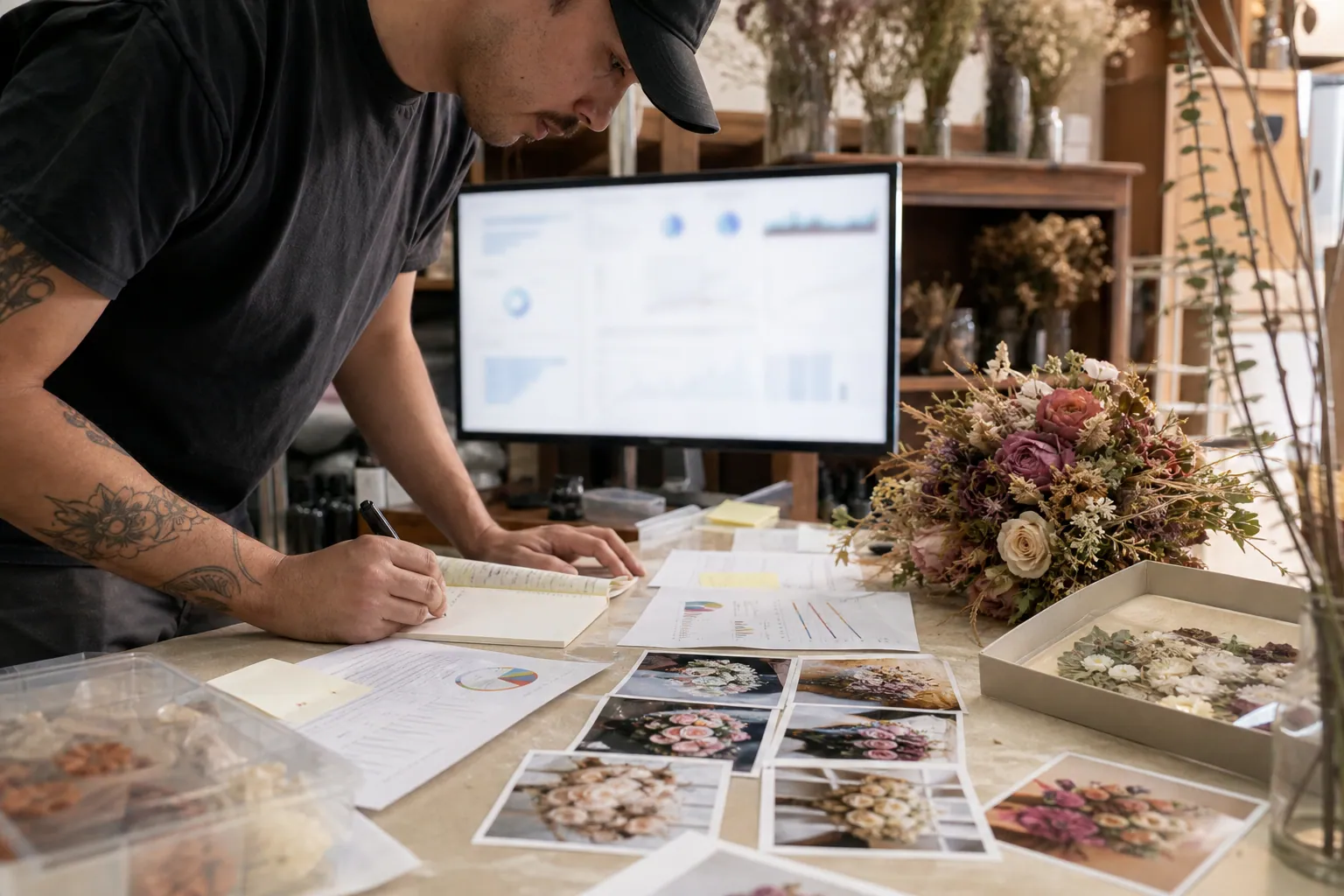
From Bouquet Intake to Booked Dates: A Pinterest Content Blueprint for Floral Preservation Studios
Turn bouquet intake notes, process photos, and client questions into a Pinterest publishing rhythm that earns better-fit floral preservation reservations.

Strategy Memo: Pinterest for Basement Waterproofing Contractors Before Fall Rains
A practical Pinterest strategy for waterproofing contractors: position around homeowner diagnosis, avoid low-fit inspiration traffic, track estimate-ready demand, and launch in 30 days.

Which Pinterest Positioning Fits a College Essay Coach?
Compare five Pinterest positioning routes for independent college essay coaches, then build boards and landing pages that serve fall applicants without making outcome promises.
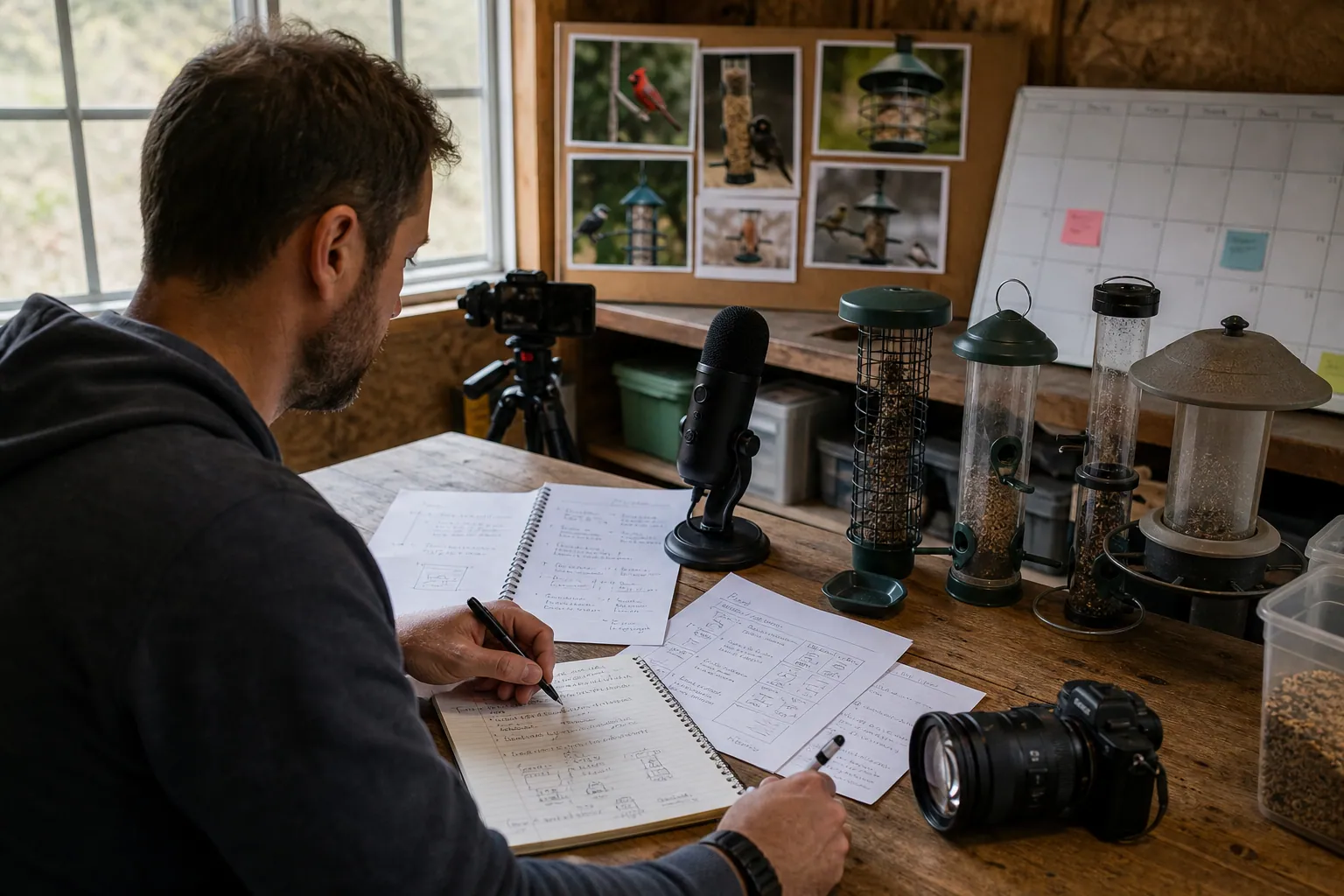
Strategy Memo: Pinterest SEO for Squirrel-Proof Bird Feeder Shops
A focused Pinterest SEO plan for bird feeder retailers: choose problem-solving content over generic bird inspiration, define useful metrics, and launch in 30 days.

Strategy Memo: Which Pinterest Pins Actually Book Home Staging Consultations?
Home staging studios should test seller intent—not chase before-and-after saves. Compare four Pinterest routes, track qualified consults, and run a focused 30-day test.