The Fit-Question Pinterest SEO Playbook for Bicycle Fitters
A practical Pinterest SEO routine for bike fit studios that turns saddle, reach, and indoor-training questions into better local fit bookings.
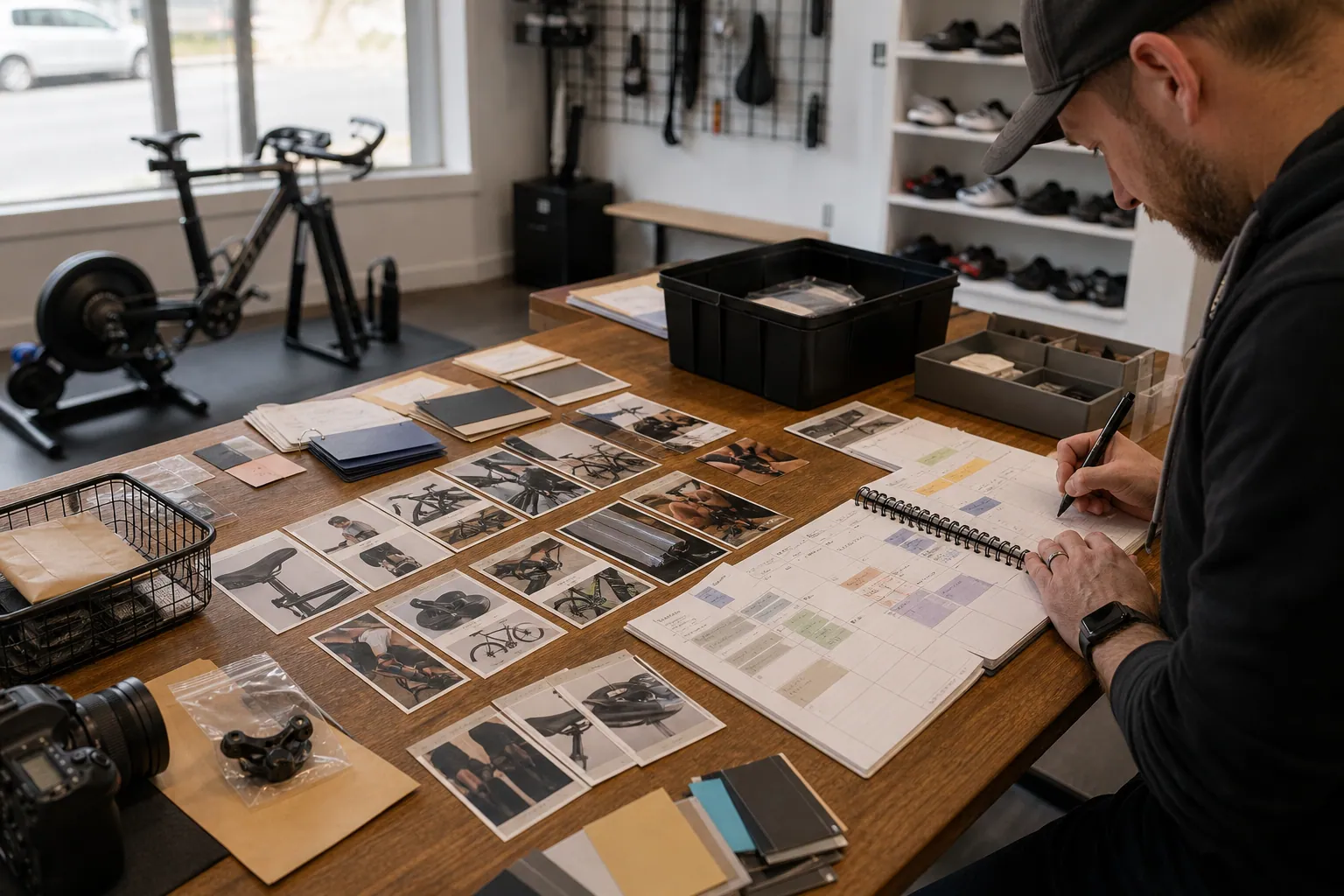
A two-person bike fit studio enters November with an open calendar. The owner has plenty of excellent assets: side-view fit videos, trainer setups, customer bikes, cleat adjustments, and years of intake notes.
Yet its Pinterest account is mostly polished photos labeled “Road Bike Fit” or “Bike Fitting Studio.” They get occasional saves, but few booking requests.
The issue is not a lack of visual material. It is a mismatch between what a prospective client searches and what the studio publishes.
Someone who searches “indoor trainer bike setup,” “how far should handlebars be from saddle,” or “cycling cleat position checklist” is trying to make a decision. A generic studio photo does not help them take the next step.
This operator playbook shows how a local bicycle fitting studio can turn recurring fit questions into search-led Pinterest content—without making medical promises, giving individualized advice in a Pin, or spending every week creating from scratch.
Start with a diagnosis, not a posting target
Before creating another Pin, inspect the path from question to booking.
For a bike fitter, the useful path usually looks like this:
Search question → practical planning Pin → focused guide or service page → fit-readiness booking request
If any part is vague, Pinterest traffic tends to become low-intent inspiration traffic.
Diagnose the account in three passes
1. Review the last 20 Pins by destination, not saves.
Create a simple sheet with these columns:
| Pin topic | Destination | Outbound clicks | Booking-page visits | Qualified inquiries | Notes |
|---|---|---|---|---|---|
| Road bike fit photo | Homepage | 34 | 3 | 0 | Visual but no next step |
| Indoor trainer setup | Trainer setup guide | 27 | 14 | 2 | Strong seasonal intent |
| Cleat setup checklist | Download page | 51 | 9 | 1 | Good click-through, weak booking route |
A Pin sending visitors to the homepage asks them to decide what the studio does, whether it serves their bike type, and how to book—all at once. That is too much work for a new visitor.
2. Pull language from real fit appointments.
Use the phrases riders use on intake forms, emails, calls, and post-fit surveys. Keep their wording intact. A rider may say “my hands go numb on the trainer,” while a fitter might call it “excessive reach.” Both matter, but the first phrase is often a better discovery starting point.
Create a small question bank with four fields:
- Exact rider question
- Bike or riding context
- What the studio can responsibly explain online
- Best next page
For example:
| Rider wording | Context | Pin can explain | Best destination |
|---|---|---|---|
| “Why does my indoor trainer setup feel different?” | Winter training | Setup variables to check before changing position | Indoor trainer fit guide |
| “How do I prepare for a bike fit?” | First appointment | What to bring, wear, and note | Bike fitting appointment checklist |
| “Road bike fit vs tri bike fit” | New bike or event goal | Why goals and position differ | Service comparison page |
| “Cleat position basics” | New shoes or recurring discomfort | Fit variables and when to get professional help | Cleat setup overview + booking route |
3. Audit the landing pages against the search promise.
A Pin titled “How to Prepare for Your First Bike Fit” should not land on a gallery of carbon road bikes. It needs a page that immediately delivers preparation guidance.
A practical local landing page should include:
- A direct answer or checklist above the fold
- Who the appointment is for
- Bike types and rider situations served
- What happens during the appointment
- Location, service area, and appointment length
- A low-friction booking action
- Clear boundaries around what the guide can and cannot diagnose remotely
This is where many studios lose otherwise valuable Pinterest traffic. The content earns the click; the destination does not continue the conversation.
Build four search shelves from one month of rider questions
Do not organize content around every service you offer. Organize it around the decisions a rider makes before booking.
For a local fitting studio, four shelves are enough to begin.
1. Indoor training setup
November through February, indoor riding creates a steady stream of setup questions. This is a good entry point because the rider has a current problem and a bike nearby.
Possible topics:
- Indoor trainer bike setup checklist
- How to make trainer height feel closer to outdoor riding
- What to note before changing saddle height indoors
- Indoor cycling setup for a small apartment
- Fan, hydration, and towel placement for longer trainer rides
Keep the distinction clear: a guide can help someone prepare and observe their setup. It should not promise to resolve pain, prescribe treatment, or replace an in-person assessment.
2. Appointment readiness
These Pins reduce friction for people already considering a fit.
Possible topics:
- What to bring to a bike fitting appointment
- What to wear for a bike fit
- Questions to ask before buying a new road bike
- Bike fit checklist before a long-distance event
- How to choose between a first fit and a new-bike fit
These topics often produce fewer saves than glossy bike imagery. They can produce more useful visits because the reader is closer to an appointment decision.
3. New-bike decision support
A rider shopping for a new bike may not be ready to book this week, but can become a valuable lead when the content answers a narrow planning question.
Possible topics:
- Questions to ask before choosing a road bike size
- Endurance road bike vs race bike position: planning differences
- What measurements to bring to a bike shop
- When to schedule a fit: before or after buying a bike?
Avoid declaring that one frame or position is right for everyone. Frame selection depends on the rider, goals, flexibility, handling preferences, available components, and many other factors.
4. Component-change questions
These searches help a studio demonstrate expertise without giving away an individual prescription.
Possible topics:
- What to record before changing handlebars
- Bike cleat adjustment checklist before a ride
- When a saddle change deserves a fit review
- Questions to ask before changing crank length
This is also a logical place to build trust with a “what we assess” page rather than a page that claims a specific component will solve a universal problem.
The weekly desk: 2 hours and 40 minutes
Pinterest SEO works better when it is attached to a repeatable publishing habit. A small fit studio does not need daily posting. It needs a dependable way to turn existing client-facing knowledge into accurate search assets.
Monday: collect one week of questions — 20 minutes
Ask the person handling appointments to add five recurring questions to a shared note. Include the exact wording, not a cleaned-up version.
Good source material includes:
- Appointment inquiry emails
- First-fit questionnaires
- Questions riders ask during setup
- Seasonal trainer questions
- Questions from local bike-shop partners
Do not publish names, individual measurements, medical details, or private client stories without explicit permission.
Tuesday: select one question and map its intent — 25 minutes
Choose a question that meets three criteria:
- The studio can answer the general planning part accurately.
- A focused destination page exists or can be built quickly.
- The topic connects naturally to a booking decision.
Then create a compact search brief:
Core query: what to bring to a bike fitting appointment
Related wording: bike fit appointment checklist, first bike fit preparation
Reader situation: booked, comparing studios, or hesitant to book
Promise: arrive prepared and know what the session covers
Destination: /bike-fit-appointment-checklist
Primary action: request an appointment
Use Pinterest search suggestions as idea prompts, then validate wording against your own intake language and website search data. The goal is not to chase every keyword variation. It is to identify the clearest useful question.
Wednesday: make a three-Pin family — 65 minutes
One guide should produce three distinct Pins, each with a different reason to click.
For an appointment-preparation page, the family might be:
| Pin angle | On-image text | Pin title | Destination |
|---|---|---|---|
| Checklist | 6 Things to Bring to a Bike Fit | What to Bring to a Bike Fitting Appointment | Appointment checklist |
| Expectation setting | Your First Bike Fit: What Happens | What to Expect During a Professional Bike Fit | Appointment checklist |
| Local service route | Booking a Bike Fit? Start Here | First Bike Fit Checklist for Riders in [City] | Local booking page |
Use a real studio image, a clean checklist graphic, or a detail shot of shoes and pedals. You do not need three versions of the same photo with only new text.
Write titles for clarity, not cleverness. Pinterest pin titles should name the topic a person would actually search. “Feel More Connected to Your Ride” is brand language. “How to Prepare for Your First Bike Fit” is a useful search-led title.
For descriptions, add context that helps the reader decide whether the Pin applies to them.
Example description:
Preparing for your first bike fitting appointment? Use this checklist to gather your bike, riding shoes, recent ride notes, and event goals. See what a professional bike fit typically covers and how riders in Austin can request an appointment.
That is specific, readable, and aligned with the page. It does not overload the description with repeated keywords.
Thursday: publish, label, and route — 20 minutes
Publish one to three Pins to the most relevant board. Add a unique UTM structure so the studio can separate topics and creative angles later.
For example:
utm_source=pinterest
utm_medium=organic
utm_campaign=winter_fit_questions
utm_content=first_fit_checklist_v1
Consistent Pinterest UTM tracking matters more than sophisticated reporting. If every Pin is tagged differently or not tagged at all, the studio cannot tell whether appointment-readiness content outperforms trainer-setup content.
Friday: review the prior month — 30 minutes
Look at Pins published at least 21 to 30 days ago. Pinterest discovery and appointment decisions do not always happen on the same day.
Review:
- Outbound clicks by topic
- Visits to the booking page
- Inquiry form starts and completions
- Qualified lead rate
- Which questions booked riders mentioned on their form or call
A simple definition is enough:
Qualified lead rate = inquiries that fit your service area, bike type, and appointment criteria ÷ total Pinterest inquiries
A Pin with 15 clicks and two qualified bookings may be more important than a Pin with 200 clicks to a broad trainer accessories article.
Three content examples a bicycle fitter can publish this month
Example 1: “Indoor Trainer Setup Checklist Before You Change Your Bike Fit”
Reader: A rider whose indoor setup feels noticeably different from outdoor riding.
Pin promise: Check setup variables before making several position changes at once.
Best page structure:
- Trainer placement and floor stability
- Front-wheel height and bike angle
- Fan and hydration placement
- What to note over several rides
- When an in-person fit review may be useful
- Booking link for local riders
This page is valuable because it respects the reader’s immediate problem while setting realistic limits. It does not imply that an online checklist can diagnose an individual issue.
Example 2: “What to Bring to a Bike Fitting Appointment”
Reader: A rider who has booked, or is close to booking, their first fitting.
Pin promise: Make the appointment more productive with a short prep list.
Useful checklist items:
- Primary bike and any alternate bike you want assessed
- Cycling shoes and pedals used most often
- Typical riding kit
- Recent ride goals or event plans
- Notes on when the current position feels different
- Any components you are considering changing
This page has a natural booking role because it shows the studio’s process without turning into a generic service page.
Example 3: “Should You Schedule a Bike Fit Before Buying a New Road Bike?”
Reader: A shopper narrowing options before a significant purchase.
Pin promise: Understand what a pre-purchase fit can clarify and what it cannot guarantee.
The landing page can explain the difference between establishing useful fit coordinates, evaluating a current bike, and selecting an exact production-bike size. That distinction builds more trust than an oversized claim that a fit can “guarantee the perfect bike.”
Mistakes that make fit content hard to trust
Publishing only transformation photos
Before-and-after fit images can be compelling, but they seldom answer a search question on their own. Pair proof with planning content: what riders should bring, what changes are considered, and what an appointment covers.
Treating every discomfort question as a keyword opportunity
Do not turn sensitive health concerns into simplistic “fix” Pins. A studio can explain its scope, encourage riders to seek appropriate professional care when needed, and avoid diagnoses or outcome guarantees.
Sending all Pins to one booking page
A rider researching indoor trainer setup needs a helpful guide first. A rider searching “bike fit near me” may be ready for a location-specific appointment page. Match the page to the stage of intent.
Making titles sound like ads
“Ride Faster Today With Elite Bike Fitting” is an assertion and an ad. “First Bike Fit Checklist: What to Bring and Expect” is a clear content promise. Earn attention with utility; let the page explain the service.
Reposting the same creative with a new date
Seasonal refreshes are useful only when the information or angle changes. For winter, create distinct content for trainer setup, early-season event planning, and first-fit preparation. Do not simply add “2026” to last year’s generic Pin.
Measuring saves as the main outcome
Saves can signal that a topic is useful, but a local studio needs the next layer: booking-page visits, qualified inquiry rate, and appointments that actually occur. Keep saves as a creative clue, not the final score.
A short operating checklist
Before publishing this week, confirm:
- One real rider question is the center of the Pin family.
- The title states a specific planning topic in plain language.
- The description adds context instead of repeating the title.
- The destination directly fulfills the Pin’s promise.
- The page includes accurate scope, local details, and a clear next step.
- No Pin makes individualized medical, comfort, or performance guarantees.
- Every destination uses a consistent UTM pattern.
- The studio will review the topic after at least 21 days, using qualified inquiries and bookings—not saves alone.
The durable advantage for a bike fitting studio is not publishing more bike photos. It is becoming easy to find when a rider is trying to make a practical decision. Build around the questions already arriving at your desk, connect each answer to a useful page, and Pinterest can become a steady source of better-prepared local appointments.

The Dormancy-to-Repotting Pinterest SEO Desk for Bonsai Supply Shops
A practical Pinterest SEO routine for bonsai retailers that turns winter research into spring-ready traffic for tools, soil, pots, and beginner kits.

The Jar-Eligibility Pinterest SEO Playbook for Candle Refill Shops
Turn candle-jar, refill, care, and gift searches into qualified Pinterest traffic without making unsafe compatibility claims or relying on cozy-photo saves.
Case Study: How a Seed-Starting Light Shop Turned Pinterest Questions Into Kit Sales
A composite teardown of a seed-starting light retailer that replaced catalog-only Pins with setup and troubleshooting content that sold more complete kits.
The AI Pinterest Desk for Wedding Invitation Studios
A practical weekly desk for invitation designers using AI to turn verified FAQs, portfolio assets, and print details into Pinterest Pins that earn better consult inquiries.

The Spring-Project Pinterest Operator Playbook for Pool Renovation Companies
Turn pool tile, resurfacing, coping, and timeline research into better spring renovation inquiries with intent-led boards, useful pages, and a weekly operator routine.
The Contract-Value Pinterest Operator Playbook for Hood Cleaning Companies
A practical testing routine for hood cleaning firms that need Pinterest traffic to create service-area-qualified maintenance contracts—not generic restaurant cleaning questions.