The Braces FAQ Pinterest SEO System for Orthodontic Practices
A copyable Pinterest SEO system for orthodontic practices turning patient FAQs into search-ready pins, approved content, and consult traffic.
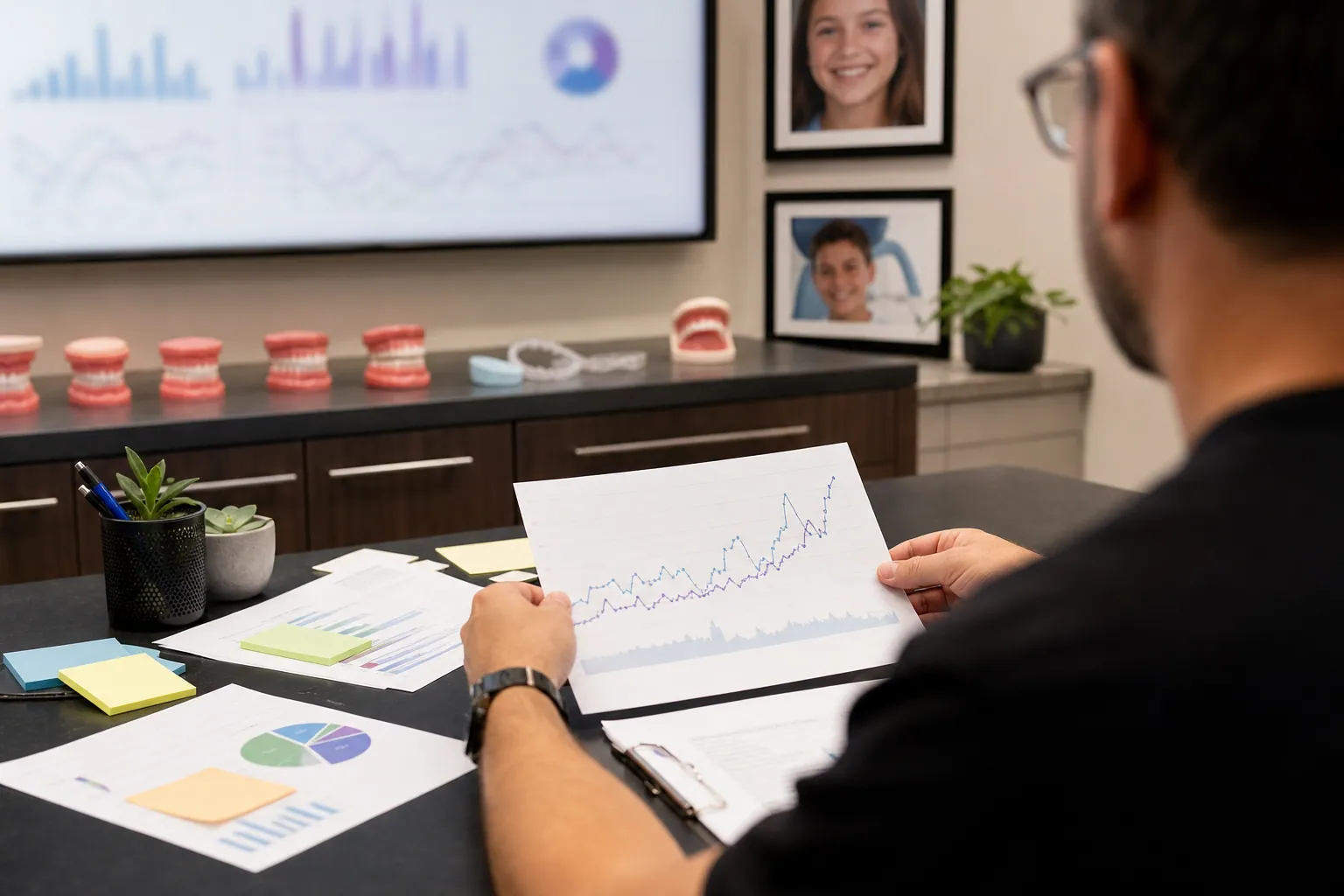
Most orthodontic practices already have the raw material for Pinterest SEO. It is sitting in consult notes, treatment handouts, front-desk scripts, and the questions parents ask after the first wire goes on.
The mistake is treating Pinterest like a smile gallery. Beautiful patient photos can build trust, but Pinterest search demand usually starts earlier: what can my kid eat with braces, Invisalign tips for beginners, braces colors for school, retainer cleaning routine, or orthodontist near me for teens.
For an orthodontic practice, Pinterest works best as a question index. Below is a practical content system a practice manager or marketing coordinator can copy without turning the clinic into a media company.
The core rule: clinical approval comes before clever SEO
Orthodontic content has a different bar than ecommerce or lifestyle content.
You are not just trying to get saves. You are publishing health-adjacent information under a local professional brand. That means every pin and landing page should be useful, accurate, privacy-safe, and clear about when someone should call their own provider.
A good Pinterest SEO system for an orthodontic practice should do five things:
- Answer real patient questions in plain language.
- Support local consult demand without making exaggerated claims.
- Turn recurring staff explanations into reusable assets.
- Route clicks to helpful landing pages, not only the home page.
- Keep a repeatable review process so publishing does not become risky or chaotic.
Start with the input shelf
Do not begin by brainstorming pin ideas in Canva. Start by collecting the questions your team already answers every week.
Use this input map as your source shelf:
| Input | Where to find it | Pinterest SEO use | Owner |
|---|---|---|---|
| New patient consult questions | Treatment coordinator notes | Consult prep pins and local landing pages | Treatment coordinator |
| First-week braces questions | Post-placement handouts, phone calls | Food, comfort, school, and care content | Clinical lead |
| Invisalign starter questions | Aligner instructions, chat messages | Beginner tips and routine content | Clinical lead |
| Retainer questions | Debond appointment materials | Retainer care pins and reminder content | Assistant or hygienist |
| Seasonal concerns | Back-to-school, sports seasons, holidays | Timely pins published 6-8 weeks early | Marketing coordinator |
| Before-and-after categories | Approved gallery, with written consent | Trust-building pins, not medical promises | Doctor or compliance reviewer |
| Payment and insurance FAQs | Front desk scripts | Consult readiness pages | Office manager |
| Location-specific service pages | Website pages for city or neighborhood searches | Local Pinterest SEO destinations | Marketing or web owner |
The point is not to publish every question. The point is to stop inventing content from scratch.
If your front desk hears the same question three times in a week, it belongs on the shelf.
Build five search shelves, not fifty boards
Pinterest boards should reflect how patients and parents think, not how your practice is organized internally.
For most orthodontic practices, five search shelves are enough to start.
1. Braces care and comfort
This shelf captures urgent, practical searches from families in the first few days of treatment.
Example keyword pockets:
first week with bracesbraces soreness tipshow to brush with bracesbraces wax tipswhat to do after braces adjustment
Best destinations:
- First-week braces guide
- Braces care FAQ page
- Emergency or comfort guidance page
- New patient resource hub
Avoid promising that discomfort will disappear. Say what is common, what can help, and when to contact the office.
2. Braces-friendly food
This is one of the strongest Pinterest angles for orthodontic practices because it is visual, practical, and recurring.
Example keyword pockets:
soft foods for braceslunch ideas with bracesbraces friendly snackswhat not to eat with bracesschool lunch ideas for kids with braces
Best destinations:
- Blog post with meal categories
- Printable lunch list
- Parent FAQ page
- Back-to-school braces guide
This shelf can earn saves from people who are not ready to book today, but it builds recognition with local parents over time.
3. Invisalign routines
Invisalign content should focus on habits and expectations, not treatment outcomes.
Example keyword pockets:
Invisalign tips for beginnershow to clean Invisalign traysInvisalign travel tipsInvisalign case routineInvisalign for adults
Best destinations:
- Invisalign FAQ page
- Adult orthodontics service page
- Consultation prep guide
- Aligner care article
For local practices, pair general education with local next steps: what happens at a consultation, what records are taken, and what questions patients can ask.
4. Style, school, and confidence
This shelf is especially useful in July and August because back-to-school searches start before the first day of class.
Example keyword pockets:
braces colors for schoolbraces colors for fallcute braces colorssports with bracesband instruments with braces
Best destinations:
- Braces colors guide
- Teen braces page
- Back-to-school orthodontic checklist
- Sports mouthguard information page
This content can be lighter, but it still needs a clinical review when it touches safety or treatment instructions.
5. Local consult readiness
This is where Pinterest for local business becomes more direct.
Example keyword pockets:
orthodontist for teens in [city]Invisalign consultation [city]braces payment plans [city]family orthodontist near [neighborhood]when should my child see an orthodontist
Best destinations:
- City-specific orthodontist page
- Teen braces page
- Invisalign consultation page
- Payment options page
- First visit page
Local Pinterest SEO is not about stuffing city names into every pin. It is about making sure local-intent pins land on pages that actually answer local patient questions.
The weekly production cadence: one FAQ, one page, six pins
A small practice does not need twenty pins a day. It needs a steady content cadence that survives busy clinic weeks.
Here is a manageable weekly rhythm.
| Day | Task | Time | Output |
|---|---|---|---|
| Monday | Choose one FAQ from the input shelf | 15 min | One approved topic |
| Tuesday | Draft or update the destination page | 45-60 min | Blog post, FAQ, or service-page section |
| Wednesday | Create six pin tickets | 30 min | Titles, descriptions, overlays, boards, UTMs |
| Thursday | Design or adapt pin creatives | 45-75 min | Six fresh pins |
| Friday | Clinical and SEO review, then schedule | 30-45 min | Approved pins in queue |
If you only have two hours a week, reduce the batch to three pins. Consistency matters more than volume.
The repeatable unit is simple:
- One real question.
- One useful destination.
- Several search angles.
- A review pass.
- Scheduled publishing with tracking.
A Pinterest-specific tool can help keep that last part tidy. For example, PinPinMe can be used to turn approved pin tickets into scheduled pins with titles, descriptions, boards, and UTM tracking in one place.
Use a pin ticket before anyone opens the design file
A pin ticket prevents generic designs and rushed captions. It is the small brief every pin should pass through.
Copy this format:
Topic: First week with braces
Destination: /first-week-with-braces-guide
Search intent: Parent wants practical food and comfort ideas after placement
Primary keyword: first week with braces
Secondary keywords: soft foods for braces, braces soreness tips, school lunch with braces
Pin title: What to Eat the First Week With Braces
Text overlay: First Week With Braces: Easy Foods + Care Tips
Description: New to braces? Use this parent-friendly guide to plan soft meals, school lunches, brushing reminders, and comfort steps for the first week. Learn what is common and when to call your orthodontic office.
Board: Braces Care Tips
CTA: Read the first-week guide
UTM campaign: braces_first_week_august
Reviewer: Clinical lead + marketing coordinator
This ticket separates strategy from design. The designer knows what the pin must communicate. The reviewer knows what to check. The scheduler knows where it goes.
Example batch: one braces food guide becomes six search assets
Suppose your practice creates a destination page called Soft Foods for the First Week With Braces.
Do not publish one pin and move on. Build a small batch around different search intents.
| Pin angle | Pin title | Text overlay | Best board |
|---|---|---|---|
| Parent planning | What to Eat the First Week With Braces | First Week With Braces Food List | Braces Care Tips |
| School lunch | Soft Lunch Ideas for Kids With Braces | Braces-Friendly School Lunches | Back-to-School Braces Tips |
| Snack search | Easy Snacks That Are Braces-Friendly | Safe Snack Ideas for Braces | Braces-Friendly Foods |
| Comfort moment | Gentle Meal Ideas After a Braces Adjustment | Soft Foods After Adjustment | Braces Care Tips |
| Avoidance search | Foods to Avoid With Braces | Skip These Foods With Braces | Braces-Friendly Foods |
| Local parent | New Braces? A Parent Guide for [City] Families | New Braces Parent Guide | [City] Orthodontic Tips |
Notice that each pin has a distinct job. They all point to the same helpful page, but they do not repeat the same title.
That is the difference between Pinterest content planning and simply making more graphics.
Write pin descriptions like a helpful front desk note
Pinterest descriptions should include keywords, but they should still sound human.
Weak description:
Braces food list braces foods soft foods braces orthodontist braces tips.
Better description:
Starting braces this week? Use this simple guide to plan soft foods, school lunches, snacks, and brushing reminders while your mouth adjusts. Includes parent-friendly tips and signs it is time to call your orthodontic office.
The better version still supports Pinterest SEO. It includes starting braces, soft foods, school lunches, snacks, and orthodontic office, but it reads like something a person would trust.
For orthodontic content, trust is part of click-through rate.
The review process: four gates before publishing
A practice should not let marketing content bypass clinical judgment. At the same time, review cannot be so slow that every pin waits three weeks.
Use four clear gates.
Gate 1: Clinical accuracy
The clinical reviewer checks:
- Is the advice consistent with your practice standards?
- Does the pin avoid diagnosis or individualized treatment claims?
- Does it say when to contact the office if needed?
- Are timeframes and expectations phrased carefully?
Replace absolute claims with practical language.
Instead of This will fix braces pain, use These comfort steps may help after an adjustment.
Gate 2: Privacy and consent
The reviewer checks:
- Are patient images approved for this exact use?
- Is written consent documented?
- Are names, school logos, or identifying details removed unless approved?
- Does the pin avoid implying guaranteed results?
If there is any doubt, use illustrations, product-free flat lays, office-approved educational graphics, or non-identifying photos.
Gate 3: Pinterest SEO clarity
The marketing reviewer checks:
- Does the pin title match a real search phrase?
- Does the description use natural Pinterest keyword research language?
- Is the board relevant?
- Does the text overlay make sense without reading the caption?
- Is there only one clear idea on the pin?
A pin about braces colors for fall should not land on a generic services page. It should land on a color guide, teen braces page, or related article.
Gate 4: Conversion path
The office manager or web owner checks:
- Does the landing page load quickly on mobile?
- Is the call to action appropriate for the intent?
- Can a parent book, call, or save the resource easily?
- Are Pinterest UTMs attached so traffic can be measured?
- Does the page include local trust signals where relevant?
For early-stage searches, the CTA might be Read the guide or Download the checklist. For local consult searches, it can be Request a consultation.
Publishing rhythm: steady, seasonal, and not too sales-heavy
A practical starting rhythm for one practice is 3-5 fresh pins per week.
Use this mix:
- 50% evergreen care content: brushing, food, retainers, first-week tips.
- 20% seasonal content: back-to-school, sports, holidays, graduation photos.
- 20% service education: Invisalign, teen braces, adult orthodontics, payment FAQs.
- 10% trust content: office experience, approved transformations, meet-the-team moments.
Publish seasonal pins earlier than you think.
For example:
- Back-to-school braces content: publish in June and July.
- Fall braces colors: publish in July and August.
- Holiday braces food tips: publish in October and November.
- Graduation smile content: publish in February and March.
- Sports mouthguard content: publish 6-8 weeks before local sports seasons.
Pinterest often rewards planning. If you publish a braces-friendly Thanksgiving foods pin the week of Thanksgiving, you are late.
Landing pages: do not send every pin to the home page
The fastest way to waste organic Pinterest traffic is to send all clicks to the same generic home page.
Match the destination to the search intent.
| Search intent | Better landing page | CTA |
|---|---|---|
| Parent researching care | First-week braces guide | Save the checklist |
| Teen choosing colors | Braces colors guide | Ask about colors at your next visit |
| Adult comparing aligners | Invisalign consultation page | Request a consult |
| Parent planning costs | Payment and insurance FAQ | Call with coverage questions |
| Local family comparing offices | City-specific orthodontist page | Book a first visit |
Each landing page should include:
- A clear answer near the top.
- Short sections with scannable headings.
- Local context when relevant.
- A simple next step.
- Internal links to related pages.
- UTM tracking on Pinterest links.
This is where Pinterest SEO and website SEO support each other. The pin earns discovery. The landing page earns trust.
Maintenance: the monthly clean-up that keeps the system alive
Pinterest content can keep working for months, but only if you maintain the assets behind it.
Set a 45-minute monthly review.
Create four queues.
| Queue | What goes in it | Action |
|---|---|---|
| Winners | Pins with strong saves, outbound clicks, or consult-page traffic | Create 2-3 new variations |
| Useful but flat | Pins with impressions but weak clicks | Rewrite title, improve overlay, test a clearer destination |
| Clinical update needed | Any content affected by practice policy or treatment guidance changes | Pause, revise, re-approve |
| Seasonal refresh | Pins tied to school, sports, holidays, or local calendars | Update publish dates and visuals |
Do not judge every pin after three days. For organic Pinterest traffic, use longer windows.
A simple review cadence:
- Weekly: check publishing errors, broken links, and obvious outliers.
- Monthly: review saves, outbound clicks, top boards, and destination pages.
- Quarterly: decide which search shelves deserve more pages or better visuals.
Metrics that matter for an orthodontic practice
Impressions are useful for diagnosing reach, but they are not the business outcome.
Track these instead:
- Saves by topic: shows which ideas parents want to remember.
- Outbound clicks by pin angle: shows which searches drive action.
- Landing-page engagement: time on page, scroll, button clicks.
- Consult starts by UTM campaign: shows which content supports demand.
- City or service-page visits from Pinterest: shows local relevance.
- Phone clicks or form submissions: shows practical lead quality.
A pin about braces colors may drive many saves and fewer consults. That is fine if it introduces teens and parents to your practice. A pin about Invisalign consultation [city] should be judged more directly by local page visits and consult actions.
Different pins have different jobs.
A 30-day build plan for a busy practice
If you are starting from zero, do not rebuild everything at once.
Week 1: Collect and choose
- Pull 20 repeated questions from staff.
- Group them into the five search shelves.
- Choose three destination pages to create or improve.
- Pick one seasonal opportunity, such as back-to-school braces tips.
Week 2: Build the first destinations
- Publish or update one first-week braces guide.
- Publish or update one braces-friendly food guide.
- Improve one local consult page.
- Add clear CTAs and internal links.
Week 3: Create the first pin batch
- Write 12 pin tickets.
- Design 12 pins using 3-4 approved templates.
- Review for clinical accuracy, privacy, SEO, and conversion path.
- Add UTM campaigns.
Week 4: Publish and review the process
- Schedule 3-5 pins per week.
- Confirm every link works on mobile.
- Create a simple metrics sheet.
- Note which review step slowed you down.
- Choose next month’s three FAQ topics.
After 30 days, the goal is not viral growth. The goal is a working content rhythm your team can repeat.
The operating takeaway
An orthodontic practice does not need to chase every Pinterest trend.
It needs a reliable way to turn real patient questions into approved, search-ready content that helps families before they ever call the office.
Start with the questions. Map them to search shelves. Create one useful destination at a time. Review carefully. Publish steadily. Maintain what wins.
That is how Pinterest becomes more than a gallery of smiles. It becomes an evergreen discovery channel for the exact families your practice is already built to serve.

The Trip-Planning Pinterest SEO Desk for Family Travel Advisors
A copyable Pinterest content blueprint for Europe-focused family travel advisors: turn itinerary questions into accurate pins, useful pages, and better-fit planning calls.
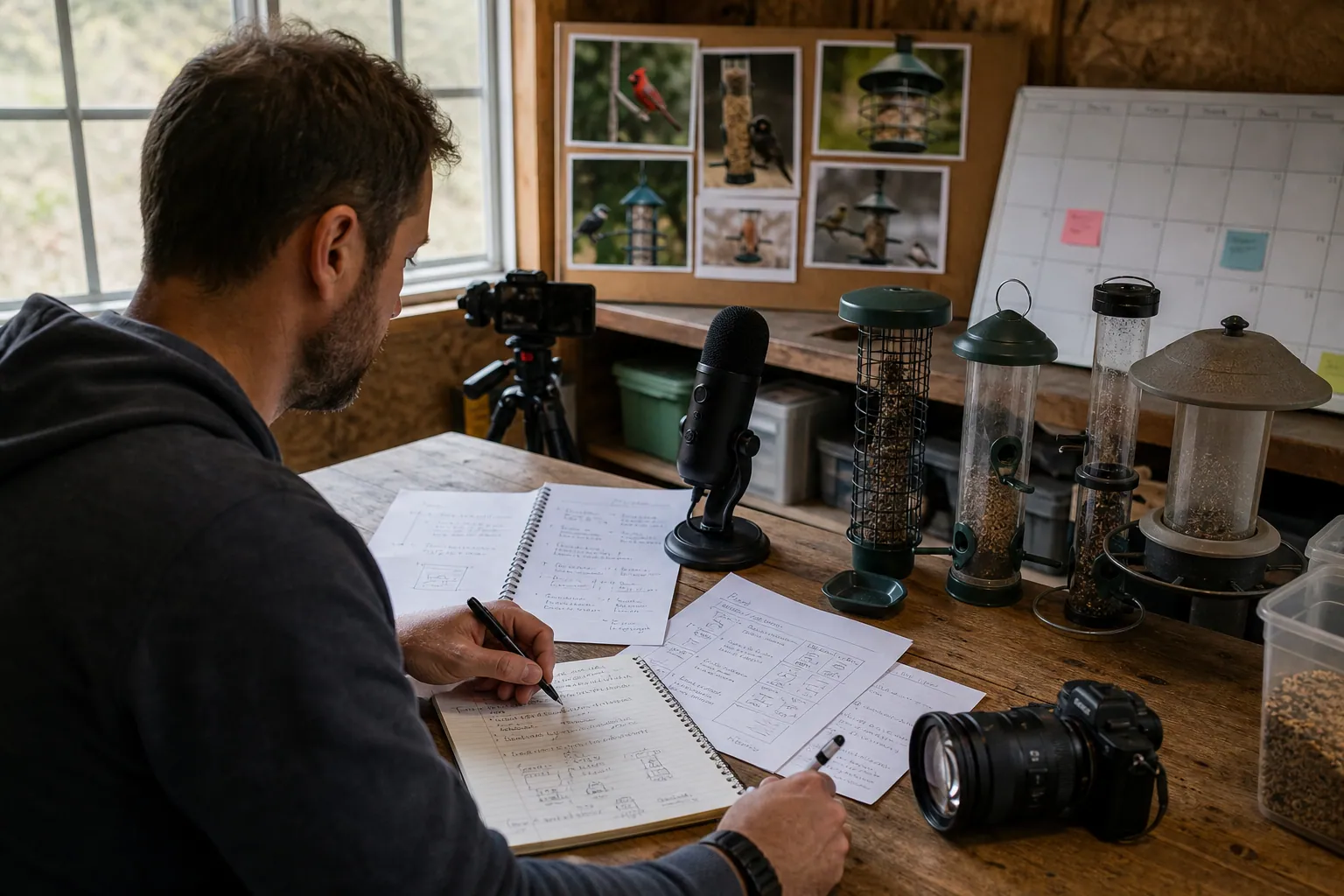
Strategy Memo: Pinterest SEO for Squirrel-Proof Bird Feeder Shops
A focused Pinterest SEO plan for bird feeder retailers: choose problem-solving content over generic bird inspiration, define useful metrics, and launch in 30 days.
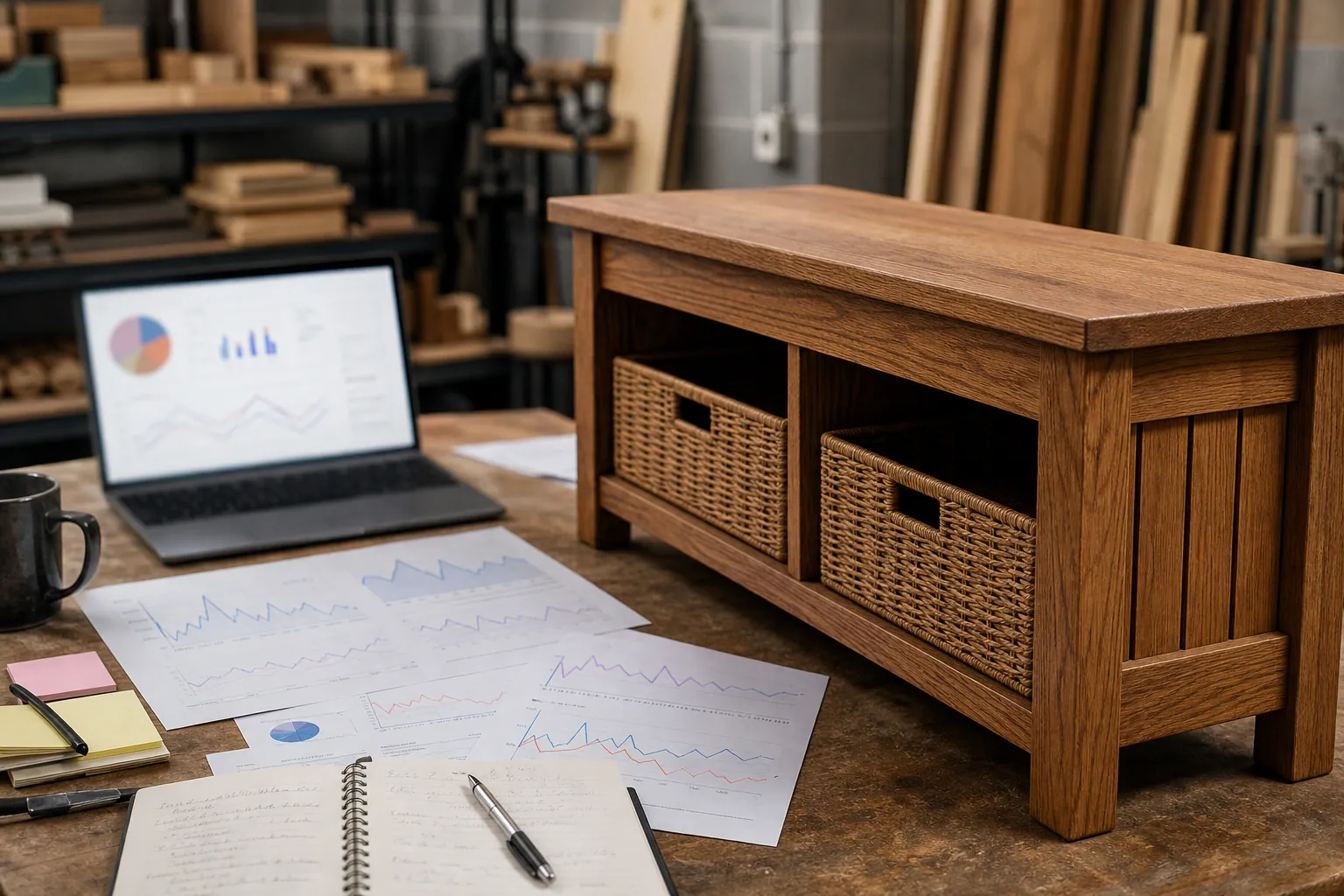
Project Posts vs Plan Pages: What a Woodworking Plan Shop Should Link From Pinterest
Compare five Pinterest destinations for PDF woodworking plans—from direct product pages to cut lists—and choose the route that fits each searcher's build decision.

The Stitch-Guide Pinterest SEO Desk for Needlepoint Canvas Shops
Turn hard-to-search canvas names into Pinterest discovery assets with a weekly routine built around stitch questions, finishing decisions, and project-ready collections.

The Fit-Diagnosis Content Blueprint for Pants-Fitting Courses
Turn pants-fitting questions into an evergreen Pinterest content operation that sends serious sewists to free fit tools, lessons, and your paid course.

The Measure-Visit Pinterest Desk for Custom Window Treatment Studios
Turn measuring appointments, fabric decisions, and installation photos into a steady Pinterest presence that earns better-fit window treatment consultations.