Strategy Memo: Pinterest for Cabin Retreats Filling Fall Weeknights
A practical Pinterest strategy memo for cabin and glamping operators using trip-planning intent to fill shoulder-season weekdays and direct bookings.

Strategic thesis: a small cabin retreat should not use Pinterest as a prettier version of its booking calendar. It should use Pinterest to become part of the trip-planning process before the traveler has chosen a place to stay.
For a two-cabin property, a glamping site, or a small rural inn, the highest-value Pinterest traffic usually does not come from people searching your exact brand name. It comes from people planning moments like:
- “fall weekend in the Catskills”
- “dog friendly cabin getaway”
- “romantic cabin with hot tub”
- “quiet writing retreat weekend”
- “Blue Ridge fall foliage itinerary”
If you can meet those searches with useful pages, clear visuals, and well-tagged pins, Pinterest can support shoulder-season demand without depending entirely on Airbnb, Vrbo, Instagram, or last-minute discounting.
This memo is written for an operator looking at late summer and asking: “How do we fill more September, October, and November weeknights through direct bookings?”
The operating context
Assume this business has:
- 2–8 cabins, tiny homes, domes, cottages, or glamping tents
- A direct booking site or at least a booking inquiry page
- Good photography of interiors, fire pits, views, trails, pets, breakfasts, hot tubs, or nearby towns
- A location people visit for seasonal reasons: foliage, hiking, wineries, skiing, lakes, markets, dark skies, retreats, or quiet weekends
- Some unsold weekday inventory outside peak weekends
The goal is not “go viral on Pinterest.”
The goal is to build organic Pinterest traffic that brings planners to pages where they can understand the trip, check dates, join a list, or book directly.
Option comparison: five ways a cabin retreat can use Pinterest
Most property owners start with listing pins: beautiful cabin photo, name of the property, “Book your stay.” Those pins have a place, but they are rarely enough.
Here are the main strategic options and what each is good for.
| Option | Best use | Strength | Weakness |
|---|---|---|---|
| Direct cabin pins | Warm visitors comparing stays | Clear commercial intent | Limited reach if nobody knows your property |
| Destination itinerary pins | Early planners choosing a region | Strong Pinterest SEO and saves | Requires useful landing pages |
| Occasion-led pins | Couples, pet owners, remote workers, friend groups | Better fit between searcher and stay | Needs segmented messaging |
| Amenity-led pins | Hot tub, sauna, fireplace, dog-friendly, creek access | High booking intent | Competitive; must be accurate |
| Local partner pins | Hikes, restaurants, markets, wineries | Builds trust and trip value | Not every click will book immediately |
A strong cabin Pinterest strategy usually uses all five, but not equally.
For a small property trying to fill fall weeknights, I would weight the first 30 days like this:
- 40% destination itinerary content
- 25% occasion-led content
- 20% amenity-led content
- 10% direct cabin/listing content
- 5% local partner content
That mix gives you enough commercial clarity without making every pin feel like an ad.
The core tradeoff: booking intent vs planning intent
Pinterest sits earlier in the decision than a booking engine.
That is the tradeoff.
Someone on Airbnb may be searching “cabins available October 12.” Someone on Pinterest may be searching “fall weekend getaway near Asheville” or “what to pack for a cabin weekend.” The second person is less ready today, but they may be easier to influence before they compare twenty nearly identical listings.
Your job is to connect planning intent to booking action.
For example:
- Pin: “3-Day Fall Cabin Weekend Near Asheville”
- Landing page: itinerary with hikes, coffee stops, dinner ideas, cabin photos, drive times, and a booking module
- Call to action: “Check fall weekday availability”
That is much stronger than:
- Pin: “The Pinecone Cabin”
- Landing page: generic listing page
- Call to action: “Book now”
The second version only works if the viewer is already sold. The first helps them picture the trip.
Board structure: organize by trip decision, not by property feature
Many cabin accounts create boards like:
- Our Cabins
- Interior Design
- Travel
- Nature
- Things to Do
Those boards are too broad to help Pinterest or the traveler understand intent.
A better board strategy uses trip categories:
- Fall Weekend Getaways in [Region]
- Dog-Friendly Cabin Trips
- Romantic Cabin Retreats
- Work From Cabin Escapes
- Hiking Weekends Near [Town]
- Cozy Winter Cabin Stays
- Girls Weekend Cabin Ideas
- Quiet Retreats for Writers and Creatives
If your location is specific enough, include it. “Fall Weekend Getaways in North Georgia” is more useful than “Fall Travel.”
If your destination is not widely searched, pair the nearest known region with your exact town on the landing page. For example:
- Board: “Hudson Valley Cabin Getaways”
- Pin title: “A Quiet Fall Weekend Near Livingston Manor”
- Page section: “Why guests choose this area over busier Hudson Valley towns”
That gives Pinterest broader context while still qualifying travelers for your actual location.
Landing pages: the missing piece in most cabin Pinterest accounts
A pin cannot do all the work. For cabin retreats, the landing page determines whether Pinterest traffic becomes useful.
You do not need dozens of pages. You need a few pages that match real planning moments.
Start with three.
1. A fall weekend itinerary page
Example title: “A 3-Day Fall Weekend at Our Cabins Near [Region]”
Include:
- Best arrival window
- Two or three nearby hikes or scenic drives
- Coffee, breakfast, and dinner suggestions
- What the cabin is best for: couples, dogs, solo work, families
- Seasonal photos
- Available amenities
- A booking module or date-search link
- A short FAQ about drive time, cell service, pets, and weather
This page can support many pins without feeling repetitive.
2. An occasion page
Example title: “A Dog-Friendly Cabin Weekend Near [Town]”
Include:
- Pet policy in plain language
- Nearby dog-friendly trails or patios
- Mudroom, hose, towels, fenced area, or crate notes if relevant
- Photos with dogs, not just empty rooms
- Clear fees and limits
- Suggested weekday stays if weekends sell out
This page qualifies guests before they contact you.
3. An amenity page
Example title: “Cabins With Private Hot Tubs Near [Region]”
Include:
- Which cabins have the amenity
- Privacy details
- Seasonal use notes
- Safety or cleaning notes if relevant
- Best trip types for that amenity
- Nearby activities that pair with it
Amenity pages often carry stronger booking intent than generic inspiration posts.
Pin angles that fit the buying journey
For each landing page, create several pin angles instead of repeating one image with minor text changes.
For a fall weekend itinerary page, angles could include:
- “3-Day Fall Cabin Itinerary Near [Region]”
- “Where to Stay for a Quiet Fall Weekend Near [Town]”
- “A Cabin Weekend for Foliage, Fire Pits, and Slow Mornings”
- “Fall Weekday Getaway Idea: Two Nights Near [Trail or Town]”
- “What to Do on a Cozy Cabin Weekend in [Region]”
For a dog-friendly page:
- “Dog-Friendly Cabin Weekend Near [Region]”
- “A Muddy-Paw Friendly Cabin Stay for Fall Hikes”
- “Cabin Getaway Ideas for You and Your Dog”
- “Pet-Friendly Weekend Trip Near [Town]”
For a work-from-cabin page:
- “A Quiet Midweek Cabin Stay for Remote Work”
- “Work From Cabin: Wi-Fi, Coffee, and a Fire Pit After 5”
- “Solo Cabin Retreat for Deep Work Near [Region]”
Good Pinterest pin titles should sound like what the traveler is trying to plan, not what the property owner is trying to sell.
The tradeoffs to decide before publishing
Tradeoff 1: broad inspiration vs location-specific search
A pin like “Cozy Cabin Weekend Ideas” may reach more people, but many will be nowhere near your destination.
A pin like “Fall Cabin Weekend Near Boone NC” will reach fewer people, but the click is more qualified.
For a small retreat, qualified beats broad. Use broad language only when the image or page quickly narrows the location.
Tradeoff 2: direct booking page vs helpful trip page
Sending all pins to a booking calendar may feel efficient, but it often asks for commitment too soon.
Trip pages give visitors context. They also let you rank and convert on searches that are not yet property-specific.
A good compromise: helpful page first, booking widget or availability button above the fold and again near the bottom.
Tradeoff 3: perfect photography vs useful planning visuals
Beautiful interiors help, but Pinterest travelers also respond to practical trip cues:
- View from the porch at sunrise
- Fire pit setup
- Dog towel station
- Trail map screenshot or simple illustrated route
- Coffee on the deck with laptop nearby
- Muddy boots by the door
- Hot tub in realistic evening light
Do not let the lack of a full brand shoot stop the first month. Use what helps the traveler decide.
Tradeoff 4: Pinterest only vs Pinterest plus email
Some travelers will not book on the first visit. If you have shoulder-season inventory, create a simple email capture:
- “Get our fall weekday openings”
- “Send me the 3-day cabin itinerary”
- “Notify me when winter dates open”
This is especially useful if weekends sell out but weekdays need help.
Tradeoff 5: manual posting vs a repeatable publishing rhythm
The operator does not need a complex social stack. They need consistent pin creation, clean Pinterest UTMs, and a place to keep variants organized. If you want one practical tool for drafting pin versions and keeping the month’s queue tidy, PinPinMe can fit into that cadence without turning Pinterest into a full-time job.
Metrics: what to measure and what not to overreact to
Do not judge this strategy by bookings in the first week. Pinterest often needs time to index pins, understand boards, and find the right search pockets.
For the first 30 days, measure leading signals and booking-path behavior.
| Metric | What it tells you | How to use it |
|---|---|---|
| Impressions by pin angle | Whether Pinterest understands the topic | Keep if rising; revise vague titles if flat |
| Saves | Whether the idea fits planning behavior | Good for itineraries and packing content |
| Outbound clicks | Whether the pin earns action | Prioritize angles with clicks, not just saves |
| Click-through rate | Whether creative and title match intent | Compare within the same page topic |
| Landing page engagement | Whether the page answers the promise | Watch time on page, scroll, availability clicks |
| Availability searches | Whether visitors are moving toward booking | Track by page and trip type |
| Direct bookings or inquiries | Commercial result | Attribute with UTMs where possible |
| Lead time | How far ahead Pinterest visitors plan | Use this to time seasonal content earlier |
| Weekday vs weekend interest | Whether the channel supports the inventory gap | Build more weekday-specific pins if it works |
A simple UTM structure is enough:
utm_source=pinterest
utm_medium=organic
utm_campaign=fall_weekday_cabins
utm_content=dog_friendly_hot_tub_pin1
The campaign should describe the business goal. The content field should identify the pin angle.
If you cannot track bookings directly, track the next best signals:
- “Check availability” clicks
- Booking engine sessions
- Inquiry form starts
- Email signups by page
- Calls or messages mentioning a Pinterest itinerary
What I would not do in the first 30 days
Do not start with Pinterest ads before tracking organic traffic. You need to know which pages and angles attract qualified visitors first.
Do not pin only your prettiest room photos. A cabin bedroom can earn saves without helping someone choose your region or dates.
Do not create ten boards in one afternoon and leave them empty. Build fewer boards with clear intent and enough pins to make them coherent.
Do not send all traffic to an Airbnb listing if direct bookings are the goal. If you must use a platform listing, create a helpful page on your site first, then link onward.
Do not use misleading amenity language. If the hot tub is shared, seasonal, or only available with one unit, say so. Qualified clicks are better than disappointed guests.
A 30-day action plan for a cabin retreat
This plan assumes one owner or marketer can spend 3–5 focused hours per week.
Days 1–3: choose three trip moments
Pick three planning moments that match unsold inventory and real strengths.
For example:
- Fall foliage weekday stays
- Dog-friendly hiking weekends
- Quiet remote-work retreats
For each one, write:
- Who is planning this trip?
- What are they trying to avoid?
- What makes your property a good fit?
- What page should they land on?
- What dates or days of week do you want to fill?
Then do light Pinterest keyword research. Use Pinterest autocomplete and search results to note phrases like “fall cabin getaway,” “dog friendly cabin,” “romantic cabin weekend,” “fall weekend itinerary,” and your region-specific modifiers.
Days 4–7: build or improve three landing pages
Create one page for each trip moment.
Each page should have:
- A clear title that includes the trip type and location
- 5–8 useful planning sections
- 6–12 images
- Internal links to specific cabins or rooms
- A visible availability button
- A short FAQ
- A reason to book weekdays if that is the inventory gap
Do not overdesign these pages. Clarity matters more than polish.
Days 8–10: set the board architecture
Create or revise 4–6 boards.
A starting structure:
- Fall Getaways in [Region]
- Dog-Friendly Cabin Trips
- Romantic Cabin Weekends
- Remote Work Cabin Retreats
- Things to Do Near [Town]
- Cozy Cabin Stays With Hot Tubs
Write board descriptions with natural Pinterest SEO. Mention location, trip type, season, and use case. Avoid stuffing every nearby town into every description.
Days 11–17: create the first pin batch
Make 24 pins:
- 8 pins for the fall itinerary page
- 6 pins for the dog-friendly page
- 6 pins for the work-from-cabin or occasion page
- 4 pins for direct cabin or amenity pages
For each pin, vary one major element:
- The headline
- The image crop
- The traveler segment
- The seasonal hook
- The landing page section being emphasized
Example pin title variations for one page:
- “A 3-Day Fall Cabin Weekend Near [Region]”
- “Fall Weekday Getaway Idea Near [Town]”
- “Cozy Cabin Trip With Hikes, Coffee, and Fire Pit Nights”
- “Where to Stay for a Quiet Fall Weekend in [Region]”
Keep descriptions useful. Mention what the page helps them plan, not just that your cabin is available.
Days 18–21: publish with clean tags
Start publishing steadily instead of dumping everything at once.
A simple cadence:
- 1–2 fresh pins per day
- Rotate destination, occasion, and amenity topics
- Save each pin to the most relevant board first
- Use UTMs on every destination URL
- Record the pin title, page, board, and UTM content value in a small spreadsheet
Pinterest analytics become much more useful when you know which pin angle created which click.
Days 22–26: add local proof
Create a small set of supporting content that makes the trip feel real.
Ideas:
- “5 Easy Hikes Within 25 Minutes of Our Cabins”
- “Where to Get Coffee Before a Fall Drive in [Town]”
- “A Rainy-Day Cabin Weekend Near [Region]”
- “What to Pack for a Dog-Friendly Cabin Trip”
These do not need to be long. They need to help the traveler imagine the stay.
Link them back to the relevant booking or itinerary page.
Days 27–30: review and choose the next bet
At the end of 30 days, do not ask only, “How many bookings came from Pinterest?”
Ask:
- Which trip moment earned the most outbound clicks?
- Which pin titles produced saves but few clicks?
- Which landing page led to availability searches?
- Did weekday language reduce or improve click quality?
- Are location-specific pins outperforming broad cabin inspiration?
- Are visitors bouncing because the page lacks pricing, dates, or drive-time details?
Then choose one of three next actions:
- Double down: create 12 more pins and one supporting page for the best-performing trip moment.
- Repair: improve the landing page if pins get clicks but visitors do not check availability.
- Reposition: rewrite pin titles and board descriptions if impressions are weak or too broad.
The operator’s bottom line
For a cabin retreat, Pinterest works best when it sells the trip before it sells the unit.
Start with the moments your ideal guest is already planning: fall color, dog-friendly hikes, remote-work quiet, anniversary weekends, winter fireside stays, or local festival trips. Build a few useful pages around those moments. Then create pins that make the decision feel easier.
If the page helps someone plan a better weekend, the booking ask feels natural. That is the difference between using Pinterest as a gallery and using it as a business channel.

Strategy Memo: Pinterest for Basement Waterproofing Contractors Before Fall Rains
A practical Pinterest strategy for waterproofing contractors: position around homeowner diagnosis, avoid low-fit inspiration traffic, track estimate-ready demand, and launch in 30 days.

The Measure-Visit Pinterest Desk for Custom Window Treatment Studios
Turn measuring appointments, fabric decisions, and installation photos into a steady Pinterest presence that earns better-fit window treatment consultations.

From Bouquet Intake to Booked Dates: A Pinterest Content Blueprint for Floral Preservation Studios
Turn bouquet intake notes, process photos, and client questions into a Pinterest publishing rhythm that earns better-fit floral preservation reservations.

Which Pinterest Positioning Fits a College Essay Coach?
Compare five Pinterest positioning routes for independent college essay coaches, then build boards and landing pages that serve fall applicants without making outcome promises.

The Trip-Planning Pinterest SEO Desk for Family Travel Advisors
A copyable Pinterest content blueprint for Europe-focused family travel advisors: turn itinerary questions into accurate pins, useful pages, and better-fit planning calls.
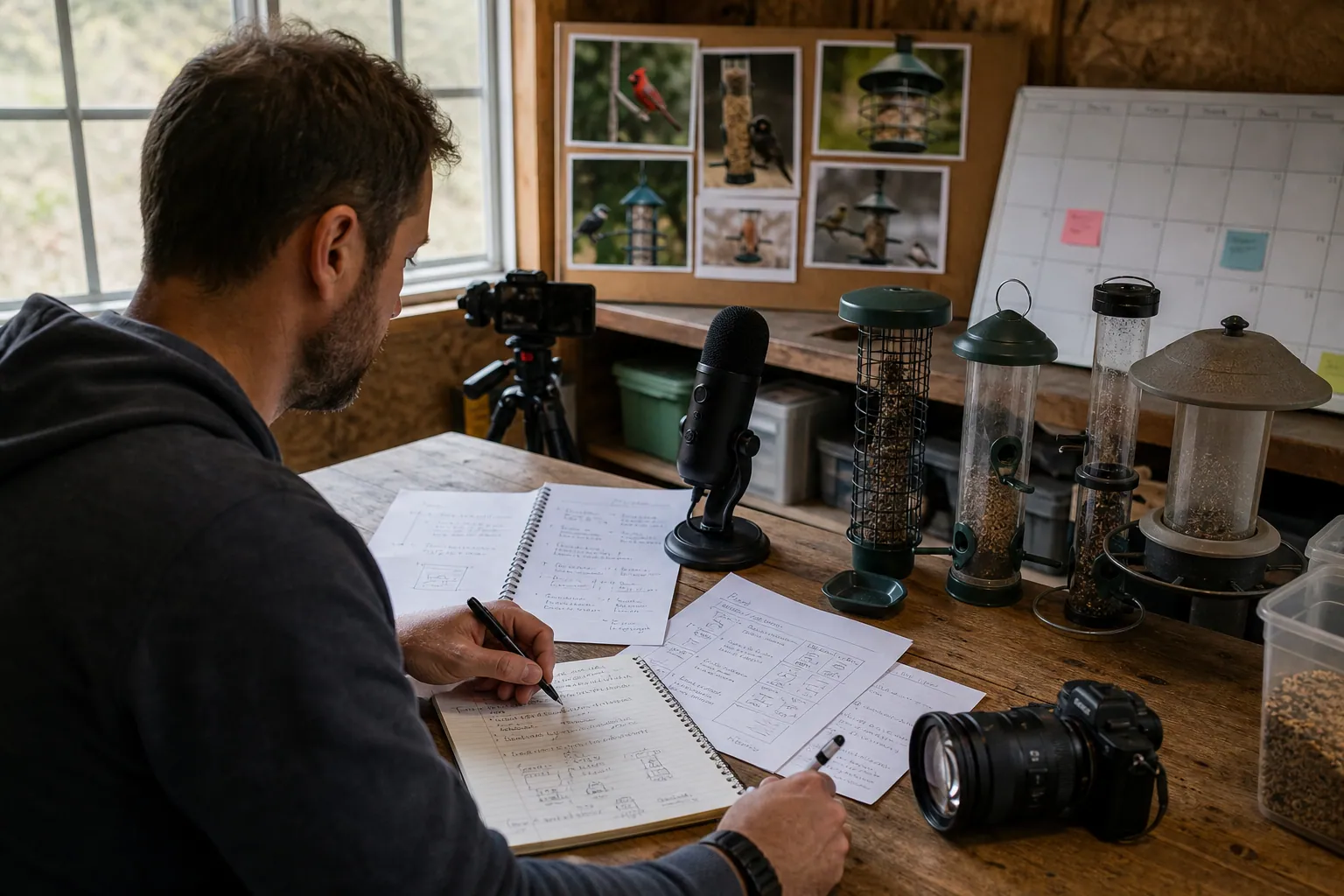
Strategy Memo: Pinterest SEO for Squirrel-Proof Bird Feeder Shops
A focused Pinterest SEO plan for bird feeder retailers: choose problem-solving content over generic bird inspiration, define useful metrics, and launch in 30 days.