Strategy Memo: Back-to-School Pinterest for a Lunchbox Gear Shop
A July strategy memo for lunchbox and kids’ gear brands: choose the right Pinterest mix before back-to-school searches peak.
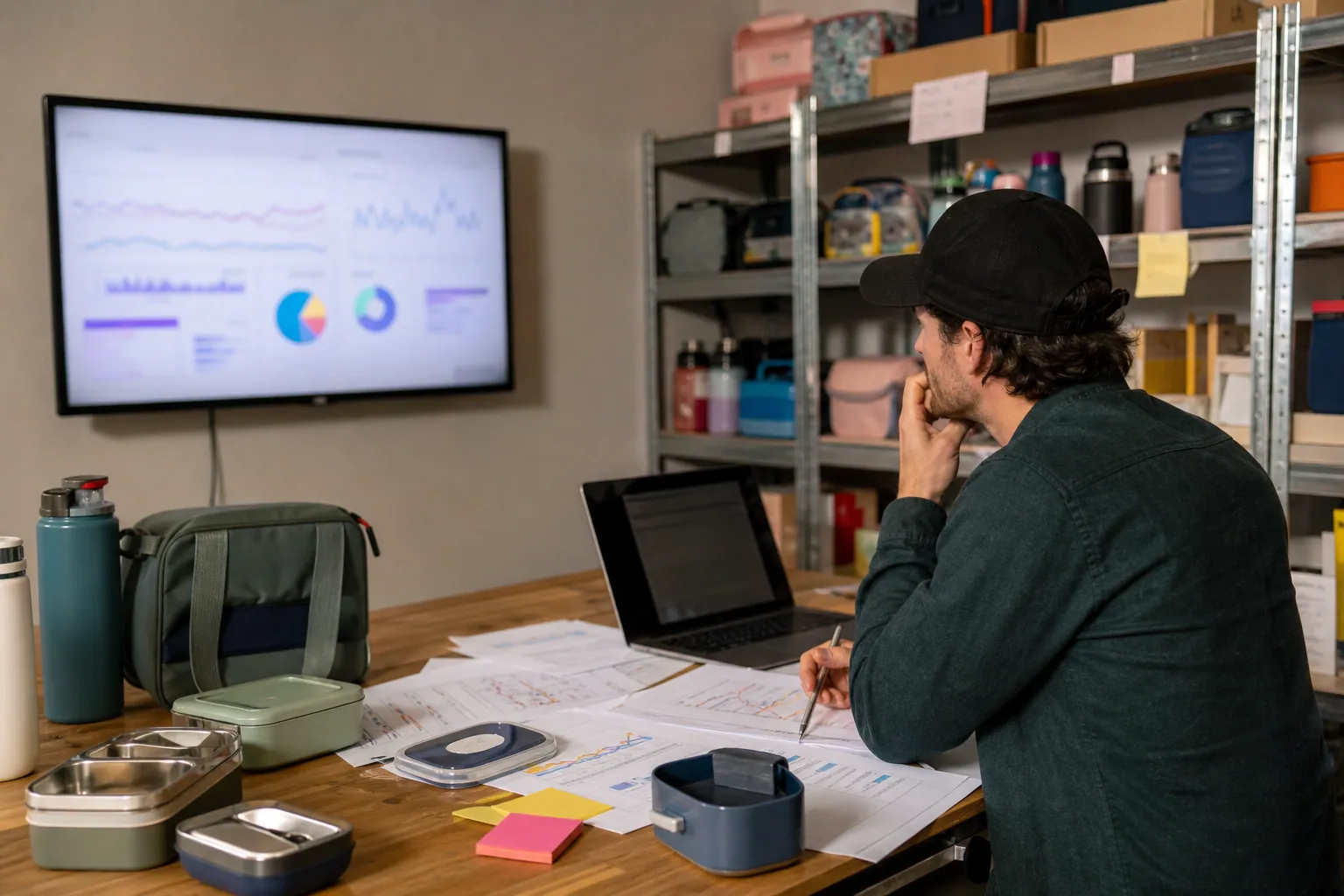
Strategic thesis: A lunchbox gear shop should not treat Pinterest as a catalog dump before back-to-school season. The winning move is to merchandise the catalog around parent decisions: age, routine, food type, durability, and school-year timing.
Parents rarely search Pinterest for “SKU 104 stainless lunchbox.” They search for things like:
- “kindergarten lunch box ideas”
- “easy school lunch packing station”
- “bento lunchbox for picky eaters”
- “leakproof lunch container for kids”
- “back to school lunch supplies”
That means your Pinterest ecommerce strategy needs two layers: product pins that keep buying paths short, and decision-led content that helps parents choose the right setup.
This memo is for a small ecommerce brand selling lunchboxes, snack containers, water bottles, labels, ice packs, lunch bags, or kids’ meal accessories. If you are operating in early July, you are not early. You are on time.
The decision: what should you pin first?
For a back-to-school product shop, there are four realistic Pinterest approaches. Each can work, but they do different jobs.
Option 1: Push catalog product pins
This is the simplest route: connect your product catalog, clean up product titles, and let Pinterest product pins point directly to product pages.
Best for:
- Clear, visually distinct products
- Shops with strong product photography
- Buyers who already know what they want
- Retargeting and lower-funnel discovery
Example pins:
- “Leakproof Kids Bento Lunchbox in Sage Green”
- “Stainless Steel Snack Containers for School Lunches”
- “Insulated Kids Water Bottle With Straw Lid”
The upside is speed. You can publish quickly, and every pin has a direct buying path.
The downside is that product pins alone often miss earlier searches. A parent planning the school year may not yet know whether they need a bento box, thermos, divided container, or lunch bag. If your pins only show products, you enter the conversation too late.
Option 2: Build back-to-school collection pages
Collection pages group products by a parent’s actual buying situation.
Instead of sending every pin to a single product page, you create destinations like:
- “Kindergarten Lunchbox Essentials”
- “Leakproof School Lunch Containers”
- “Back-to-School Lunch Packing Kit”
- “Lunch Gear for Picky Eaters”
- “Dishwasher-Safe Lunchboxes for Busy Families”
Best for:
- Stores with multiple related SKUs
- Bundles and average order value growth
- Searchers comparing options
- Pinterest landing pages that need to convert colder traffic
The upside is merchandising control. You can explain why certain products fit together, show bundles, answer sizing questions, and reduce decision fatigue.
The tradeoff is maintenance. Collection pages need current inventory, clear images, and strong internal links. If half the items sell out in August, your Pinterest traffic may land on a weak page unless you plan substitutions.
Option 3: Publish problem-led guides
This approach uses educational content to capture planning searches, then routes readers toward relevant products.
Examples:
- “How to Pack a Kindergarten Lunch Without Leaks”
- “What Fits in a Kids Bento Lunchbox? 10 Real Examples”
- “Lunchbox Setup for Kids Who Don’t Like Sandwiches”
- “How Many Snack Containers Does One Child Need for School?”
Best for:
- Brands with a point of view
- Products that need explanation
- Higher-priced or premium lunch gear
- Email list growth before peak buying weeks
The upside is intent capture. Parents saving and clicking these pins are often actively preparing.
The downside is that content takes longer than uploading product pins. You need photos, examples, and enough substance to earn trust. Thin posts with a few affiliate-style blurbs will not do much.
Option 4: Lead with visual lifestyle boards
This is the “make it look useful and aspirational” approach: lunch packing stations, pantry drawers, matching sets, colorful school prep, and weekly lunch layouts.
Best for:
- Strong visual brands
- Products with colorways or patterns
- Shops selling sets, labels, or accessories
- Top-of-funnel saves
Example board themes:
- “Back-to-School Lunch Organization”
- “Kids Bento Lunch Ideas”
- “School Morning Routine Ideas”
- “Lunchbox Supplies for Elementary School”
The upside is save potential. Pinterest users collect ideas before they buy.
The tradeoff is measurement. A beautiful pantry organization pin may get saves without immediate outbound clicks. That is not bad, but you need to know whether it supports sales or merely attracts organization inspiration traffic.
Recommended mix: 40% collection, 30% product, 20% guide, 10% lifestyle
For most small lunchbox gear shops, the best July mix is not all-or-nothing.
Use this starting allocation:
| Pin type | Share | Primary job |
|---|---|---|
| Collection pins | 40% | Help parents choose a setup |
| Product pins | 30% | Capture ready-to-buy demand |
| Guide pins | 20% | Win planning searches |
| Lifestyle pins | 10% | Grow saves and visual reach |
This mix gives you enough direct product exposure without ignoring the searches that happen before the cart.
If you sell only one hero lunchbox, shift more effort into guides and comparison pages. If you sell 80 lunch accessories, prioritize collection pages and product pins. If your brand is highly design-led, lifestyle pins can take a larger role, but do not let them replace clear buying paths.
The tradeoffs operators should decide before publishing
Pinterest rewards clarity, but ecommerce teams often create confusion by trying to make every pin do every job.
Before you batch pins, make these decisions.
Direct product page or collection page?
Send a pin to a product page when the pin is about one specific item.
Example:
- Pin title: “Leakproof Stainless Steel Lunchbox for Kindergarten”
- Destination: that product page
Send a pin to a collection page when the searcher is still comparing or assembling a set.
Example:
- Pin title: “Kindergarten Lunchbox Essentials for the First School Year”
- Destination: kindergarten lunch collection page
Do not send a broad “school lunch gear ideas” pin to a random product page. That creates a mismatch: the pin promises help, but the page asks for a purchase too soon.
Seasonal urgency or evergreen value?
Back-to-school is seasonal, but lunch packing is not only a six-week topic.
Use seasonal language for July and August pins:
- “Back-to-School Lunchbox Setup”
- “First Day of School Lunch Gear”
- “Kindergarten Lunch Supplies Checklist”
Use evergreen language for pins you want working into September and beyond:
- “Easy School Lunch Containers for Kids”
- “Bento Lunchbox Ideas for Picky Eaters”
- “How to Pack a Leakproof School Lunch”
A good account needs both. Seasonal pins can catch the shopping spike; evergreen Pinterest traffic helps you keep discovery alive after the rush.
Pretty flat lay or proof photo?
A flat lay of coordinated lunch gear can earn saves. A proof photo shows the product solving a real problem.
For this niche, proof photos often deserve more space than polished brand shots:
- Lunchbox open with real food inside
- Water bottle next to a backpack pocket
- Snack container held by a child’s hand for scale
- Before/after drawer showing lunch gear organization
- Thermos and cold-pack setup for a full school day
Parents are evaluating fit, capacity, cleanup, and leaks. Your visuals should answer those questions before the description does.
Broad keywords or specific parent searches?
“Back to school” is big, but broad. “Kindergarten lunchbox ideas” is smaller, but sharper.
A practical Pinterest keyword research pass might produce clusters like:
- Age: kindergarten, preschool, elementary school, middle school
- Problem: leakproof, easy to clean, dishwasher safe, picky eaters
- Food format: bento, hot lunch, snack box, sandwich-free lunch
- Routine: lunch packing station, school morning routine, weekly lunch prep
- Product: lunchbox, snack container, water bottle, ice pack, lunch bag
Use the cluster in the pin title, description, board choice, and landing page copy. Pinterest SEO works better when those pieces reinforce each other.
What to measure: useful metrics, not vanity comfort
For a seasonal ecommerce push, measure by pin cohort and destination type. Do not judge all pins together.
A product pin and a guide pin should not have identical expectations.
Core Pinterest metrics
Track these weekly:
- Impressions: Is Pinterest finding an audience for the topic?
- Saves: Are parents collecting the idea for later?
- Outbound clicks: Are they interested enough to visit the shop?
- Outbound click rate: Are the image and promise strong enough to create action?
- Top pin topics: Which parent decisions are getting traction?
Saves matter more than many ecommerce operators think. A parent may save lunch ideas in July, compare options in August, and buy a week later from a different session.
But saves without clicks are not enough. If a pin consistently earns saves and no outbound clicks, test a clearer product cue or stronger callout on the image.
Store metrics
Inside Shopify, WooCommerce, or your ecommerce analytics, track:
- Sessions from Pinterest
- Add-to-cart rate by landing page
- Conversion rate by destination type
- Revenue by UTM campaign
- Average order value from collection pages versus product pages
- Email signups from guide content
If collection page traffic has a lower conversion rate but a higher average order value, that may be acceptable. If guide traffic does not buy immediately but joins the email list, it can still support the back-to-school campaign.
Use Pinterest UTMs consistently so you are not guessing. At minimum, separate:
utm_campaign=back_to_school_2026utm_content=collection_kindergartenutm_content=product_leakproof_bentoutm_content=guide_picky_eatersutm_content=lifestyle_lunch_station
If you need a simple place to organize pin titles, descriptions, boards, and tracking links before scheduling, PinPinMe can help keep the campaign pieces together without turning the planning sheet into a mess.
The merchandising rule: every pin should answer one buying question
For lunchbox gear, good pins are not just “cute product + keyword.” They reduce uncertainty.
Here are better pin angles by buyer question.
“Will this fit enough food?”
Use:
- Open lunchbox with compartments filled
- Caption: “What fits in our kids bento lunchbox”
- Destination: product page or size guide
Pin title examples:
- “What Fits in a Kids Bento Lunchbox for Elementary School”
- “Bento Lunchbox Capacity Guide for School Lunches”
“Will it leak?”
Use:
- Sauce, yogurt, fruit, or dip shown in compartments
- Short visual proof statement
- Destination: leakproof collection or product page
Pin title examples:
- “Leakproof Lunch Containers for Kids’ School Lunches”
- “How to Pack Yogurt in a School Lunchbox Without Leaks”
“What do I need for kindergarten?”
Use:
- Complete starter set image
- Checklist format
- Destination: kindergarten collection page
Pin title examples:
- “Kindergarten Lunchbox Essentials for Back to School”
- “First School Lunch Setup for Kindergarten Parents”
“Can my child open it?”
Use:
- Child-friendly latch closeup
- Hand scale photo
- Destination: product page with usability details
Pin title examples:
- “Easy Open Lunchbox for Kindergarten and Preschool”
- “Kid-Friendly Lunch Containers for School”
“How do I organize this at home?”
Use:
- Drawer, shelf, or packing station
- Labels and accessories
- Destination: organization guide or bundle page
Pin title examples:
- “Back-to-School Lunch Packing Station Ideas”
- “School Lunch Organization Ideas for Busy Mornings”
This is where visual merchandising and Pinterest SEO meet. The image creates trust. The title and description tell Pinterest what the pin is about. The destination completes the promise.
30-day action plan for a back-to-school Pinterest push
This plan assumes a small team: one operator, one designer or Canva-capable marketer, and access to product photos. If you are solo, reduce the volume but keep the sequence.
Days 1–3: Choose the campaign architecture
Pick three parent decision themes. Do not start with your full catalog.
For example:
- Kindergarten lunch setup
- Leakproof lunch containers
- Picky eater bento ideas
For each theme, choose:
- 1 primary landing page
- 3 to 5 products to feature
- 5 keyword phrases
- 3 visual proof points
- 1 board or board section
If you do not have the right landing pages, create collection pages before making more pins.
Days 4–7: Fix the destinations
Your Pinterest traffic is only as good as the page it lands on.
For each collection page, add:
- A clear headline using the parent’s language
- A short intro explaining who the collection is for
- Product cards with useful names, not clever names only
- Photos that show scale and use
- Shipping deadline or back-to-school cutoff if relevant
- Links to related products or bundles
- FAQ content for fit, cleaning, materials, and age range
Example collection page intro:
“A simple kindergarten lunch setup for kids who need easy-open containers, leak-resistant compartments, and a water bottle that fits small backpack pockets.”
That sentence does more selling than a generic “Shop our new arrivals.”
Days 8–12: Build the pin list
Create 36 pins for the first campaign wave.
Suggested breakdown:
- 14 collection pins
- 10 product pins
- 8 guide pins
- 4 lifestyle pins
For each pin, write the angle before designing the image.
A simple pin brief can include:
- Buyer question
- Keyword phrase
- Pin title
- Pin description
- Destination URL
- Board
- Image concept
- UTM content tag
Example:
| Field | Example |
|---|---|
| Buyer question | What does my kindergartener need? |
| Keyword | kindergarten lunchbox essentials |
| Pin title | Kindergarten Lunchbox Essentials for Back to School |
| Description | A simple school lunch setup with easy-open containers, a leak-resistant lunchbox, snack cups, and a kid-friendly water bottle. |
| Destination | Kindergarten collection page |
| Board | Back-to-School Lunch Ideas |
| Image | Starter kit flat lay with labels |
| UTM | collection_kindergarten_checklist |
Writing this first prevents random design work.
Days 13–18: Produce the creative in sets
Do not make 36 completely unrelated designs. Create repeatable sets so you can compare performance.
Use four creative formats:
- Checklist pin — “Kindergarten Lunchbox Essentials”
- Proof pin — “What Fits in This Bento Lunchbox”
- Problem pin — “Leakproof Containers for Yogurt and Fruit”
- Routine pin — “School Lunch Packing Station Ideas”
For each format, vary one thing at a time:
- Background color
- Product arrangement
- Text overlay
- Photo crop
- Age group
- Callout phrase
Avoid tiny text. Parents are scrolling fast, often on mobile, and “dishwasher-safe, BPA-free, leak-resistant, compact, toddler-approved” in one overlay is not readable.
Better overlay examples:
- “Kindergarten Lunch Setup”
- “Leakproof Snack Containers”
- “What Fits Inside?”
- “Picky Eater Lunchbox Ideas”
- “Easy-Open School Lunch Gear”
Put the detail in the pin description and landing page.
Days 19–21: Publish with board discipline
Pinterest board strategy is not complicated, but it does need consistency.
Create or refresh boards such as:
- Back-to-School Lunch Ideas
- Kids Lunchbox Ideas
- School Lunch Organization
- Bento Lunchbox Ideas for Kids
- Kindergarten School Essentials
Each board should have:
- A keyword-aware title
- A helpful description
- A coherent first 20 to 30 pins
- Your best matching products and guides
Do not pin every lunchbox image to every board. Match the pin to the board’s search context.
A leakproof snack container pin fits “Kids Lunchbox Ideas” and “School Lunch Organization.” It may not belong on a broader “Back to School Outfits” board unless your shop has a real reason to be there.
Days 22–26: Add email capture for guide traffic
If you publish guide content, give visitors a next step besides “buy now.”
Useful lead magnets for this niche:
- Printable school lunch packing checklist
- 5-day bento lunch planner
- Kindergarten lunch gear checklist
- Allergy-friendly snack list
- Lunch packing station labels
Keep the opt-in close to the article topic.
A guide about picky eater lunches should not offer a generic 10% discount popup as the only next step. Offer a picky eater lunch planner, then introduce the products inside the follow-up emails.
A simple three-email sequence:
- Deliver the checklist and share one practical packing tip
- Explain how to choose containers by food type and age
- Feature the matching collection with a back-to-school shipping reminder
This turns Pinterest discovery into owned attention before the seasonal deadline.
Days 27–30: Review early signals and adjust
Pinterest can take time, but early signals still help.
Do not ask, “Did Pinterest work?” after 30 days. Ask sharper questions:
- Which keyword cluster earned impressions first?
- Which creative format earned saves?
- Which pins produced outbound clicks?
- Which landing page kept visitors engaged?
- Which product pages had add-to-cart activity?
- Which pins had saves but no clicks?
- Which boards are starting to surface impressions?
Then make specific adjustments.
If checklist pins get saves but few clicks:
- Add a clearer product image
- Test “shop the setup” language
- Send to a collection page instead of a blog post
If product pins get clicks but no add-to-cart:
- Check price clarity
- Improve product page photos
- Add capacity details
- Show shipping deadline
- Add reviews about school use
If guide pins get traffic but no revenue:
- Add product blocks higher in the article
- Include comparison tables
- Add an email opt-in
- Link to relevant collections earlier
If lifestyle pins get impressions but weak engagement:
- Make the use case more specific
- Replace generic organization wording
- Show the product solving a real morning problem
A practical benchmark for the first month
Your numbers will depend on account age, domain strength, product appeal, and pin quality. Still, you need a decision frame.
After 30 days, look for:
- At least one keyword cluster gaining impressions
- A small group of pins earning saves consistently
- Outbound clicks from more than one destination type
- Collection pages producing deeper browsing than generic product pages
- Product pins identifying which SKUs have visual pull
- Email opt-ins from guide content, even if sales lag
The first month is not only about revenue. It is about finding which parent decision deserves more inventory, creative, and page polish before the August buying window.
The operator’s takeaway
For a lunchbox gear shop, Pinterest is not just a place to show products. It is a place to meet parents while they are planning the school year.
Catalog pins help shoppers buy. Collection pages help them choose. Guides help them trust you. Lifestyle pins help them save and remember.
The strongest back-to-school campaign uses all four, but not equally. Start with the decisions parents are making, build the pages that answer those decisions, then create pins that make the answer visible in one second.

Product Pins vs Routine Guides for Refillable Cleaning Shops
Compare product, bundle, routine, and problem-solution Pinterest pins to choose the right catalog-growth mix for a refillable cleaning brand this fall.

The In-Stock Pinterest Playbook for Small-Space Storage Shops
A practical Pinterest routine for storage ecommerce teams that need renter and dorm-room traffic to reach in-stock collections—not discontinued shelf configurations.

Strategy Memo: Pinterest for HVAC Filter Shops Before Winter
A September Pinterest strategy for replacement air-filter stores: use size, MERV, and change-schedule content to turn seasonal research into compatible orders.

Catalog Pins vs Cat Wall Plans: Pinterest Routes for Modular Cat Furniture Shops
Compare four Pinterest routes for modular cat-wall retailers, then choose the mix that turns room ideas and mounting questions into kit and component sales.
Strategy Memo: Pinterest SEO for Squirrel-Proof Bird Feeder Shops
A focused Pinterest SEO plan for bird feeder retailers: choose problem-solving content over generic bird inspiration, define useful metrics, and launch in 30 days.

The Pinterest Margin Test Desk for Personalized Ornament Shops Before Q4
A practical Pinterest testing desk for personalized ornament sellers: map catalog inputs, test buyer intent, publish with discipline, and protect holiday profit.