Holiday Table Pinterest Playbook for Table Linen Shops
A practical Pinterest routine for table linen shops that turns Thanksgiving, Friendsgiving, and holiday-hosting searches into collection visits and confident orders.
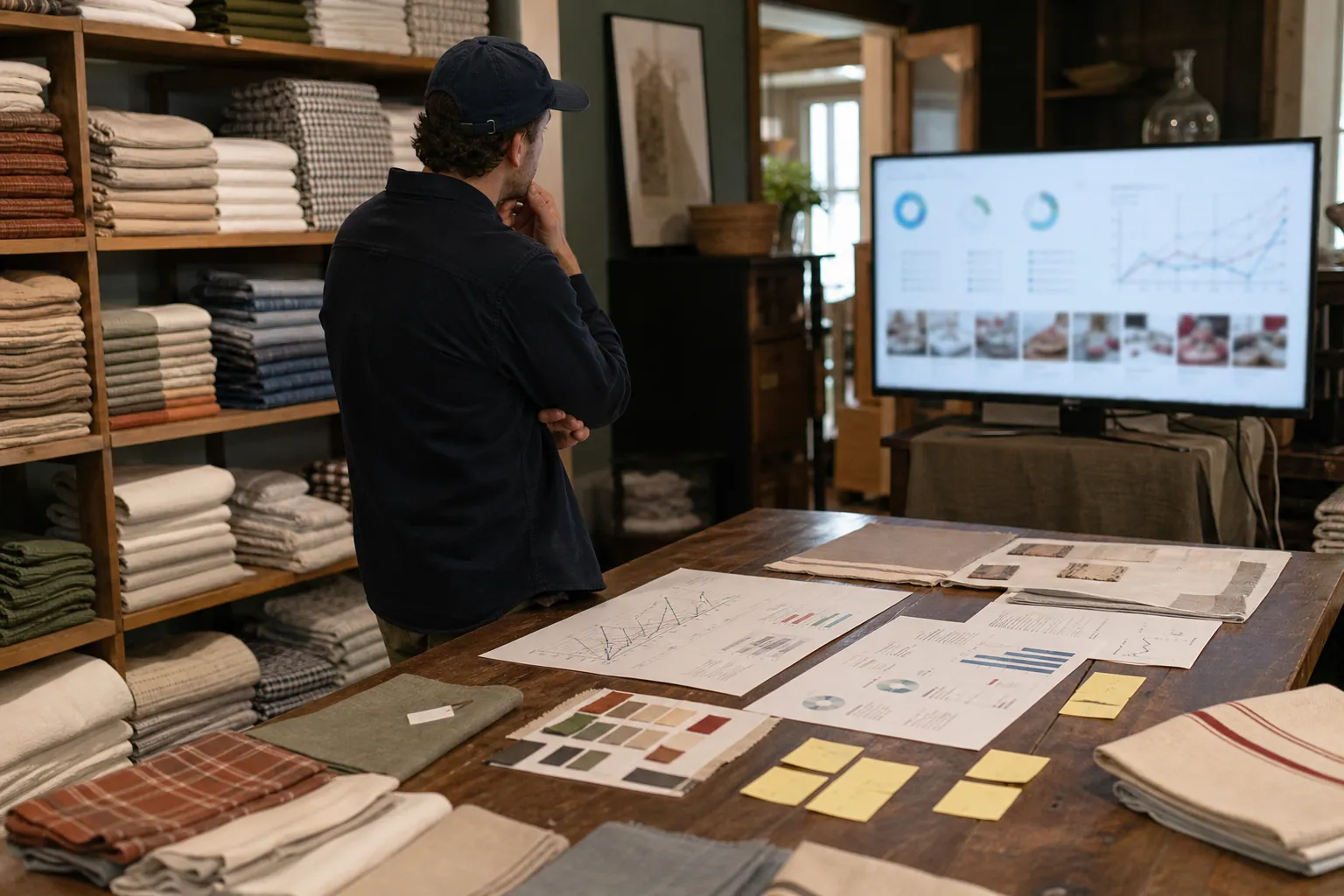
It’s October 10, and a small table linen shop has 14 days before its best Thanksgiving delivery window starts to feel tight.
The founder has attractive photography: a striped runner on an oak table, linen napkins folded beside place cards, a complete Friendsgiving spread. Pinterest saves are climbing. Orders are not.
The problem usually is not that the photos are too plain. It is that the account treats every table as inspiration when shoppers are trying to solve a hosting decision:
- Will this cloth fit my 72-inch rectangular table?
- How many napkins do I need for an eight-person dinner?
- Can I wash it after gravy and red wine?
- Which color works with white plates and a dark wood table?
- Will it arrive before Thanksgiving or make a useful host gift?
A holiday Pinterest account works better when it merchandises answers to those questions, not just finished tablescapes.
Diagnose the gap between saves and orders
Start by opening the last 60 to 90 days of Pins and labeling each one by shopper job. Do not begin with the visual style.
| Pin type | What the shopper is trying to decide | Best destination | What a weak result tells you |
|---|---|---|---|
| Full tablescape | “How could my table look?” | Shop-the-look collection | It may earn saves but lack a buying next step |
| Tablecloth sizing graphic | “What size do I need?” | Size guide with matching products | The page may not show stocked sizes clearly |
| Napkin color pairing | “What goes with my dishes?” | Color-family collection | A broad category page makes comparison difficult |
| Thanksgiving hosting checklist | “What am I forgetting?” | Hosting collection or printable guide | The content may be helpful but detached from products |
| Host-gift bundle | “What is a useful gift?” | Gift-ready bundle page | The offer, delivery date, or gift packaging is unclear |
Then inspect the destinations as critically as the Pins. A Pinterest visitor should not have to calculate a tablecloth drop, hunt for fabric composition, or guess whether “oatmeal” is a warm beige or pale gray.
For each seasonal collection page, make these details visible before the product grid:
- Table shape and size range. State the table dimensions and expected drop for each recommended cloth.
- Seat count. Translate measurements into the language of hosting: four, six, eight, ten, or twelve guests.
- Fabric and care. Include verified wash instructions, wrinkle expectations, and whether a runner or cloth needs ironing. Do not make durability claims your care team cannot support.
- Color context. Show the same item with light plates, dark plates, wood, and painted tables when possible.
- Fulfillment reality. Put holiday order-by dates, personalization lead times, and gift packaging information near the purchase decision.
This is the foundation of Pinterest SEO for table linen shops: align a searchable phrase, a useful image, and an exact page that resolves the next question.
Use a three-signal diagnosis
A Pin with high impressions but few outbound clicks has a packaging problem: the title, visual promise, or callout is not compelling enough for a person to leave Pinterest.
A Pin with clicks but no product views has a destination problem: a slow page, a mismatched headline, or a generic collection is breaking the promise.
A Pin with product views and carts but little revenue has a commerce problem: size uncertainty, shipping cost, a weak bundle, low stock, or an offer that asks too much comparison work.
Keep those diagnoses separate. Replacing a well-performing table-size graphic with another moody table photo will not repair a collection page.
Run one holiday merchandising rhythm each week
The goal is not daily posting. It is a weekly cycle that keeps Pins accurate while demand moves from Thanksgiving planning to host gifts and Christmas entertaining.
Monday: choose the inventory that deserves traffic
Meet for 20 minutes with the person responsible for inventory or fulfillment. Pull a simple list:
- in-stock colors and sizes;
- replenishment dates;
- variants with enough margin for bundles;
- products that can ship before each cutoff;
- discontinued items that need to leave Pinterest destinations.
Pick one primary collection for the week and one support product. For example, Week 1 could promote washable Thanksgiving tablecloths and coordinating napkin sets. Week 2 could focus on host-gift bundles built around a runner, four napkins, and a gift note.
Do not send broad Pinterest traffic to a “holiday” category containing 65 unrelated items. Curate a collection around one decision, such as “table linens for an 8-person Thanksgiving dinner” or “neutral host gifts under $75.”
Tuesday: make the landing page earn the click
Build or refresh the collection page before designing Pins. A useful page for “rectangular tablecloths for 6 to 8 seats” might include:
- a table measurement illustration;
- three recommended cloth sizes and their drops;
- a short note on choosing a formal versus casual drop;
- filters for color, fabric, and in-stock status;
- a visual section pairing the cloth with matching napkins and runners;
- delivery language appropriate to the date.
Use a distinct UTM for the Pin family, not merely for the entire quarter. For example, distinguish thanksgiving-size-guide from friendsgiving-neutral-table. That level of Pinterest UTM tracking lets you see whether sizing help or style inspiration is creating the more valuable visits.
Wednesday: turn one merchandising decision into a Pin family
One collection should create several genuinely different Pins. They can use the same product, but each should answer a different question.
For a rust linen runner, create:
- Fit angle: “Runner sizes for a 6-foot dining table.”
- Occasion angle: “A warm Friendsgiving table with rust and cream linens.”
- Pairing angle: “What napkin color goes with a rust table runner?”
- Care angle: “How to wash linen napkins after holiday dinner.”
- Gift angle: “A practical host gift: linen runner + four napkins.”
Give each Pin its own vertical image, title, and destination context. Changing only a text overlay does not create five useful tests.
For titles, lead with the decision phrase, then the product category. Examples:
- “Thanksgiving Tablecloth Sizes for 6, 8, and 10 Guests”
- “Neutral Linen Napkins for a Friendsgiving Table”
- “Host Gift Ideas: Coordinating Table Runner and Napkin Set”
Pinterest descriptions should add specifics not visible in the title: table shape, fabric, washable-care details, colors, and the next action. They are supporting metadata, not a place to repeat “holiday table linens” five times.
Thursday: review for accuracy and routing
Before publishing, have someone who knows the catalog check four things:
- Is every pictured color purchasable now?
- Does the Pin link to the exact product or curated collection promised?
- Are sizing and care statements identical to approved product information?
- Does the landing page work on a phone and show the relevant variant first?
If several people contribute assets, an approval queue prevents a beautiful Pin from routing customers to a sold-out color. Teams using PinPinMe can keep approved creative, links, and scheduled seasonal batches together, but a simple shared sheet can enforce the same check.
Friday: read a small scorecard, then make one decision
Review Pins published at least 10 to 14 days ago. For holiday products, also revisit them after 30 days because shoppers may save a table idea before buying napkins later.
Track by Pin family:
- outbound click-through rate;
- collection-page product views per visit;
- add-to-cart rate;
- completed orders and net revenue per 100 visits;
- average order value;
- return or support reasons tied to sizing, color, or fabric expectations;
- stock remaining and delivery cutoff risk.
Use the review to choose one action: scale, revise the landing page, replace a visual, pause due to stock, or retire an angle. Avoid rewriting every Pin after a single slow week.
Four holiday Pin families that do real merchandising work
1. The seat-count table
A vertical graphic can show a 60-by-84-inch cloth styled on a six-seat table, then compare the look on an eight-seat table. Link it to the precise sizes in stock.
This Pin helps a shopper move from “I like linen tablecloths” to “I know which variant to order.” It also reduces the risk that a stylish room image attracts visitors who cannot identify the product dimensions.
2. The existing-dishes color guide
Make a simple split visual:
- white dinnerware + pine table + flax napkins;
- stoneware + walnut table + rust runner;
- gold-rimmed plates + cream cloth + evergreen napkins.
The collection page can show the three palettes, with every item labeled and shoppable. This is visual merchandising with a practical endpoint, not a vague “holiday tablescape ideas” board.
3. The first-hosting bundle
Target the person hosting their first Friendsgiving or first apartment holiday dinner. Include a modest bundle such as one runner, four napkins, and place cards, rather than an intimidating full table reset.
The Pin should state what is included, who it fits, and whether the gift box is optional. If the bundle only works for four seats, do not lead with imagery of a ten-person table.
4. The care-and-reuse guide
A “How to wash linen napkins after a holiday meal” Pin can bring post-event traffic that later becomes December entertaining or gift traffic. Its destination should include care instructions and related reusable napkin sets, not only a blog post with no product path.
This is especially useful when you sell a higher-priced linen item. Care content makes ownership feel manageable and gives your team a durable asset after the seasonal rush.
Mistakes that make seasonal traffic expensive
Publishing only the finished table
Finished tables are valuable top-of-funnel assets, but a feed made entirely of styled rooms gives shoppers no way to resolve fit, care, or budget. Pair every aspirational visual with a decision asset.
Using one holiday collection for every Pin
“Holiday table linens” is a navigation label, not a customer intent. Make narrower routes for seat count, table shape, color family, hosting occasion, and gifts.
Letting images outrun the catalog
A cranberry napkin image can keep getting clicks long after the color is gone. Either restock it, redirect the Pin to a clearly equivalent replacement, or pause the asset. Never quietly land someone on a generic category and hope they find an alternative.
Ignoring the order cutoff in the creative
During the final shipping week, “Thanksgiving table ideas” is often too late for a physical product. Switch effort toward in-stock, expedited options, local pickup if available, or evergreen December entertaining. Update both Pin text and landing-page banners.
Treating saves as the final outcome
Saves can signal future demand, but they do not prove that a collection is commercially useful. Compare saves with outbound clicks, product views, revenue, and the customer questions your support team receives.
A short operating checklist for next week
- Choose one in-stock table-linen collection around a clear hosting decision.
- Confirm dimensions, seat count, care notes, colors, margins, and delivery dates.
- Refresh the matching collection page before creating Pins.
- Produce three to five distinct Pins: fit, color pairing, occasion, gift, or care.
- Add a separate UTM to each Pin family.
- Check every destination, variant, and mobile page before publishing.
- Review 14-day click and commerce signals, then make one documented change.
- Recheck stock and shipping cutoffs every Monday through the holiday period.
A table linen shop does not need more generic seasonal inspiration to grow on Pinterest. It needs a catalog that behaves like a helpful host: it anticipates the guest count, answers the awkward question about fit, and makes the next choice easy.

The Host-Ready Pinterest Desk for Cocktail Glassware Shops
A Q4-ready Pinterest content operation for cocktail glassware shops that turns product specs, host questions, and gift bundles into accurate catalog traffic.

Strategy Memo: Pinterest for Rain Boot Shops Before Wet-Weather Season
Use fit confidence, weather-specific collections, and practical outfit content to turn Pinterest fall planning into rain boot orders with fewer avoidable returns.

Catalog Pins vs Red-Eye Guides: Pinterest Routes for Travel Pillow Shops
Compare five Pinterest routes for travel pillow stores—from catalog Pins to sleep-position guides—and choose a holiday-travel mix that earns more qualified orders.

From Nursery Mood Boards to Rug Orders: A Pinterest Operator Playbook
A practical Pinterest routine for nursery rug shops that need room-planning saves to become qualified collection visits, confident carts, and fewer wrong-size orders.

The AI Gift-Intent Pinterest Desk for Merino Sock Shops
A practical weekly routine for merino sock retailers using AI to turn verified product facts, gifting questions, and stock signals into accurate Pinterest traffic.

Pinterest Pin Descriptions for Personalized Notepad Shops: 4 Angles Compared
Compare four Pinterest description angles for personalized notepad shops, match each to a landing page, and test for clicks and gift-season orders.