Founder Field Note: The Occasion-First Pinterest Rebuild for a Small Jewelry Shop
A narrative field note for jewelry ecommerce founders: turn a catalog from product-type pins into occasion-led Pinterest discovery, landing pages, visuals, and tracked sales.

The Tuesday problem: a full catalog with thin discovery
This field note is a composite from the kind of ecommerce desk many small product teams eventually face.
A three-person jewelry shop had done the responsible things. The Shopify catalog was connected. Product pins existed. The founder had a folder of polished images. New arrivals went live every month. Pinterest was not ignored.
But the numbers felt oddly flat.
The pins for individual products received impressions here and there. A gold huggie earring would get saved. A pearl necklace might spike for a week. Still, the founder could not connect Pinterest activity to a reliable merchandising plan. The store was organized by product type: earrings, necklaces, bracelets, rings. Pinterest users were searching in a different language.
They were not mostly searching for SKU names or internal collection names.
They were searching for situations:
- wedding guest earrings
- bridesmaid jewelry under 50
- gold jewelry for work outfits
- dainty necklace layering ideas
- gift for sister in law
- pearl earrings for rehearsal dinner
- everyday hoops for sensitive ears
That mismatch was the real work. Not making prettier pins. Not posting more often. Not chasing every seasonal trend.
The shop needed to stop treating Pinterest like a product feed and start treating it like a visual merchandising floor.
Field takeaways
- A connected catalog is not the same as a Pinterest ecommerce strategy.
- Product-type navigation works for shoppers who already know what they want; Pinterest often captures shoppers who are still shaping the idea.
- The first audit question is not how many pins did we publish? It is what buyer situation does each pin help someone solve?
The catalog was fine. The merchandising language was not.
The team opened the product spreadsheet and added four columns next to every SKU:
| SKU type | Occasion | Style promise | Buying constraint | Pinterest phrase |
|---|---|---|---|---|
| Pearl studs | Wedding guest | Polished but simple | Under 50 | pearl earrings for wedding guest |
| Gold hoops | Work outfits | Everyday minimal | Sensitive ears | everyday hoops for sensitive ears |
| Initial necklace | Gift | Personal but easy | Ships quickly | personalized necklace gift for sister |
| Bracelet stack | Travel | Packable styling | Mix and match | vacation jewelry capsule |
This took less than two hours for the first 40 products. It was not perfect keyword research. It was merchandising translation.
Then they checked Pinterest search suggestions and their own site search terms. A few assumptions changed quickly. The founder liked the phrase modern heirloom. Pinterest gave more visible demand around pearl wedding jewelry, dainty gold necklace, and bridesmaid earrings. The internal phrase capsule classics sounded elegant, but shoppers were looking for work outfit jewelry and everyday gold jewelry.
The point was not to erase the brand voice. The point was to connect brand language to search language.
A pin can still feel like the brand while using the words buyers actually type.
Field takeaways
- Add occasion, style promise, buying constraint, and Pinterest phrase to your product spreadsheet.
- Use Pinterest keyword research to validate language, but start with real merchandising knowledge from customer questions and order history.
- Internal collection names rarely make strong Pinterest pin titles unless they also match shopper intent.
We stopped sending every click to a product page
The second problem was the destination.
Every product pin sent people to a product page. That sounds logical until you watch how Pinterest shoppers behave. Many are comparing styles, planning outfits, or saving ideas for later. A single product page can feel like a dead end if the shopper is not ready for that exact item.
So the team built five landing pages as visual shelves:
- Wedding guest jewelry
- Bridesmaid jewelry under 50
- Everyday gold jewelry for work
- Dainty necklace layering sets
- Jewelry gifts that ship quickly
Each page had 12 to 24 products. Not 80. Not every matching item in the catalog. Just enough to feel curated.
The best pages included:
- A short opening paragraph with the buyer situation named clearly
- Product cards grouped by style or price point
- One styling note per row, such as best with slip dresses or easy with office knits
- Shipping or material reassurance where it mattered
- A small FAQ section for common objections
- A clear path to the individual product page
This changed the job of Pinterest. Instead of asking one pin to sell one SKU cold, the pin could bring a shopper into a relevant shelf.
For some pins, individual product pages still made sense. If the pin showed one hero product with a clear product-specific promise, direct was fine. But for broader searches like bridesmaid jewelry ideas or gold jewelry for work outfits, the collection page worked harder.
Field takeaways
- Use Pinterest landing pages when the search phrase implies browsing, comparison, or styling help.
- Use Pinterest product pages when the pin is clearly about one specific product and the buyer intent is narrow.
- A strong collection page is a curated sales floor, not a dumped category archive.
The photo list changed after the keyword list
Before the rebuild, the team shot jewelry in three standard ways: white background, close-up detail, and model crop.
Useful, but incomplete.
Once the Pinterest phrases were visible, the shot list became more specific. The founder planned a half-day shoot around buyer situations instead of product categories.
For wedding guest jewelry, they needed:
- Earrings shown with satin, linen, and floral textures
- Close crops that made scale obvious
- A flat lay with a clutch, invitation, and soft neutral background
- One vertical pin with three styles side by side
For work outfit jewelry, they needed:
- Necklaces over knitwear and simple button-down shirts
- Earrings visible with pulled-back hair
- A muted desk or commute-adjacent setting without looking staged
- A pin that showed small, medium, and statement options
For giftable jewelry, they needed:
- Packaging in hand
- Box open with a card
- Product plus shipping cutoff note in the pin text
- A simple comparison pin by recipient: sister, friend, mom, bridesmaid
This is where many ecommerce teams accidentally underinvest. Pinterest is visual search. If the image does not confirm the situation, the title has to do too much work.
A pin titled pearl earrings for wedding guest performs better when the image actually looks like a wedding guest decision. A pin about work jewelry should not look like a black-tie party.
Field takeaways
- Plan product photography after mapping Pinterest search intent, not before.
- Make scale, use case, and styling context visible in the image.
- One product can support several pin angles if the visuals show different buyer situations.
The pin titles became merchandising labels
The founder had been using product names as pin titles. Names like The Elise Hoops and Mini Pearl Drop Earrings were clean, but they did not carry enough search meaning alone.
The team kept product names on the site. For Pinterest, they wrote titles like a merchandiser labeling shelves.
Examples:
| Weak title | Better Pinterest title |
|---|---|
| The Elise Hoops | Small Gold Hoops for Everyday Work Outfits |
| Mini Pearl Drops | Pearl Drop Earrings for Wedding Guests |
| Initial Necklace | Personalized Initial Necklace Gift for Sister |
| Gold Layering Chain | Dainty Gold Necklace for Layering |
The descriptions did not need to become long sales pitches. They simply added context:
Style these pearl drop earrings with a slip dress, wrap dress, or soft floral print for wedding guest outfits, rehearsal dinners, and summer events. Lightweight design with a polished finish.
That description names the product, the use cases, and the style situation. It gives Pinterest SEO something useful to understand without sounding robotic.
They also built boards around occasions, not just categories:
- Wedding Guest Jewelry Ideas
- Bridesmaid Gift Jewelry
- Everyday Gold Jewelry
- Dainty Necklace Layering
- Jewelry Gifts Under 50
The product-type boards still existed, but the occasion boards were easier to connect to buyer intent.
Field takeaways
- Pinterest pin titles should combine product type, occasion, style, and constraint where possible.
- Keep titles readable. Do not stack keywords until the pin sounds like a search-results page.
- Pinterest board strategy should mirror how buyers plan, not only how the store categorizes inventory.
July was not too early for September shoppers
The shop almost waited until late August to create wedding guest and bridesmaid gift pins. That would have been late.
Pinterest planning behavior starts early, especially for weddings, gifting, home projects, seasonal outfits, and holidays. For this jewelry shop, July was the right time to build assets for late summer weddings, early fall events, and Q4 gift browsing.
They used three publishing waves:
Wave 1: Search foundation
These pins targeted evergreen phrases:
- pearl earrings for wedding guest
- dainty gold necklace layering
- bridesmaid jewelry under 50
- everyday gold jewelry
The goal was to establish relevant assets and give Pinterest time to understand the destinations.
Wave 2: Seasonal styling
These pins layered in timing:
- fall wedding guest jewelry
- September wedding guest outfit accessories
- holiday jewelry gifts for friends
- office party jewelry ideas
The visuals became warmer and more seasonal, but the product selection did not require a totally new catalog.
Wave 3: Buying urgency
Closer to the buying window, pins highlighted constraints:
- jewelry gifts that ship quickly
- bridesmaid gifts under 50
- last minute personalized jewelry gift
- stocking stuffer jewelry ideas
The team did not create all pins at once. They built the destinations first, then added new creative around the same pages.
Field takeaways
- Pinterest seasonal planning should start before the buying rush, not during it.
- Reuse strong landing pages across multiple seasonal angles instead of creating a new page for every trend.
- Build evergreen pins first, seasonal pins second, and urgency pins closer to the purchase window.
The weekly review became a merchandising meeting, not a vanity report
The founder used to check impressions and feel either encouraged or disappointed. That did not tell the team what to do next.
They changed the weekly review to four questions:
- Which pins are getting saves?
- Which pins are getting outbound clicks?
- Which destinations are producing add-to-cart activity?
- Which products sell after Pinterest-assisted visits?
Saves were treated as planning signals. If a pin earned saves but few clicks, it might mean the idea was aspirational, the text was too broad, or the destination did not feel necessary.
Outbound clicks were treated as curiosity signals. If clicks were strong but add-to-cart was weak, the issue was probably on the landing page, product fit, price clarity, shipping reassurance, or mobile experience.
Sales were treated carefully. Pinterest can assist a purchase before the final click comes through another channel. The team still used Pinterest UTMs so they could compare campaigns and destinations in Shopify and analytics tools.
A simple UTM structure was enough:
utm_source=pinterest&utm_medium=organic&utm_campaign=wedding_guest_jewelry&utm_content=pearl_drop_context_pin
They did not need a complicated dashboard at first. They needed clean enough campaign tracking to see whether wedding guest jewelry was outperforming gift jewelry, or whether collection pages beat direct product pages.
If your team wants one place to keep Pinterest pin titles, descriptions, destinations, and UTM-tagged product angles organized, PinPinMe can sit beside this kind of merchandising routine without turning it into a heavy project.
Field takeaways
- Pinterest analytics should answer what to merchandise next, not just how much reach you received.
- Treat Pinterest saves, outbound clicks, add-to-carts, and revenue as different signals.
- Use Pinterest UTMs consistently enough to compare landing pages, pin angles, and seasonal campaigns.
What the founder stopped doing
The most useful part of the rebuild was not adding tasks. It was removing vague effort.
The founder stopped making pins for every new SKU by default. New products were first assigned to buyer situations. If a product did not fit an active occasion or shelf, it waited.
The team stopped using the same product photo for every pin angle. If the visual did not match the search phrase, the pin went back to the photo queue.
They stopped sending broad idea pins to narrow product pages. If a shopper was likely to compare, the destination became a curated collection.
They stopped treating Pinterest as a posting channel and started treating it as a merchandising channel with search behavior attached.
That shift is small, but it changes the whole operating rhythm.
Field takeaways
- Not every SKU deserves immediate Pinterest attention.
- A product with five buyer situations can be more valuable than five products with no clear search intent.
- The best ecommerce Pinterest work often looks like better merchandising before it looks like more content.
A 90-minute version you can run this week
If you run a small ecommerce shop, you do not need to rebuild everything at once. Start with one product family and one buyer moment.
Here is the lean version:
- Pick 20 to 40 products in one category.
- Add columns for occasion, style promise, constraint, and Pinterest phrase.
- Choose three collection pages worth building or improving.
- Draft 10 pin titles that use shopper language.
- Identify missing visuals before creating pins.
- Add UTMs to each destination.
- Review saves, outbound clicks, and add-to-cart behavior weekly.
For a jewelry shop, that might mean wedding guest jewelry. For a candle brand, it might mean housewarming gifts. For a leather goods store, it might mean work bags for commuting. For a skincare brand, it might mean travel-size skincare.
The category can change. The principle stays the same: Pinterest shoppers usually arrive through a situation before they choose a product.
Build the shelf for the situation, then pin the products that belong there.

The In-Stock Pinterest Playbook for Small-Space Storage Shops
A practical Pinterest routine for storage ecommerce teams that need renter and dorm-room traffic to reach in-stock collections—not discontinued shelf configurations.

Product Pins vs Routine Guides for Refillable Cleaning Shops
Compare product, bundle, routine, and problem-solution Pinterest pins to choose the right catalog-growth mix for a refillable cleaning brand this fall.

Strategy Memo: Pinterest for HVAC Filter Shops Before Winter
A September Pinterest strategy for replacement air-filter stores: use size, MERV, and change-schedule content to turn seasonal research into compatible orders.

Catalog Pins vs Cat Wall Plans: Pinterest Routes for Modular Cat Furniture Shops
Compare four Pinterest routes for modular cat-wall retailers, then choose the mix that turns room ideas and mounting questions into kit and component sales.
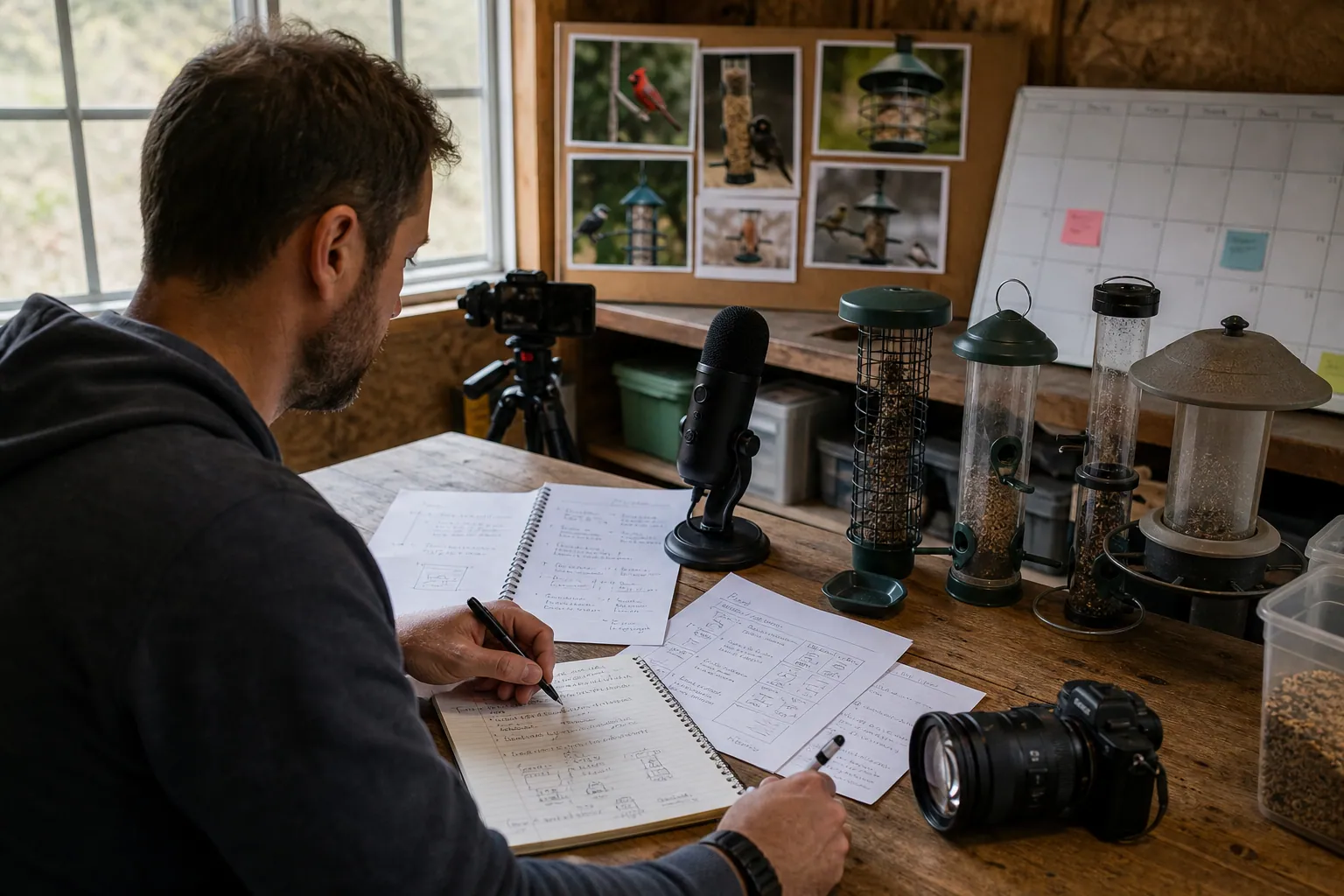
Strategy Memo: Pinterest SEO for Squirrel-Proof Bird Feeder Shops
A focused Pinterest SEO plan for bird feeder retailers: choose problem-solving content over generic bird inspiration, define useful metrics, and launch in 30 days.

The Pinterest Margin Test Desk for Personalized Ornament Shops Before Q4
A practical Pinterest testing desk for personalized ornament sellers: map catalog inputs, test buyer intent, publish with discipline, and protect holiday profit.